
Al Ain, United Arab Emirates: Where does home truly begin? Is it defined by geography, shaped by memory, or carried through the traditions, relationships and experiences that connect communities across generations?
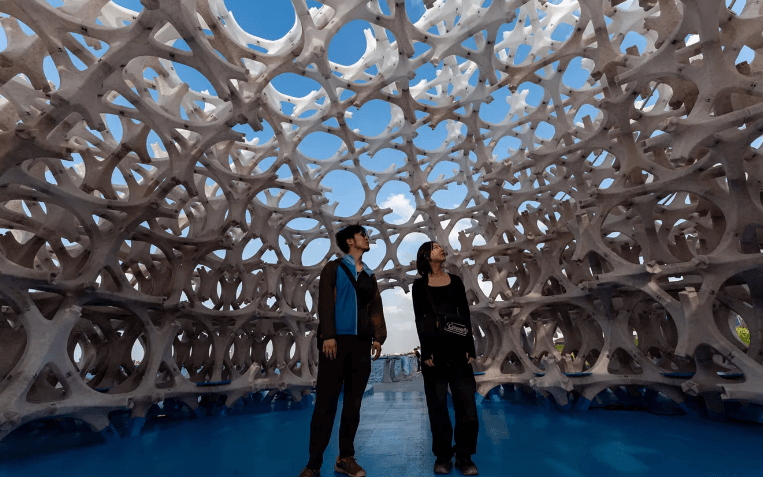
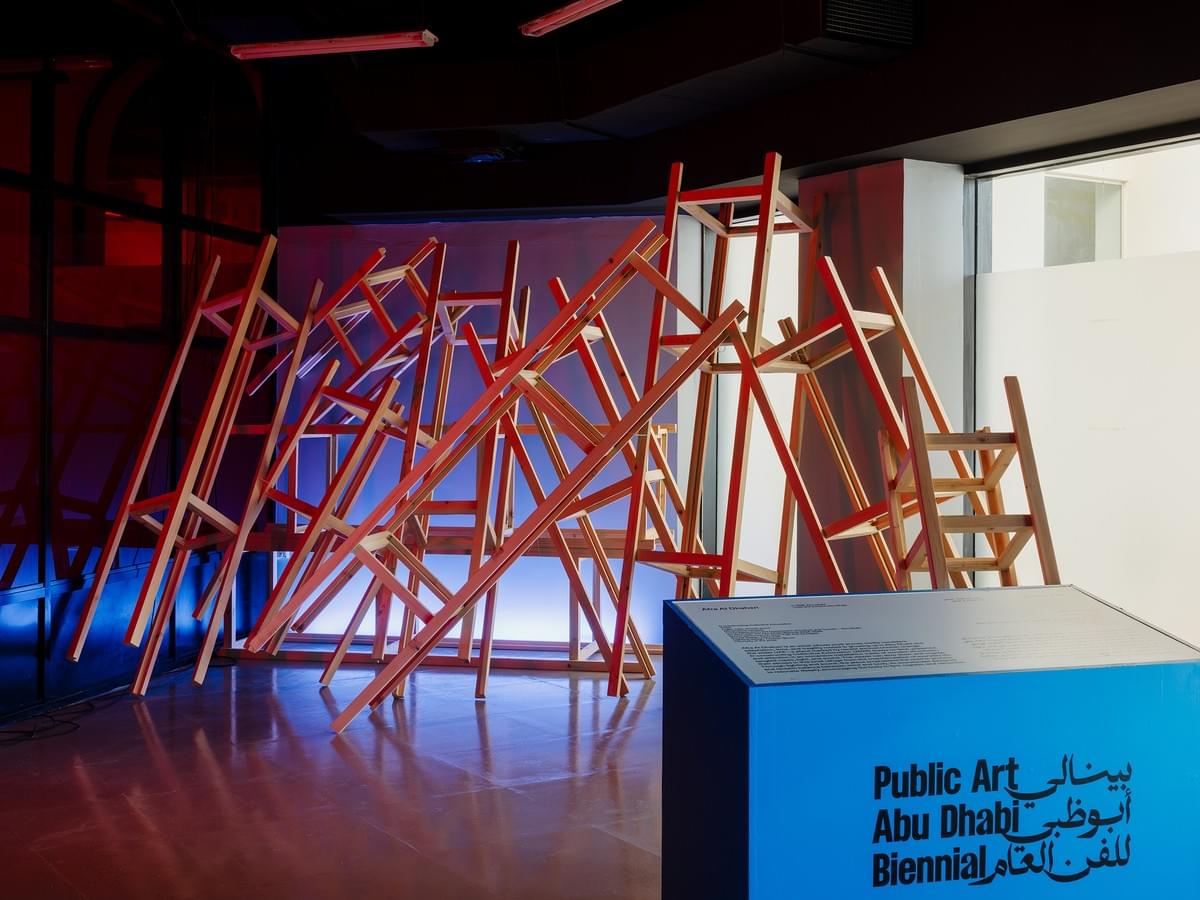
These questions form the philosophical foundation of the Public Art Abu Dhabi Biennial 2026–2027, which has opened its second edition in the historic city of Al Ain, introducing four remarkable public art installations that explore the evolving relationship between cultural identity, ecological consciousness and the human experience of belonging. Organised by the Department of Culture and Tourism – Abu Dhabi (DCT Abu Dhabi), the biennial unfolds under the evocative curatorial theme Home: A Glossary for a Communal Sense of Place. Bringing together 21 artists from the UAE and across the international contemporary art community, the exhibition positions public art as a powerful medium for dialogue, cultural continuity and collective reflection.
From monumental Emirati jewellery-inspired sculptures to immersive explorations of ecology, migration and collective memory, the second edition transforms Al Ain’s historic landscapes into a living canvas of cultural expression.
The Al Ain chapter, inaugurated on 23 October 2026, features site-specific installations at Al Towayya Roundabout and Al Qattara Oasis, connecting contemporary artistic interventions with landscapes deeply embedded in the region's history and heritage.
Rather than confining art to conventional gallery environments, the biennial brings creative expression directly into public life, allowing residents and visitors to encounter artistic narratives within familiar urban spaces, agricultural settings and historic cultural landscapes.
Reimagining Heritage: Roudhah Al Mazrouei's Monumental Tribute to Emirati Identity
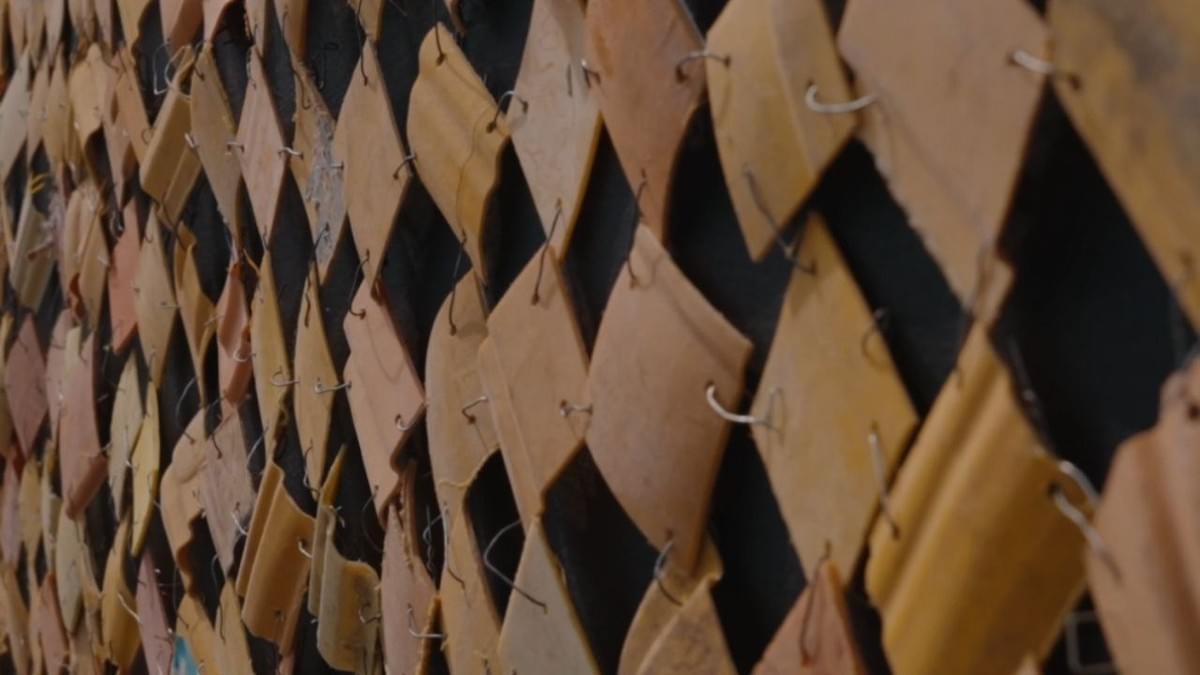
At Al Towayya Roundabout, Emirati artist Roudhah Al Mazrouei transforms a traditional symbol of adornment into an extraordinary public artwork through Tassa (2026), an expansive installation measuring 80 metres in diameter.
Inspired by a traditional Emirati gold headpiece inherited through her family, the sculpture magnifies delicate ornamental forms into an architectural-scale composition of interconnected golden structures, cascading elements and vibrant red and green beads. For Al Mazrouei, who grew up in Al Ain, the installation carries an intimate connection to personal history and the cultural traditions that shape Emirati identity. The artwork bridges the distance between past and present, transforming an object associated with family heritage into a shared visual experience accessible to the wider community.

Developed through conversations and creative workshops with children, Tassa also highlights the importance of intergenerational dialogue in preserving cultural memory. Its monumental presence suggests that heritage need not remain confined to museums or historical collections; it can evolve, expand and acquire new meanings through contemporary artistic interpretation. The installation offers a compelling reflection on how inherited traditions can inspire fresh expressions of identity while maintaining their emotional and cultural significance.
Al Qattara Oasis: Where Art, Ecology and Collective Memory Converge
Within the historic surroundings of Al Qattara Oasis, three internationally recognised artists present distinct yet interconnected perspectives on humanity's relationship with the natural environment, traditional knowledge and the concept of home. Part of Al Ain's UNESCO World Heritage cultural landscape, the oasis provides a particularly meaningful setting for artistic investigations into the relationship between human settlement and environmental resources. Here, contemporary art becomes a bridge between historical experience and urgent present-day conversations about sustainability, migration, biodiversity and cultural preservation.
Asunción Molinos Gordo: The Living Architecture of Water
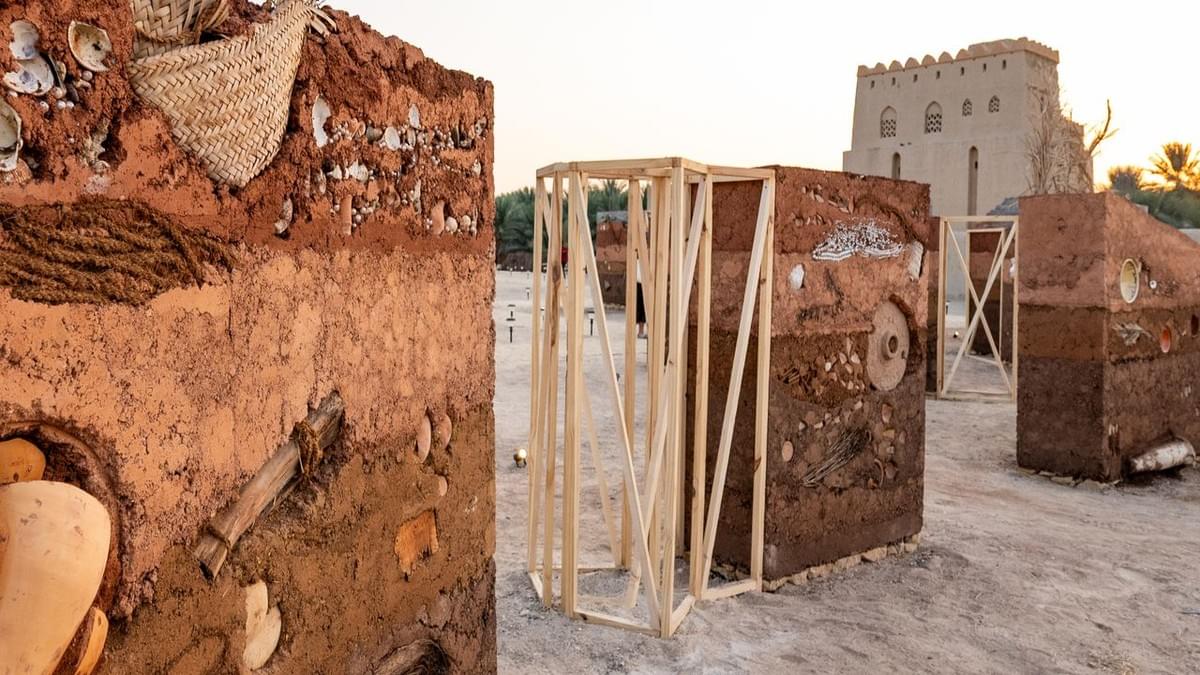
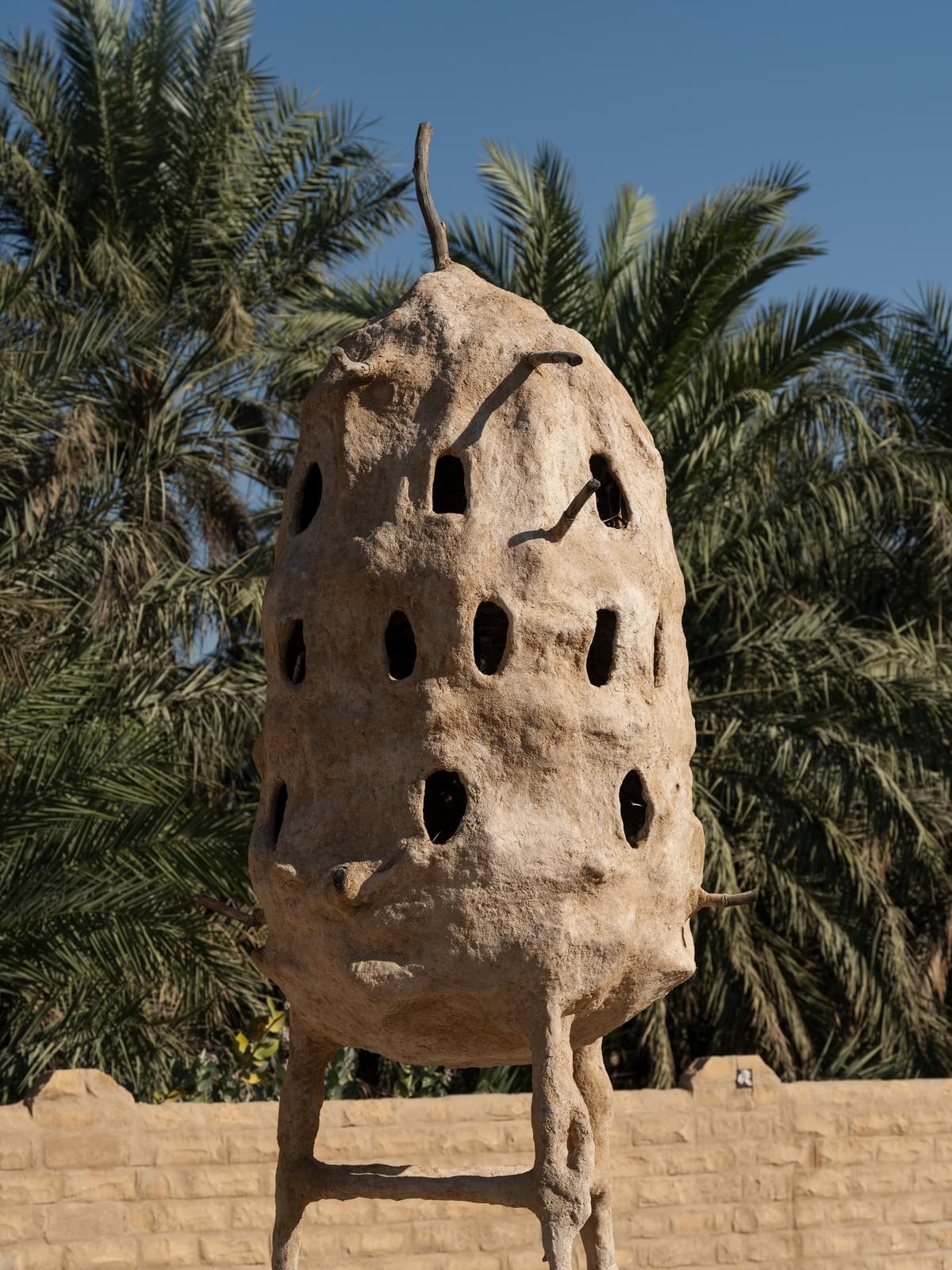
Spanish artist Asunción Molinos Gordo explores the relationship between agriculture, civilisation and collective responsibility through Bil Hana wa Al Afia (2026). Constructed using rammed earth, the installation draws inspiration from the traditional Al Aflaj irrigation systems, which have sustained agricultural communities across the region for centuries. Its branching, root-like structure evokes the interconnected networks through which water has historically been distributed among farms, while seven stratified layers incorporate pottery, artefacts and everyday objects representing different periods of human settlement.
By bringing these historical traces together, Molinos Gordo reveals the accumulated knowledge, cooperation and resource-sharing practices that have shaped life within the oasis. The work extends beyond an architectural interpretation of irrigation. It invites reflection on water as a shared inheritance, emphasising how ecological systems and collective human responsibility remain inseparable. Situated among working farms, the installation celebrates the continuity of traditional agricultural knowledge while raising broader questions about sustainability and the future of natural resources.

Reena Saini Kallat: Echoes of Extinction and the Fragility of Nature
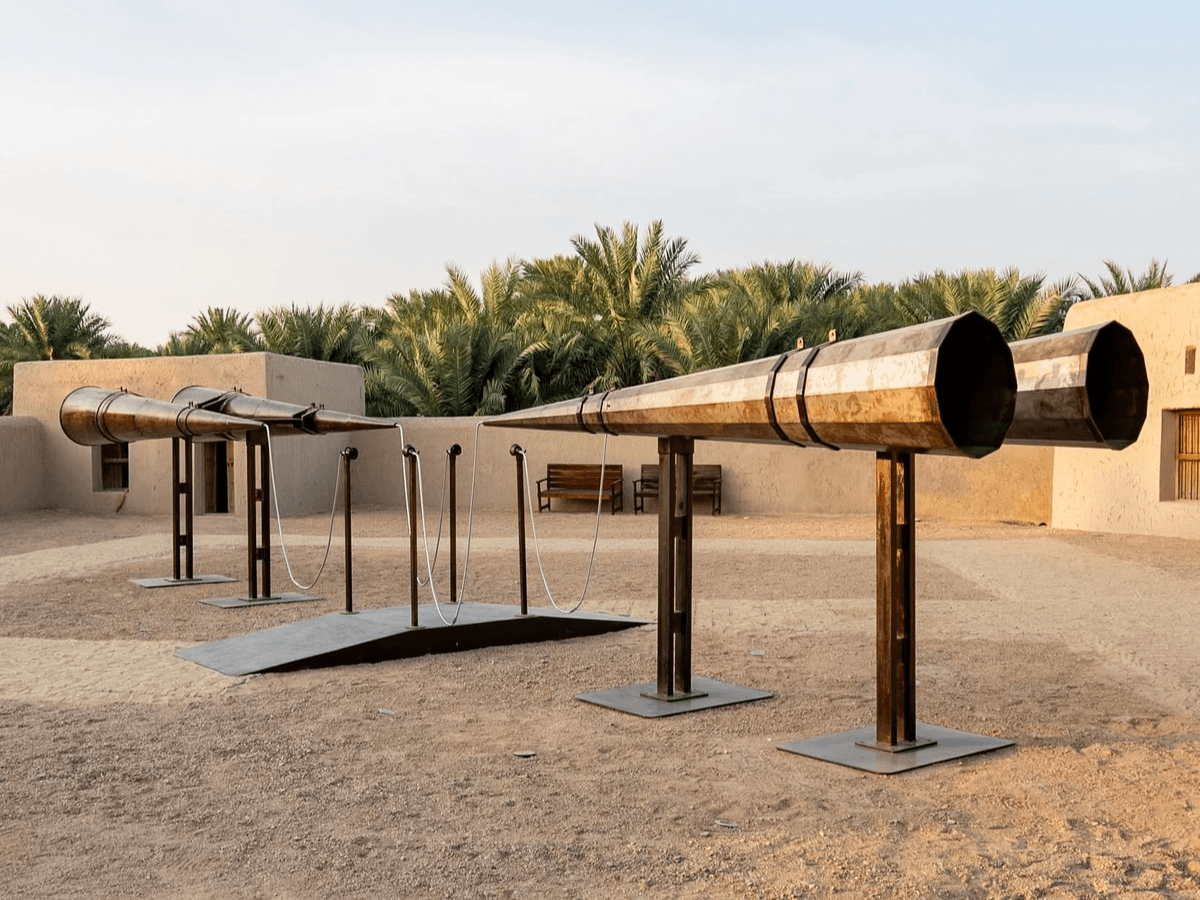
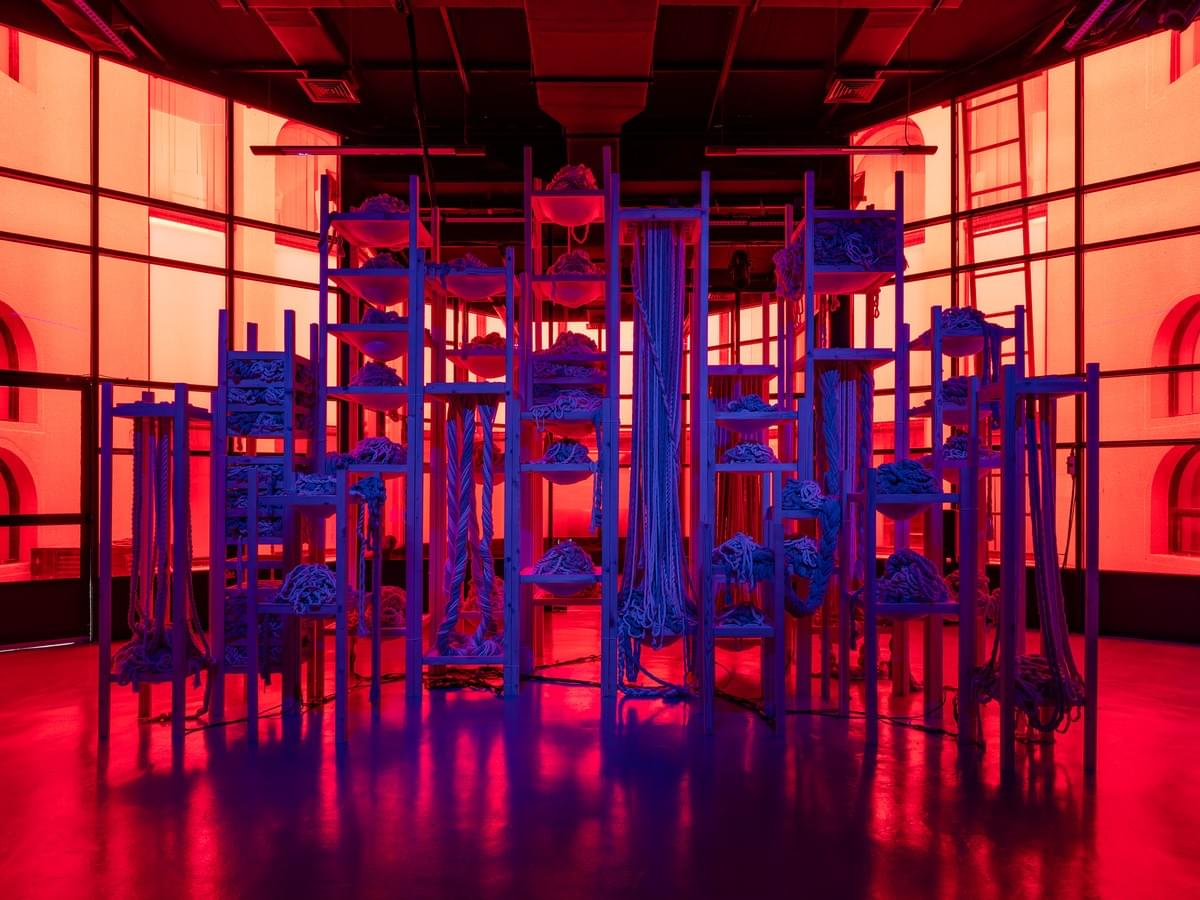
Indian contemporary artist Reena Saini Kallat presents Thresholds: Requiem (The Last Call) (2026), a thought-provoking installation that transforms historical instruments of surveillance into an evocative meditation on ecological loss. Drawing upon the form of twentieth-century acoustic locators originally designed to detect distant aircraft, Kallat reimagines these devices as sculptural listening structures dedicated to the calls of extinct and critically endangered bird species. Some of the species represented once inhabited or migrated through the UAE and the wider Arabian Peninsula, connecting the installation directly to the region's ecological history.
Through sound and sculptural form, the artwork creates an encounter with voices that have disappeared from the natural world, alongside those that remain vulnerable to extinction. Kallat's artistic intervention raises profound questions about environmental responsibility, the consequences of human activity and the fragility of ecosystems that sustain life. Within the tranquil landscape of Al Qattara Oasis, Thresholds: Requiem (The Last Call) becomes both a memorial to ecological loss and a reminder of humanity's shared obligation to protect biodiversity.
M’barek Bouhchichi: Architecture as a Metaphor for Belonging
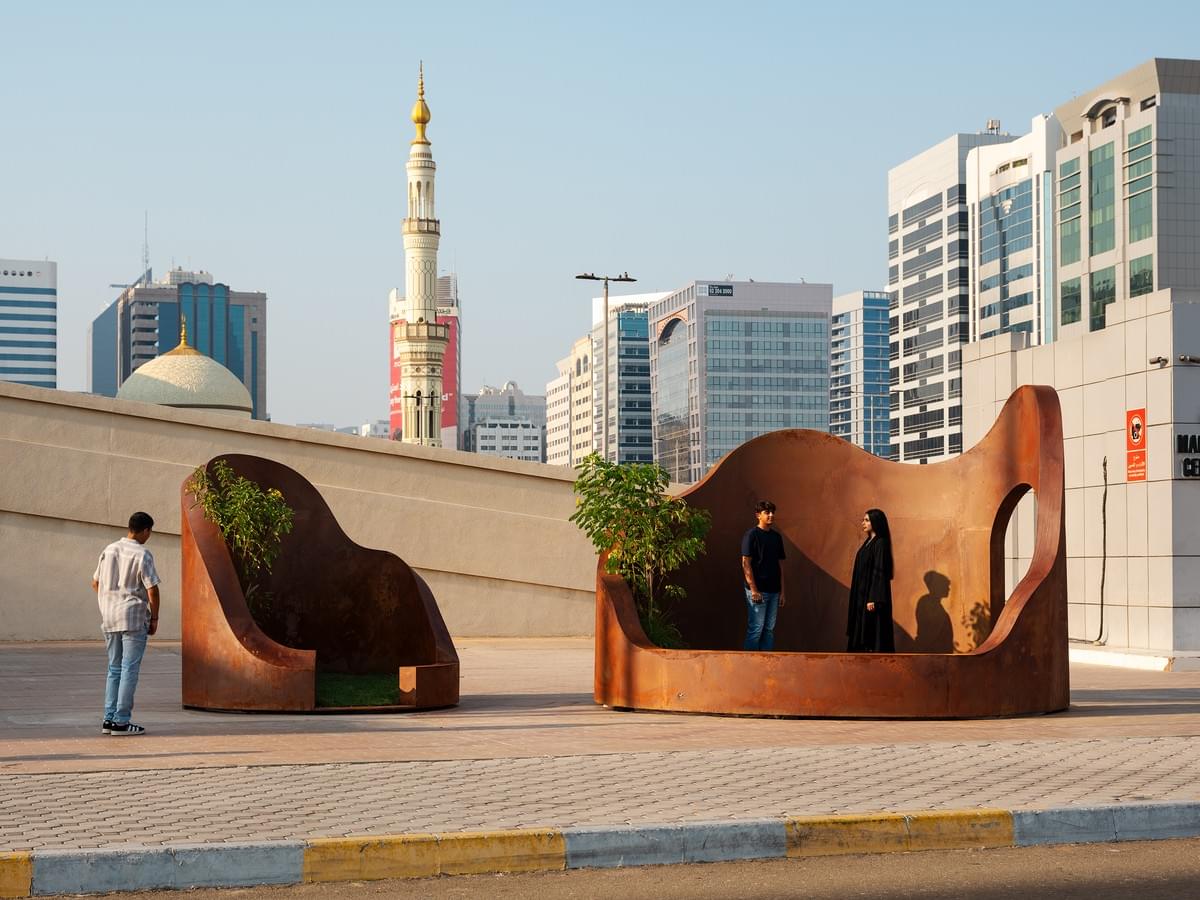
Moroccan artist M’barek Bouhchichi explores the intersections of migration, memory and cultural identity through I am not the stone thrown into the water, but the seed sown in the field (2026).The installation comprises two stainless-steel structures inspired by traditional pigeon towers, architectural forms historically associated with shelter and refuge across North Africa and the Emirates. By reinterpreting these structures through contemporary materials, Bouhchichi establishes a dialogue between vernacular architectural heritage and the evolving experiences of movement, settlement and belonging. A particularly distinctive element is the incorporation of verses from Al Nahma, traditional Emirati maritime songs historically performed by sailors, rendered in Braille across the structures. This tactile interpretation of oral heritage connects the physical language of architecture with the emotional narratives of journeys, separation and the longing for home.
The artwork's title, drawn from Tayeb Salih's novel Season of Migration to the North, further reinforces the relationship between movement, cultural memory and the possibility of renewal. Through its poetic symbolism, Bouhchichi's installation suggests that home is not always defined by permanence, but may also emerge through migration, adaptation and the preservation of shared cultural experiences.
A Curatorial Vision Rooted in Community and Shared Experience
The second edition of the biennial unfolds under the artistic direction of Elvira Dyangani Ose, Artistic Director of the Zeitz Museum of Contemporary Art Africa. Her curatorial approach challenges conventional interpretations of home as a fixed geographical location, proposing instead a more fluid understanding shaped by personal memory, social relationships, cultural traditions and collective experiences.
Reflecting on the biennial's central concept, Dyangani Ose observes: “Home is not only a location. It is a condition: felt before it is understood, carried in the body before it is articulated in language.” This perspective resonates throughout the Al Ain installations, where each artist approaches belonging through a different artistic vocabulary. From inherited jewellery and agricultural systems to endangered birdsong and maritime traditions, the works collectively demonstrate that home exists not only within physical structures but also through cultural practices, ecological relationships and memories passed between generations. The curatorial framework encourages audiences to participate in this evolving conversation, recognising that the meaning of home is continually shaped by those who inhabit, remember and reinterpret a place.
Abu Dhabi's Expanding Cultural Landscape: Art Beyond Traditional Spaces
Following its opening in Al Ain, the Public Art Abu Dhabi Biennial will expand to the capital on 15 November 2026, introducing additional artistic commissions across several prominent public locations. The participating sites include Mina Zayed, Souq Al Mina, Hidd Al Saadiyat and the Saadiyat Cultural District, extending the biennial's reach across urban, coastal and cultural environments.
Through this geographically distributed exhibition format, the biennial strengthens the relationship between contemporary art and everyday public life. The initiative builds upon the success of the inaugural 2024–2025 edition, Public Matter, continuing Abu Dhabi's commitment to developing public art as an integral component of its cultural landscape. Beyond the presentation of individual artworks, the biennial reflects a broader vision of cultural engagement, one that recognises public spaces as places for creative exchange, historical reflection and community participation. Its international artistic representation further strengthens the UAE's position as a meeting point for diverse cultural perspectives and contemporary artistic practices.
Art as a Shared Language of Humanity
What makes the Public Art Abu Dhabi Biennial particularly significant is its ability to connect artistic innovation with the lived realities of communities and the environments they inhabit. The four installations in Al Ain demonstrate how contemporary art can illuminate cultural histories while addressing universal concerns surrounding identity, environmental sustainability, migration and belonging.
Each artwork approaches these themes through a distinctive material and conceptual language, yet together they form a broader narrative about the interconnected nature of human experience. Traditional Emirati jewellery becomes an expression of collective identity. Ancient irrigation systems reveal the foundations of communal cooperation. The calls of endangered birds become reminders of ecological responsibility. Architectural forms associated with refuge evoke the emotional journeys that shape our understanding of home.
These artistic encounters encourage viewers to reconsider familiar landscapes, recognising the histories, relationships and cultural meanings that exist within them. For the UAE's growing contemporary art community, the biennial also represents an important opportunity to experience how site-responsive artistic practices can engage with local heritage while contributing to global conversations.
A Continuing Conversation Between Past, Present and Future
As the Public Art Abu Dhabi Biennial 2026–2027 unfolds across Al Ain and Abu Dhabi, its central message extends far beyond the individual installations. The exhibition reminds us that cultural identity is not static, heritage is not confined to the past, and home cannot always be defined by geographical boundaries.
Instead, these concepts continue to evolve through shared experiences, environmental relationships and the creative expressions of successive generations. By transforming historic landscapes and everyday public spaces into places of artistic discovery, the biennial creates opportunities for audiences to encounter contemporary art in ways that are accessible, meaningful and deeply connected to the cultural fabric of the region.
Ultimately, Home: A Glossary for a Communal Sense of Place offers more than an exhibition of public artworks. It presents an invitation to reflect upon the invisible connections that unite people, places, histories and cultures — reminding us that home is not simply where we live, but where memory, identity and belonging find their meaning.
Exhibition at a glance
Event: Public Art Abu Dhabi Biennial 2026–2027
Theme: Home: A Glossary for a Communal Sense of Place
Organised by: Department of Culture and Tourism – Abu Dhabi
Artistic Director: Elvira Dyangani Ose
Al Ain: 23 October 2026 – 15 February 2027
Abu Dhabi: 15 November 2026 – 15 February 2027
Participating Artists: 21 Emirati and international artists
Admission: Free
Official Website: Public Art Abu Dhabi Biennial
Art4you Magazine | Art News & Cultural Features
Source: Department of Culture and Tourism – Abu Dhabi / Public Art Abu Dhabi Biennial 2026–2027. Editorial adaptation based on the supplied exhibition information.