
In an era where images are consumed in seconds and forgotten just as quickly, the works of Pawel Kuczynski possess a rare quality, they compel us to pause. His illustrations do not merely decorate a page or accompany an article; they become intellectual experiences that challenge perception, question accepted realities, and invite viewers into conversations about the complexities of modern civilization.
Widely regarded as one of the most influential contemporary satirical illustrators, Pawel Kuczynski has transformed the language of visual storytelling into a powerful medium of social reflection. Through symbolism, metaphor, irony, and remarkable technical precision, he reveals uncomfortable truths that often remain hidden beneath everyday life. His artworks transcend language, geography, and politics, speaking directly to the conscience of a global audience.
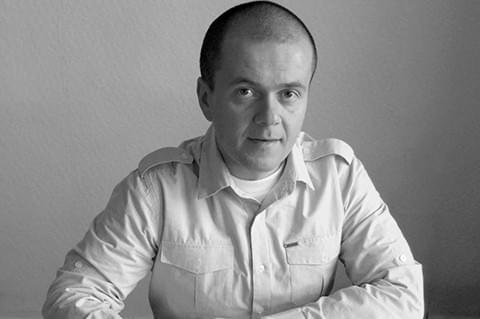
A Journey Rooted in Observation
Born in Szczecin, Poland, in 1976, Pawel Kuczynski graduated in Graphic Design from the University of Fine Arts in Poznań in 2001. After establishing himself as a professional illustrator in 2004, his exceptional ability to merge classical painting techniques with contemporary social commentary quickly attracted international attention.
Over the course of his career, he has received more than 140 international awards in illustration and satirical drawing, including the prestigious Eryk Prize awarded by the Association of Polish Cartoonists. His illustrations regularly appear in magazines, books, publications, and international exhibitions, yet his influence extends far beyond editorial illustration. Today, his work is studied, discussed, and shared across academic institutions, art communities, and digital platforms worldwide.
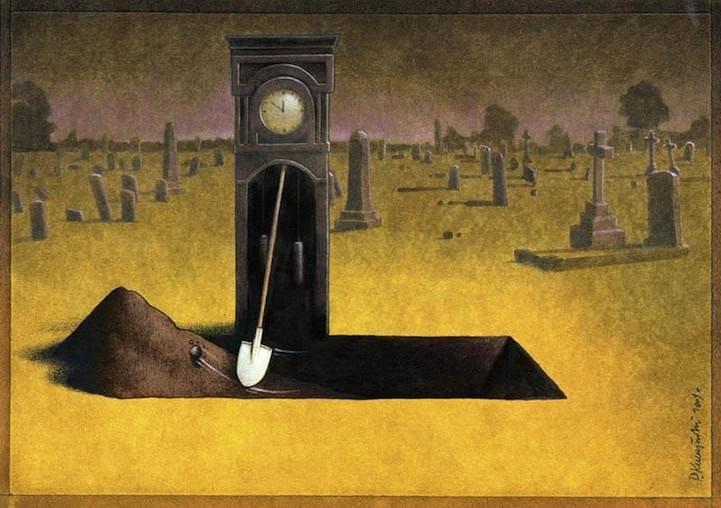
When Images Speak Louder Than Headlines
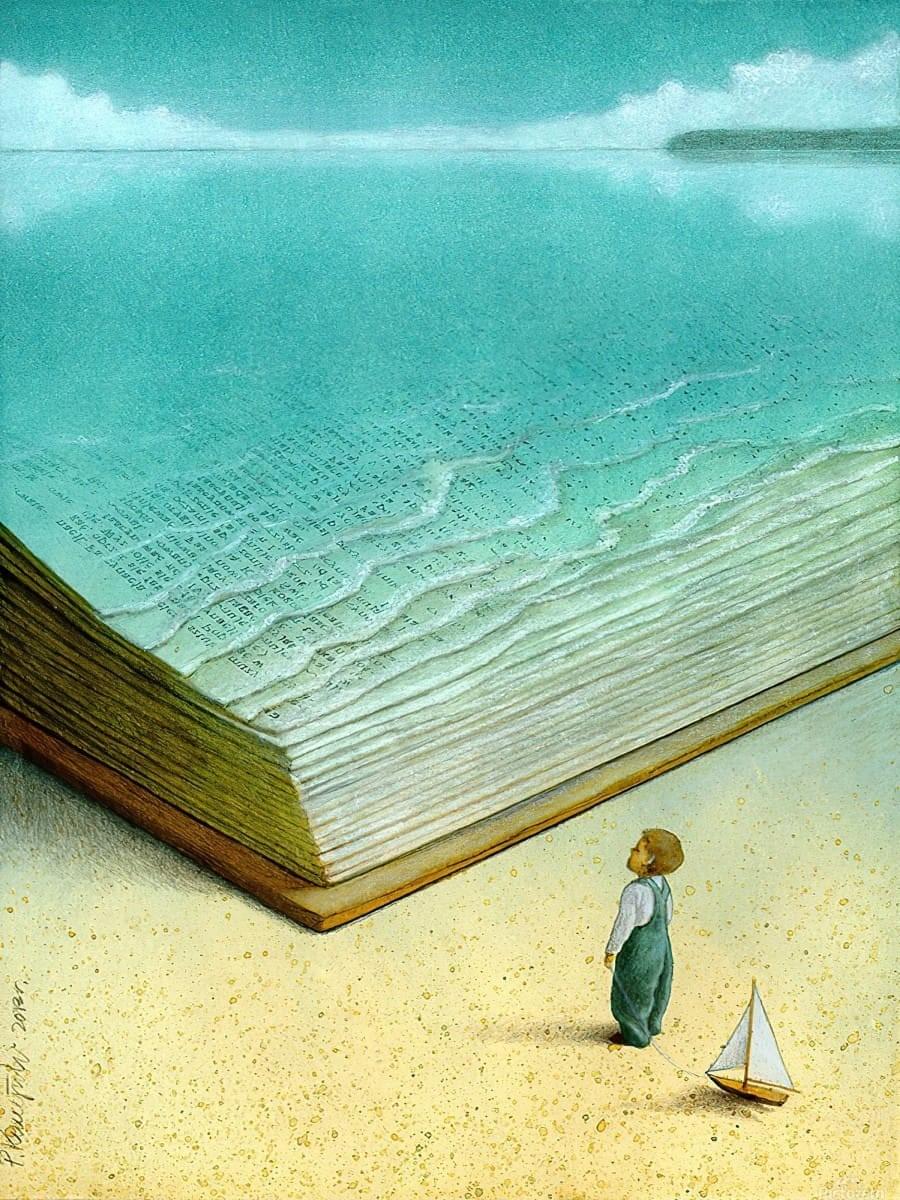
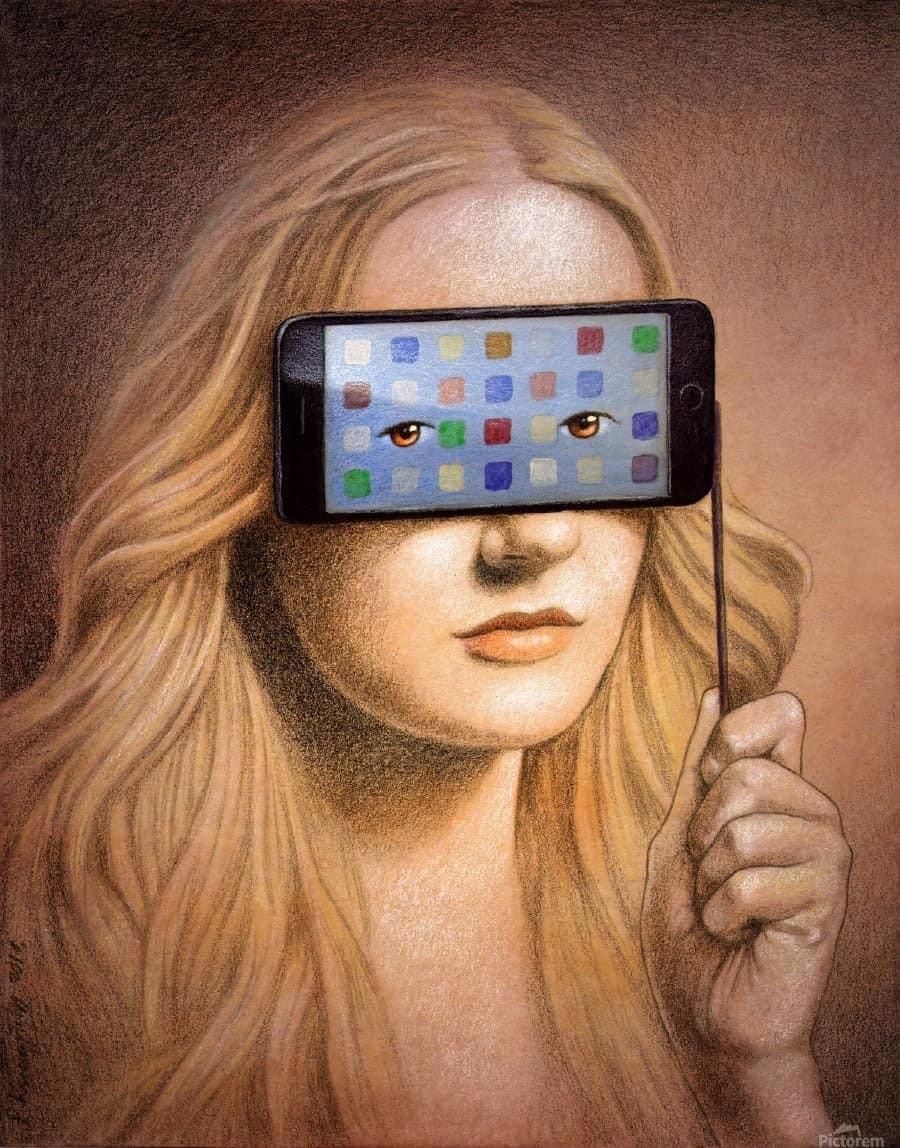
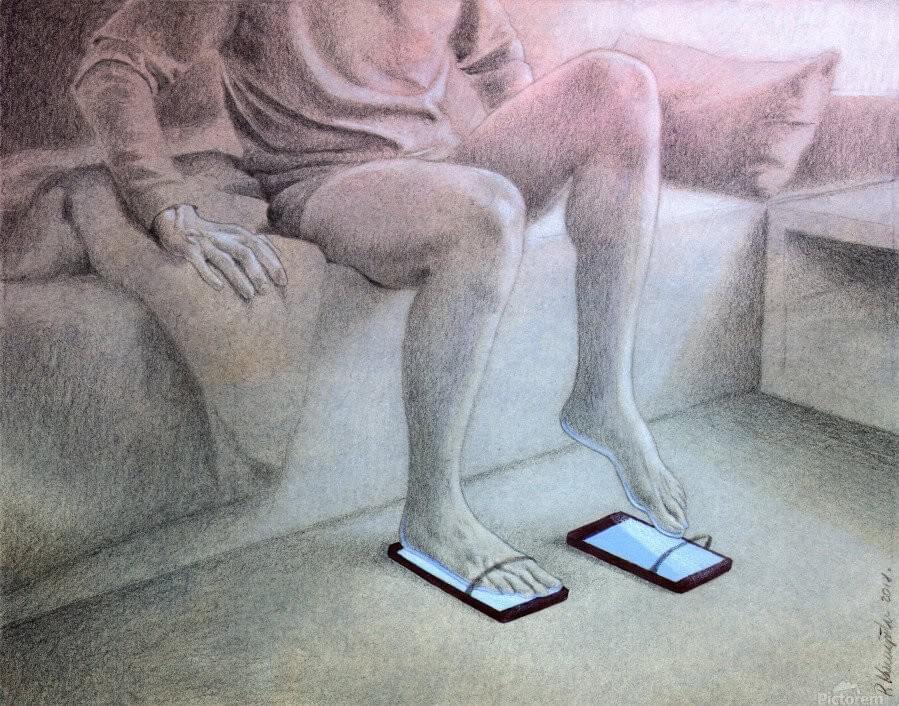
What distinguishes Pawel Kuczynski from many contemporary illustrators is his extraordinary ability to communicate profound ideas without relying on words. Every composition functions like a visual poem, layered with symbolism, emotion, and multiple interpretations. Rather than presenting direct criticism, Kuczynski constructs metaphorical worlds where ordinary objects become extraordinary symbols. A mobile phone transforms into a prison. Social media becomes a stage of illusion. Books evolve into mountains that demand perseverance to climb. Through these transformations, he asks viewers not what they see, but what they understand.
His illustrations frequently examine:
- The psychological effects of digital technology
- Social media dependency
- Information manipulation
- Political propaganda
- Environmental degradation
- Consumer culture
- War and human conflict
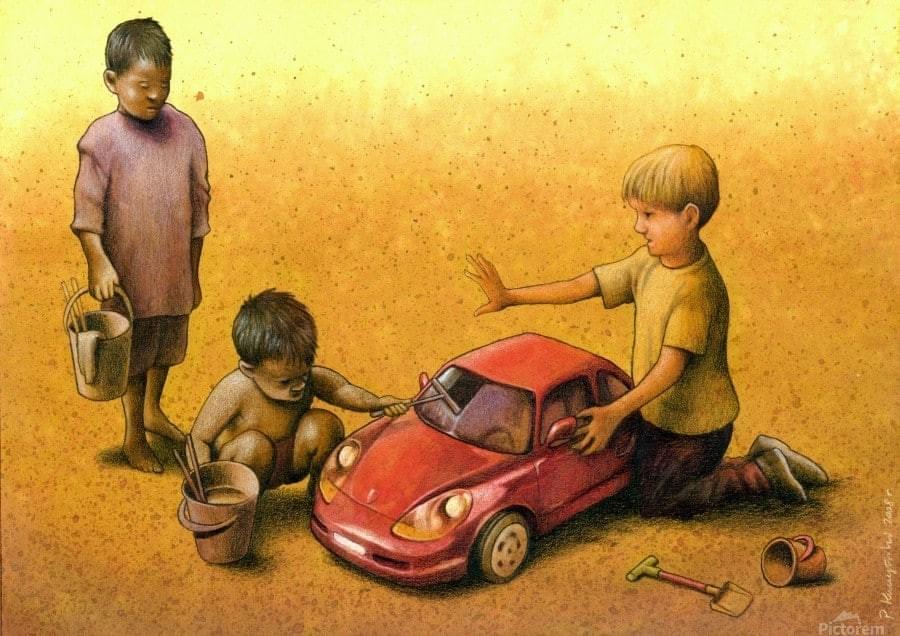
- Social inequality
- Isolation in the digital age
- The value of education and critical thinking
Each artwork presents a universal narrative that remains relevant regardless of changing news cycles.
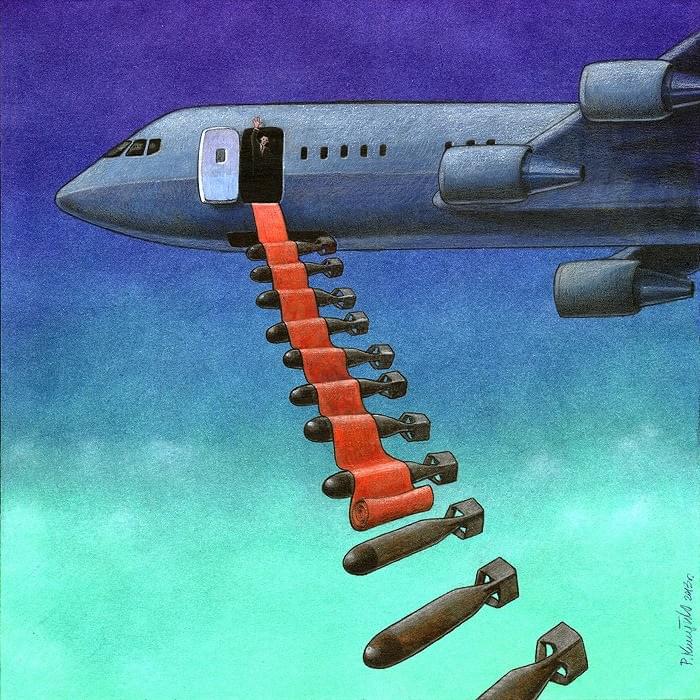
The Language of Symbolism
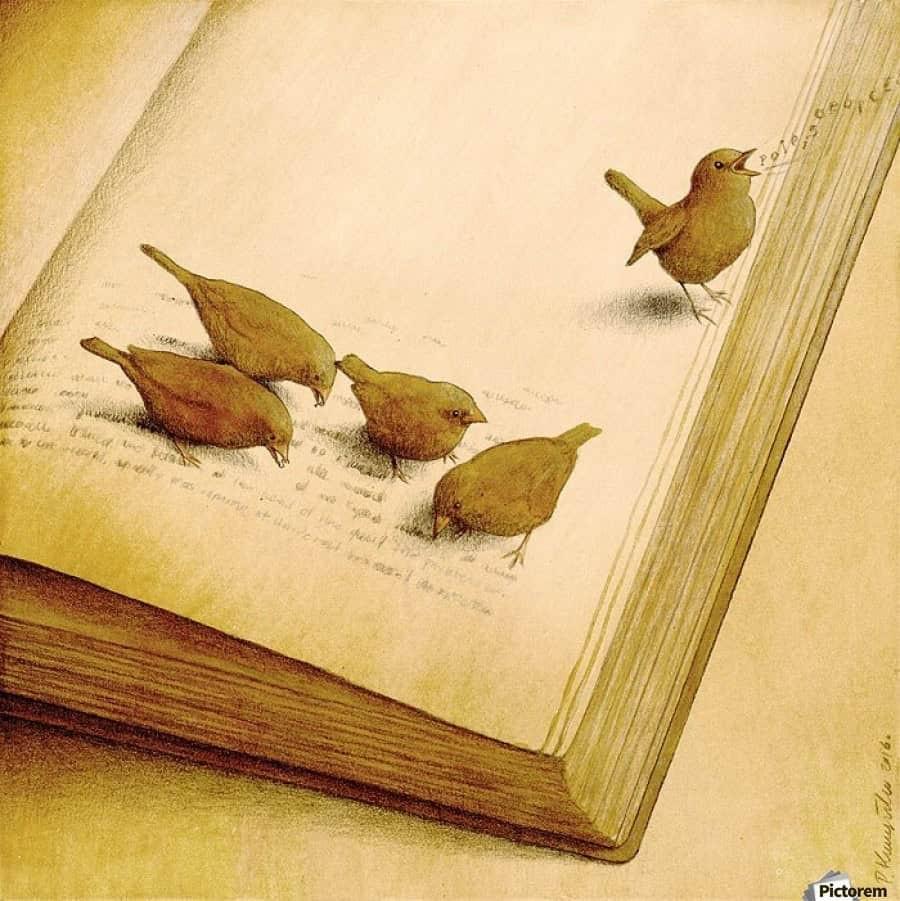
One of Kuczynski's greatest artistic strengths lies in his sophisticated visual vocabulary. Instead of literal representation, he employs metaphor as his primary language. A bird may symbolize freedom denied. A book may represent wisdom earned through perseverance. A smartphone may become a mirror reflecting society's dependence on virtual existence. These symbolic constructions encourage viewers to participate in the artwork rather than passively observe it. Every illustration becomes an invitation to interpret, question, and reflect.
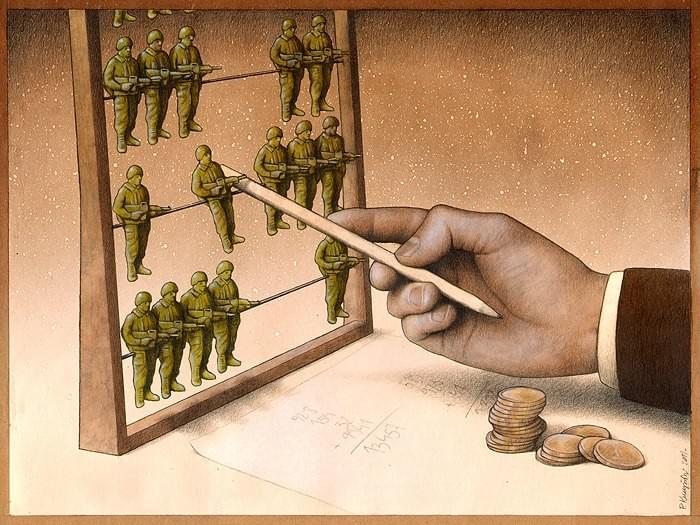
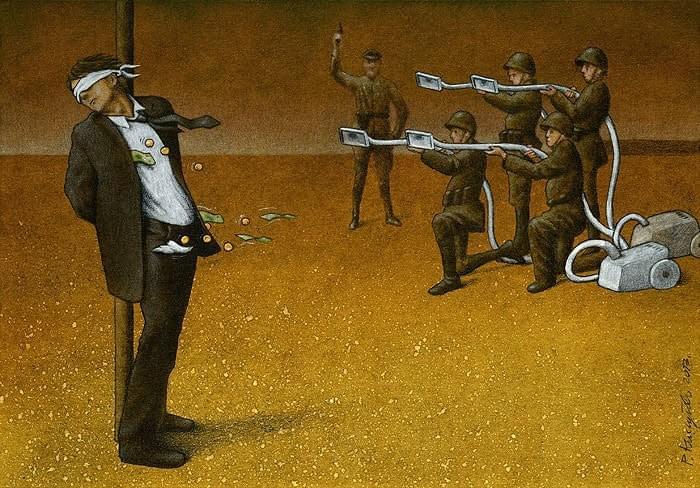
Unlike conventional political cartoons that often rely on humor or exaggeration, Kuczynski's satire is quiet, contemplative, and psychologically penetrating. His works rarely provoke laughter; instead, they generate thoughtful silence.
Light, Shadow, and the Legacy of Classical Painting
Although firmly rooted in contemporary issues, Pawel Kuczynski's artistic language draws inspiration from classical European painting. He has openly acknowledged the influence of Caravaggio, particularly in the dramatic use of chiaroscuro, the interplay of light and shadow, to heighten emotional impact.
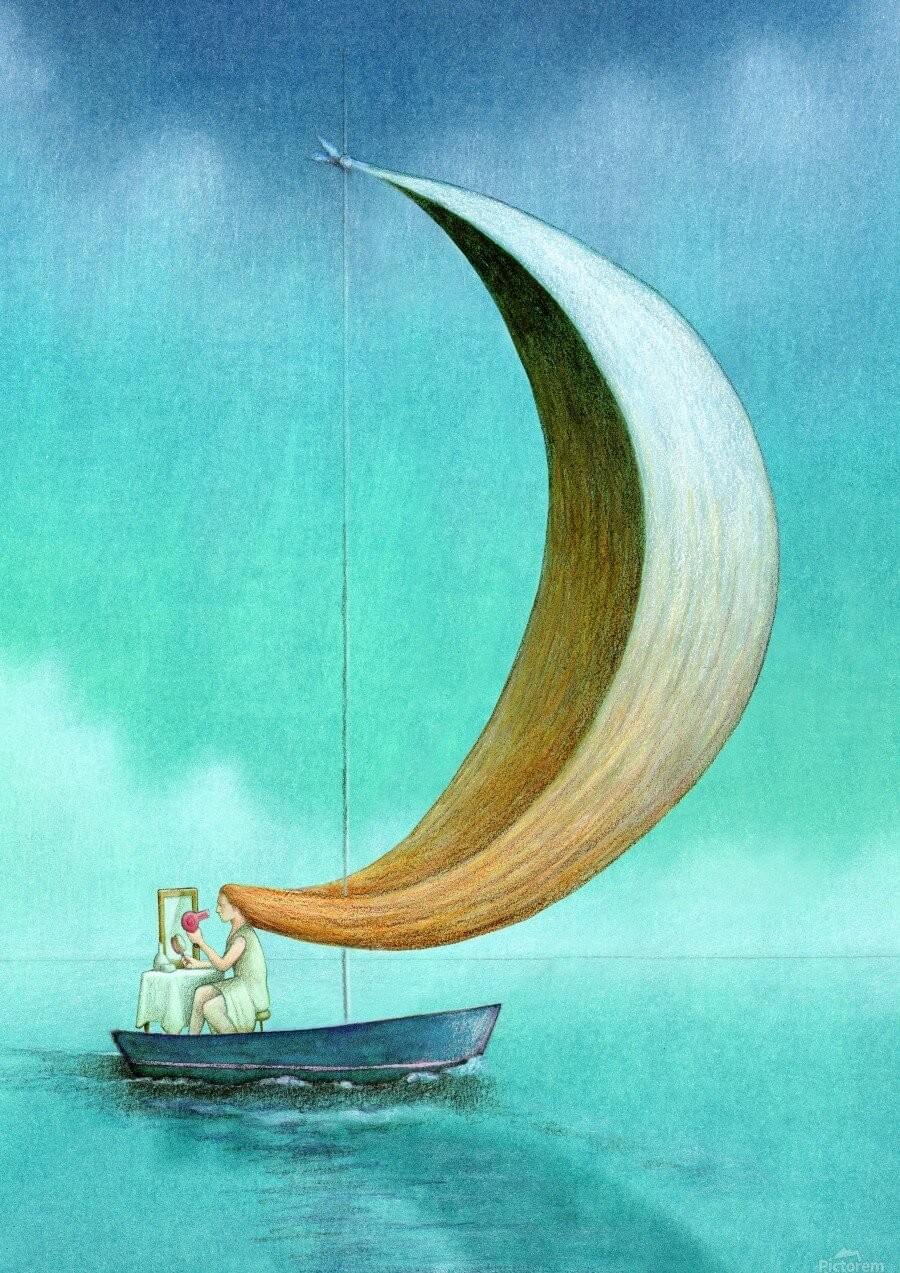
This classical approach gives his illustrations an almost timeless quality. Rich tonal modelling, carefully balanced compositions, and painterly textures elevate each work beyond editorial illustration into the realm of fine art. The result is a fascinating fusion where Renaissance-inspired visual techniques coexist with twenty-first-century concerns.
Technology: Tool or Master?
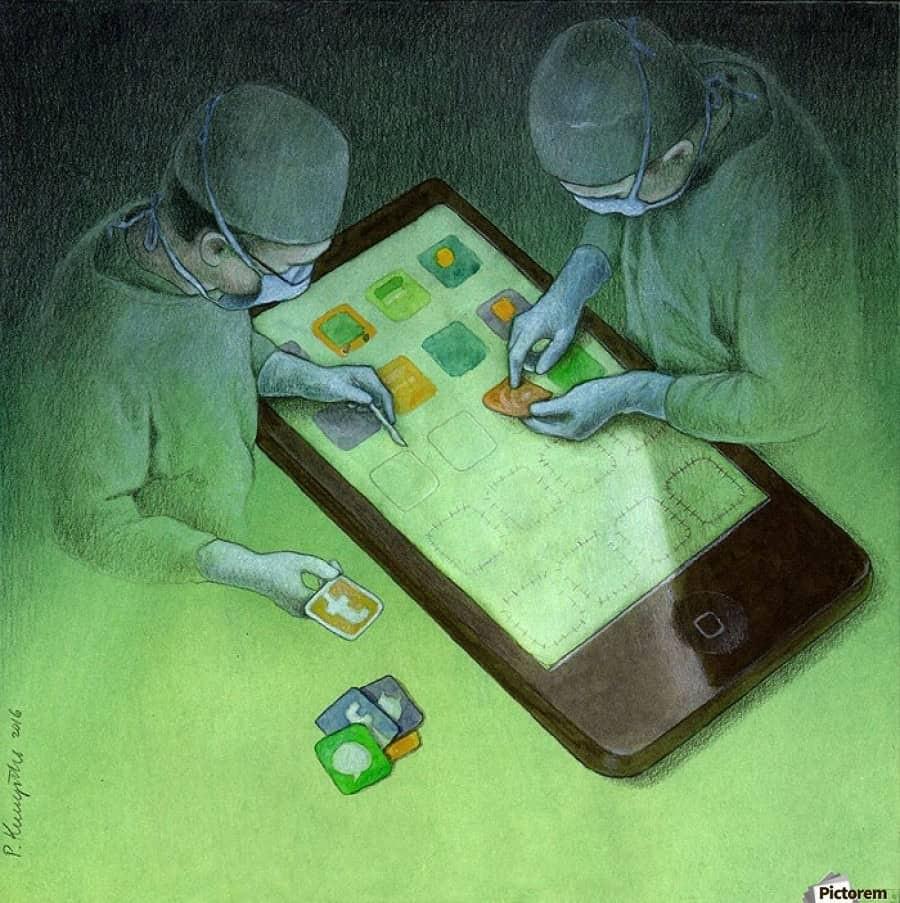
Among the recurring themes in Kuczynski's oeuvre is humanity's increasingly complicated relationship with technology. Rather than rejecting technological progress, his illustrations examine how digital tools reshape attention, communication, relationships, and identity.
His works question:
- Are we controlling technology, or is technology controlling us?
- Have virtual connections replaced genuine human interaction?
- Does constant connectivity create greater understanding, or greater isolation?
These questions resonate powerfully in an age dominated by smartphones, artificial intelligence, social media algorithms, and endless streams of information. His illustrations remind us that progress without reflection can gradually diminish the very qualities that define our humanity.
Knowledge Versus Information
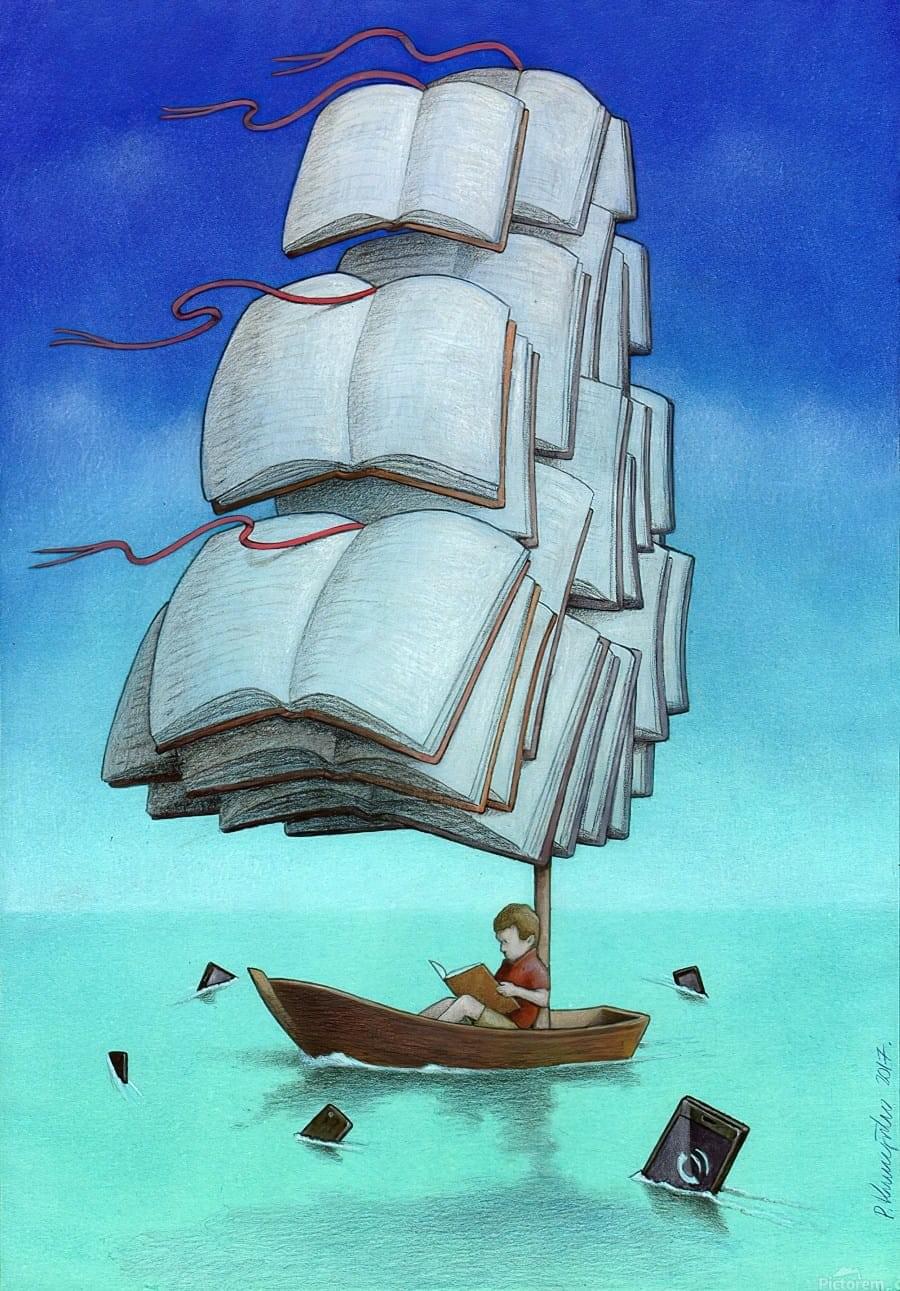
Another recurring motif throughout Kuczynski's work is the distinction between knowledge and information. In many illustrations, books symbolize effort, patience, and intellectual growth, while digital media often appears as fragmented, overwhelming, or superficial. This is a reminder that genuine understanding requires curiosity, discipline, and critical thinking. In today's attention economy, where speed often replaces depth, this message becomes increasingly significant.
The Politics of Manipulation
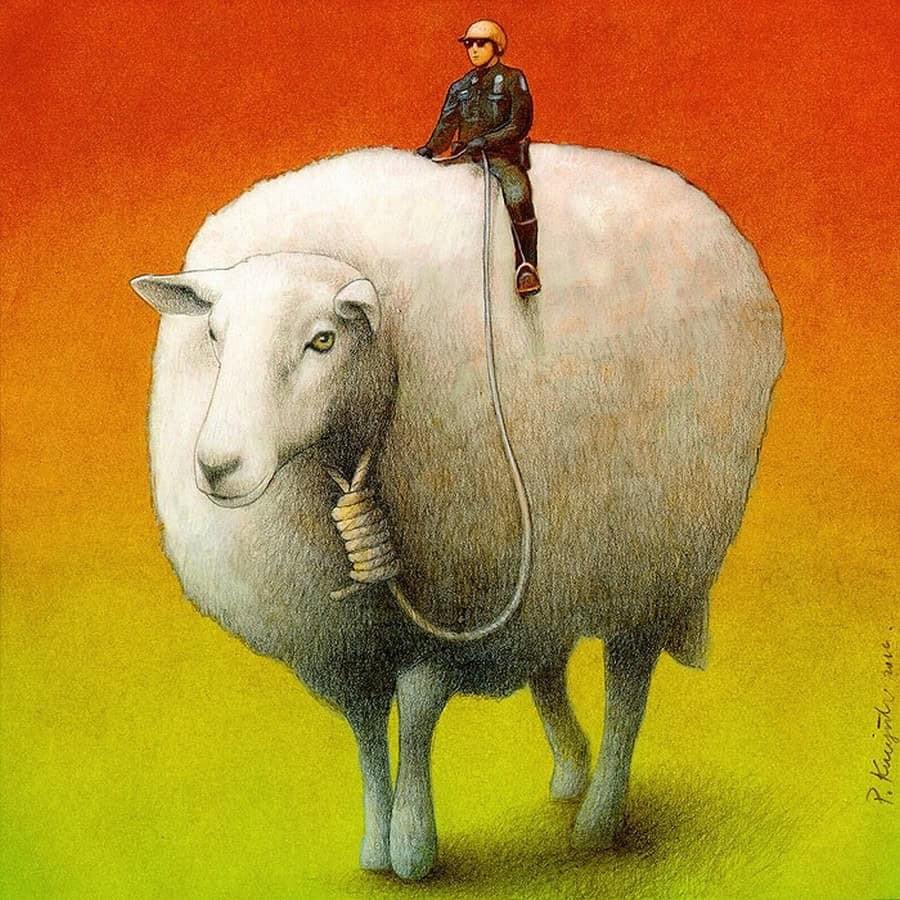
Political rhetoric, propaganda, and misinformation occupy a central place in Kuczynski's visual narratives. Without identifying specific nations or political ideologies, he exposes universal mechanisms of manipulation: language transformed into spectacle, truth concealed beneath performance, and power sustained through carefully constructed narratives.
His illustrations avoid partisan commentary, instead focusing on the psychological structures that allow misinformation and propaganda to flourish across societies. By doing so, he transforms political satire into a broader exploration of human vulnerability.
Ecology Through Visual Metaphor
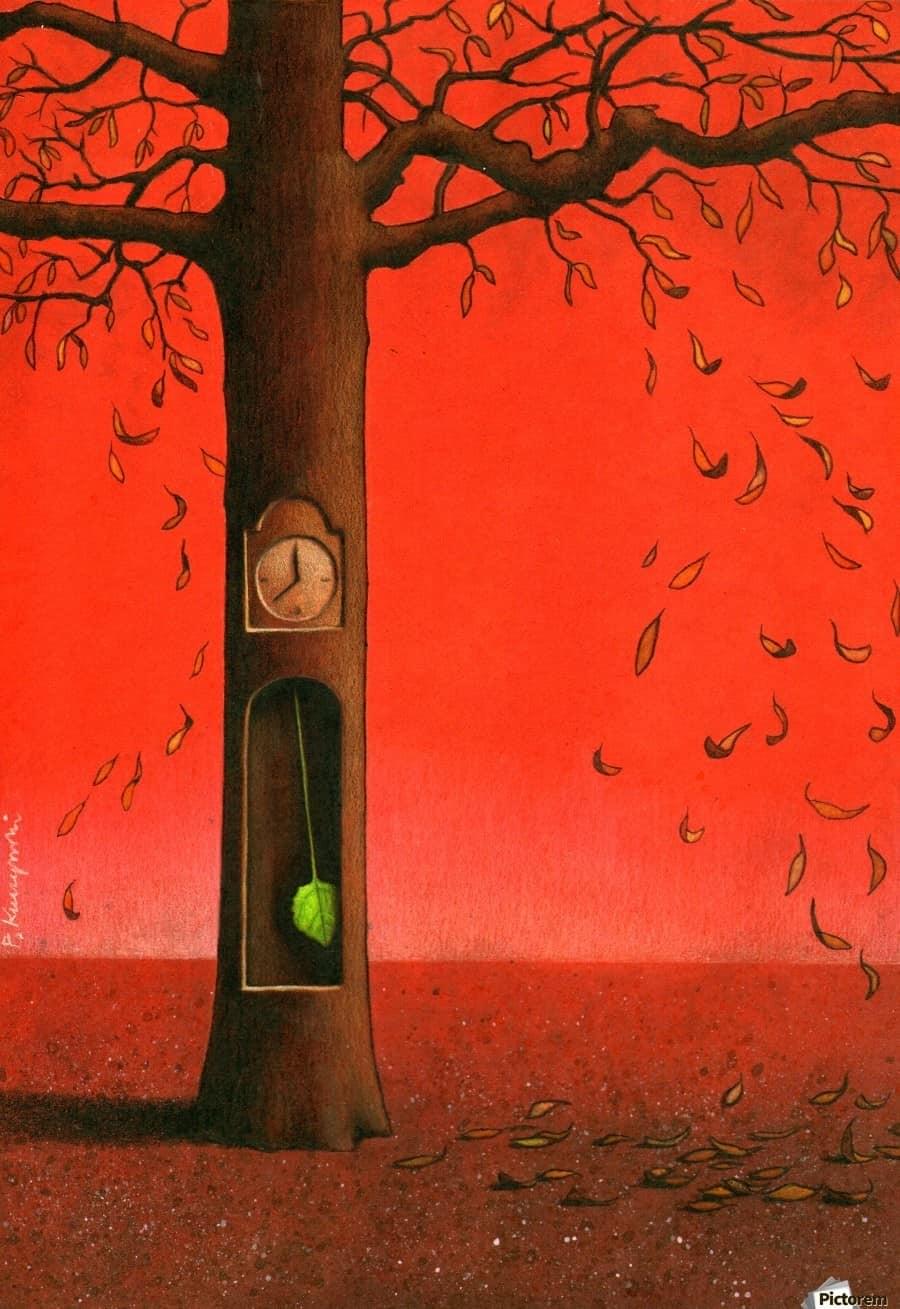
Environmental responsibility is another important thread woven through Kuczynski's portfolio. Rather than illustrating climate change literally, he presents poetic metaphors that reveal humanity's fragile relationship with nature. Trees, oceans, animals, and landscapes become silent witnesses to human excess. These works remind viewers that environmental crises are not abstract scientific concepts but deeply human stories about responsibility, consequence, and future generations.
Art Against War
Perhaps some of the most emotionally powerful illustrations in Kuczynski's collection address war. His anti-war imagery avoids graphic violence. Instead, it explores the emotional aftermath of conflict, the loss of innocence, the manipulation of patriotism, and the devastating human cost hidden behind political narratives. His compositions speak not only about specific conflicts but about the universal tragedy of violence itself. In doing so, his art transcends geography and becomes an enduring plea for empathy and peace.
Why Pawel Kuczynski Matters Today
In a world saturated with instant opinions and fleeting digital content, Pawel Kuczynski demonstrates that a single image can possess greater persuasive power than pages of commentary. His illustrations are not created merely to criticize society; they encourage self-examination. The viewer becomes an active participant, completing the meaning through personal reflection. This is perhaps the greatest achievement of his artistic philosophy. Rather than providing answers, Kuczynski presents carefully constructed visual questions.
Editorial Reflection
Art has long served as society's mirror. Yet the most influential artists do more than reflect reality, they reveal what remains hidden beneath its surface. Pawel Kuczynski belongs to this tradition. His illustrations remind us that satire is not simply entertainment or criticism. At its finest, it is a form of visual philosophy capable of illuminating contradictions, exposing uncomfortable truths, and encouraging deeper understanding. In an increasingly polarized world, his work offers something remarkably valuable: the opportunity to think before reacting, to observe before judging, and to question before accepting. That quiet invitation to reflect may ultimately be the most powerful message any artist can offer.
Artist Profile
Pawel Kuczynski
Born: 1976, Szczecin, Poland
Education: University of Fine Arts, Poznań (Graphic Design)
Profession: Illustrator, Visual Satirist, Graphic Artist
Career: Professional artist since 2004
Recognition: Recipient of more than 140 international illustration and cartoon awards, including the Eryk Prize from the Association of Polish Cartoonists.
Artistic Focus: Social satire, political commentary, technology, environmental concerns, media culture, human behaviour, symbolism, and contemporary visual philosophy.
"The strongest illustrations are those that continue speaking long after the viewer has looked away." — Art4you Magazine Editorial