
A new scholarly monograph by Dr. Ana Stjelja revisits the poetry, cultural memory and enduring voice of one of the UAE’s most influential women poets.
Across the cultural history of the United Arab Emirates, certain voices transcend their own generation. They become part of the memory of a nation, carrying its language, landscapes, values and emotional histories forward. Among those voices is 'Ousha bint Khalifa Al Suwaidi', one of the most celebrated figures in Emirati poetry and a pioneering woman within the tradition of Nabati verse. Affectionately known as 'Fatat Al Arab'- “The Girl of the Arabs”, Ousha created a poetic legacy deeply connected to the cultural consciousness of the Emirates.
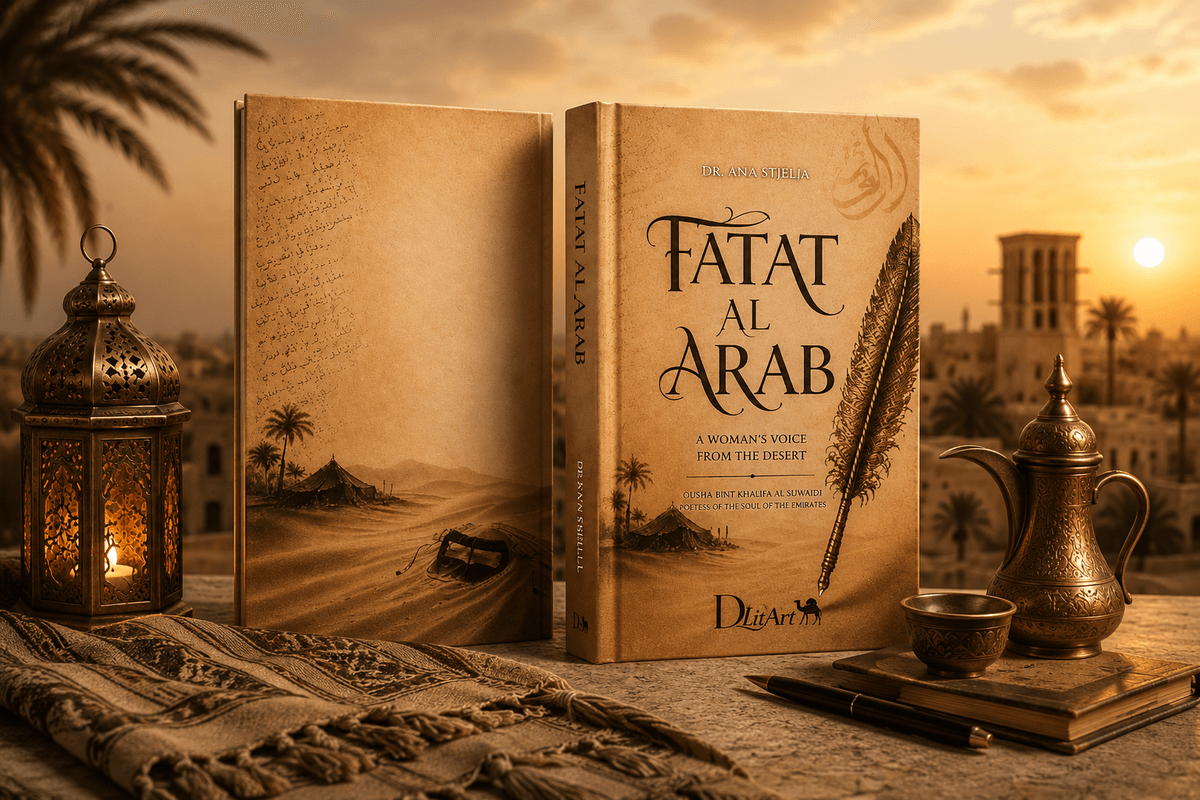
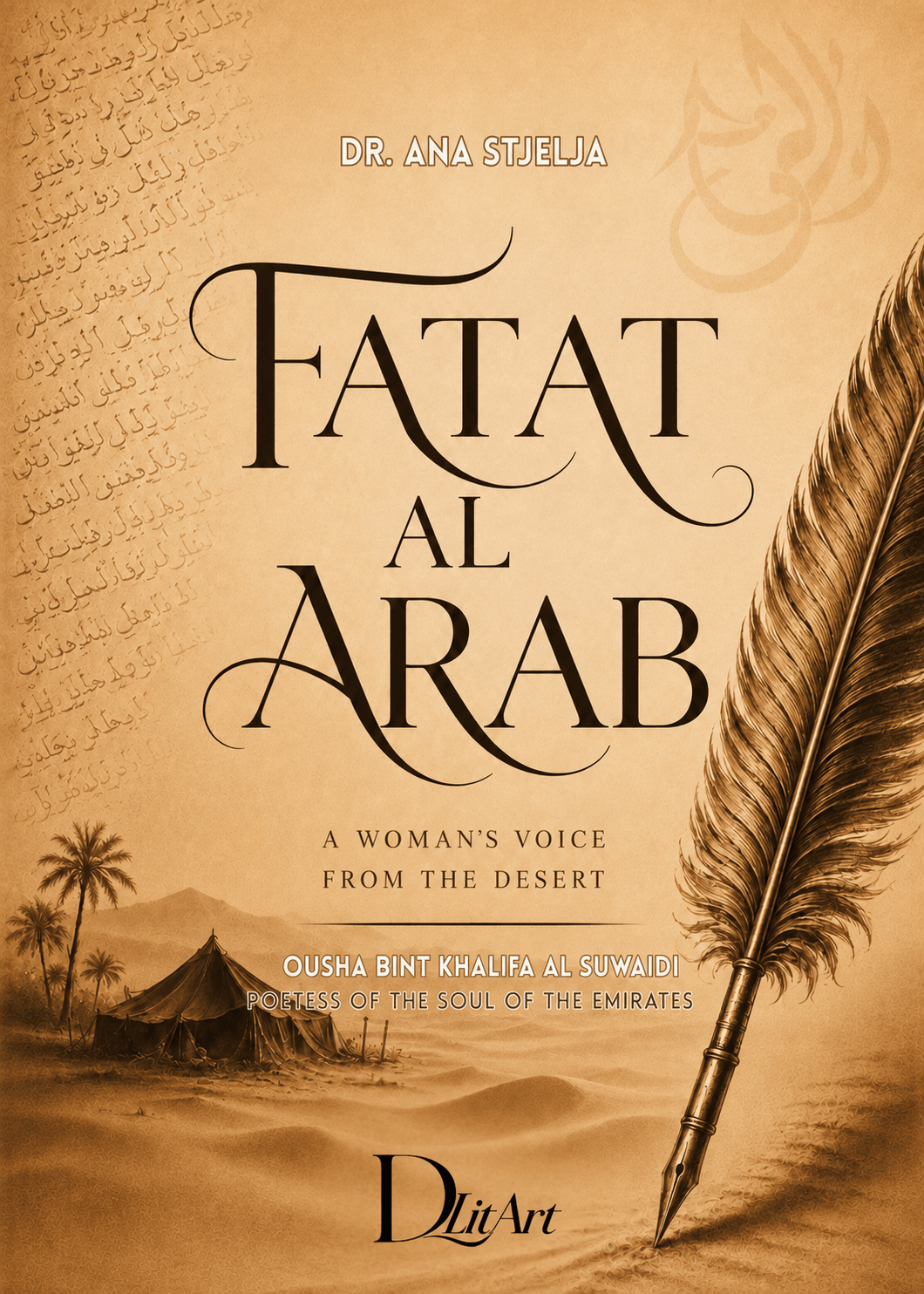
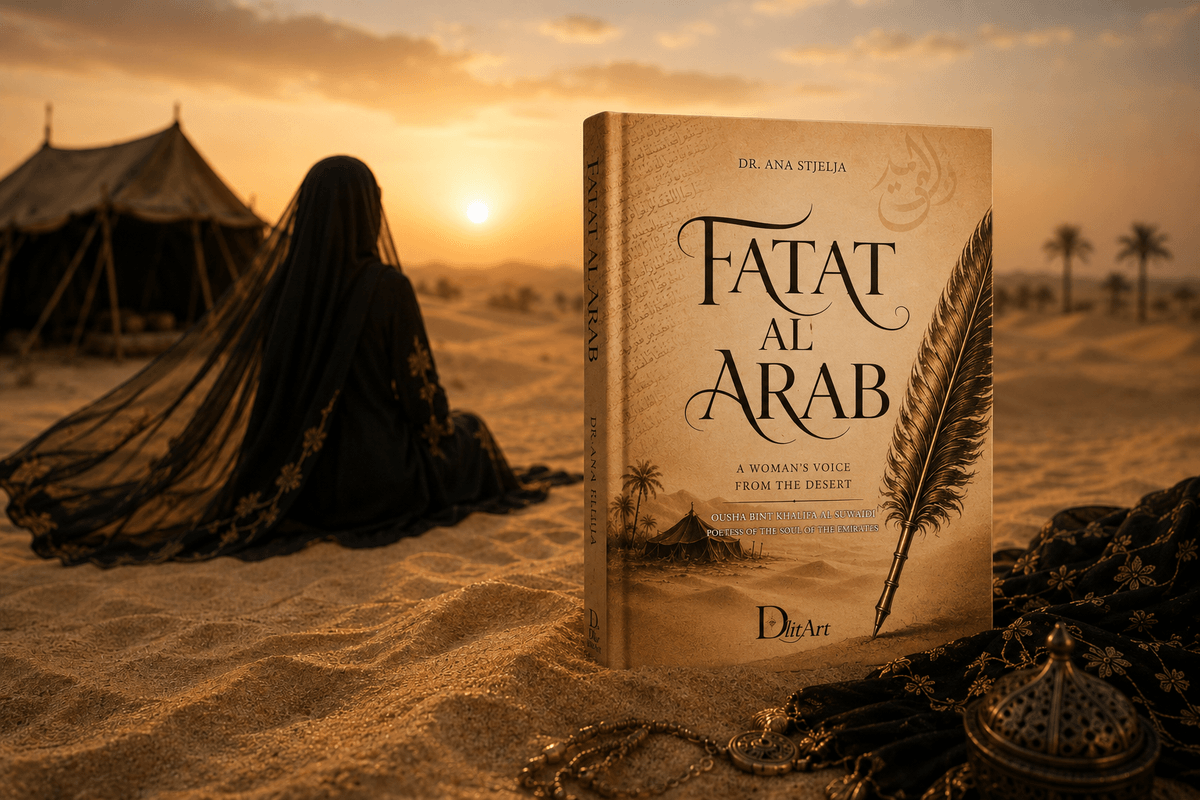
Her extraordinary literary world now becomes the subject of a new scholarly publication, FATAT AL ARAB: A Woman's Voice from the Desert - Ousha bint Khalifa Al Suwaidi: Poetess of the Soul of the Emirates, written by Dr. Ana Stjelja, who also writes under the pen name Ana S. Gad, and published by the Dubai LitArt Society.
Rather than approaching Ousha solely as an important historical poet, the monograph examines her work as a living repository of memory, identity and cultural expression. Through literary and interdisciplinary research, Dr. Stjelja explores how one woman's poetry can illuminate a much broader story: that of heritage, belonging and the place of women's voices within the literary history of the Arab world.
A Poet Who Gave Language to Memory
Ousha Al Suwaidi occupies a remarkable place within Emirati cultural history. Her poetry emerged from the rich oral and literary traditions of the region, particularly 'Nabati poetry', a vernacular poetic form deeply embedded within the cultural life of the Arabian Peninsula. Through her verses, personal emotion meets collective experience. Love, spirituality, heritage and praise appear throughout her poetic world, but beyond individual themes lies something more enduring: a record of cultural consciousness.
In this sense, poetry becomes more than literature. It becomes memory. It carries expressions, values and ways of seeing the world from one generation into another. Ousha's legacy is therefore significant not only because of what she wrote, but because of what her poetry continues to preserve. For contemporary readers encountering a rapidly transforming Emirates, her verses offer another way of understanding the country's cultural journey, through language, emotion and lived experience.
Reading Ousha Through a Contemporary Scholarly Lens
Dr. Ana Stjelja's monograph approaches this legacy from several interconnected perspectives. Her analysis moves through literary scholarship, cultural history, women's literary history and Oriental studies, positioning Ousha's poetry within both the Nabati tradition and wider discussions surrounding cultural identity and women's authorship. The research examines themes including love, spirituality, cultural heritage and panegyric poetry, while considering the social and historical environment surrounding Ousha's literary expression.
This interdisciplinary perspective gives the publication particular relevance. Rather than separating poetry from the culture that produced it, Fatat Al Arab examines literature as part of a larger cultural ecosystem, one shaped by history, language, gender, memory and identity. Ousha's poetry consequently emerges not simply as a collection of verses from the past, but as what may be understood as a living archive of Emirati cultural identity.
From Women's Literary History to the Arab World
The publication also represents a continuation of Dr. Stjelja's longstanding academic interest in recovering and interpreting women's literary histories. Her earlier doctoral research focused on Serbian writer and traveller Jelena J. Dimitrijević, whose life and writing opened important conversations around women, travel, culture and encounters between East and West. That scholarly journey eventually expanded towards the literary traditions of the Arab world.
In Ousha Al Suwaidi, Dr. Stjelja encountered a writer whose work offered fertile ground for exploring many of the questions central to her research: How are women's voices preserved? How does literature become cultural memory? And how can scholarship reconnect contemporary audiences with women whose creative contributions helped shape literary history?
As Dr. Stjelja reflects: “This monograph brings together my long-standing academic interests in women's literary history and Oriental studies. Months of research led me to the Women's Museum (Bait Al Banat) in Dubai, where I realized that preserving women's literary heritage is not only an academic pursuit, it is also an act of cultural remembrance.”
That final idea cultural remembrance, sits at the heart of the publication.
Inside the Women's Museum: When Research Meets Cultural Memory
A particularly meaningful stage of the research took place at the Women's Museum-Bait Al Banat in Dubai. There, Dr. Stjelja encountered Ousha's poetry displayed within a space dedicated to documenting and preserving the history, achievements and cultural contributions of women in the UAE. The experience moved the research beyond books and written sources. Seeing Ousha's words situated within the cultural environment they helped shape offered another dimension to understanding her legacy. The museum's work, under the leadership of Prof. Dr. Rafia Ghubash, further demonstrated the importance of institutions in safeguarding women's histories from disappearance or neglect.
Museums preserve objects. Archives preserve documents. Scholarship preserves knowledge. Poetry, however, can preserve something equally valuable: the emotional memory of a people. The meeting point of these different forms of preservation gives Fatat Al Arab much of its cultural resonance.
The Significance of a Woman's Voice
There is another important dimension to revisiting Ousha Al Suwaidi today. Literary history has not always recorded women's creative contributions with the same visibility afforded to their male contemporaries. Research dedicated specifically to women writers therefore performs more than an academic function, it can restore voices to the cultural narratives to which they have always belonged.
Ousha's stature makes her particularly significant. She was not merely a woman participating in an established poetic tradition. Her distinctive literary voice became an important part of that tradition itself. The title 'Fatat Al Arab' carries symbolic weight in this context. Behind 'The Girl of the Arabs' stands a poet whose words crossed generations and whose legacy demonstrates how deeply a woman's voice can enter collective cultural memory. Through Dr. Stjelja's study, that voice is approached not as an isolated historical phenomenon, but as part of the evolving intellectual and cultural story of the Emirates.
Poetry as a Living Archive
Perhaps one of the most compelling ideas emerging from the monograph is the understanding of poetry as an archive. Archives are usually imagined as collections of manuscripts, photographs, correspondence or historical documents. Yet poems can hold histories of another kind. A poem can preserve the vocabulary of an era. It can preserve relationships with landscape and place. It can reveal spiritual values, ideas of beauty, social customs, emotional codes and cultural references that might otherwise gradually disappear. Viewed through this lens, Ousha Al Suwaidi's poetry becomes an invaluable cultural document as well as an artistic achievement. Her verses belong to literature, but they also belong to the larger history of the UAE.
Scholarship, Heritage and Intercultural Dialogue
The publication reflects the broader mission of the 'Dubai LitArt Society', which seeks to encourage literature, interdisciplinary research and intercultural dialogue through publishing initiatives focusing on the UAE and the wider Arab world's cultural heritage. At a time when cultural institutions are increasingly exploring how heritage can remain meaningful to new generations, scholarly publications such as 'Fatat Al Arab' occupy an important space between academic research and cultural preservation. They invite readers not simply to look backwards, but to reconsider how the past continues to live within contemporary identity. For international audiences, the monograph also provides another pathway into Emirati literature beyond the country's increasingly visible contemporary cultural landscape. It draws attention to the literary traditions and individual voices that preceded, and helped inform, the cultural confidence visible in the Emirates today.
Beyond the Desert, the Voice Remains
The story at the centre of 'Fatat Al Arab' ultimately extends beyond one poet and one publication. It is about what societies choose to remember. It is about the scholars, museums, cultural organisations and publishers who ensure that important voices remain accessible. And it is about literature's remarkable ability to carry human experience across generations. Ousha bint Khalifa Al Suwaidi's poetry emerged from a particular cultural landscape, yet its themes: love, devotion, longing, identity and belonging, speak to experiences that transcend geography.
Through FATAT AL ARAB: A Woman's Voice from the Desert, Dr. Ana Stjelja brings renewed scholarly attention to that legacy while opening another conversation about the place of women within cultural history. The desert may have shaped the landscape surrounding Ousha's poetic imagination, but her voice travelled far beyond it. And that voice continues to speak.
About the Publication
Title: FATAT AL ARAB: A Woman's Voice from the Desert-Ousha bint Khalifa Al Suwaidi: Poetess of the Soul of the Emirates | Author: Dr. Ana Stjelja | Pen Name: Ana S. Gad | Publisher: Dubai LitArt Society | Format: Digital Edition | Focus: Emirati Literature | Nabati Poetry | Women's Literary History | Cultural Heritage | Oriental Studies
The digital edition is available to read online.
- Written by By Rengi Cherian | Editor in Chief | Art4you Magazine