
Canada: Art has many forms, and sometimes the most powerful stories are told through threads, fabrics and materials we use in everyday life. The World of Threads Festival 2026–2027 brings these stories together in a remarkable celebration of creativity, culture and human connection.
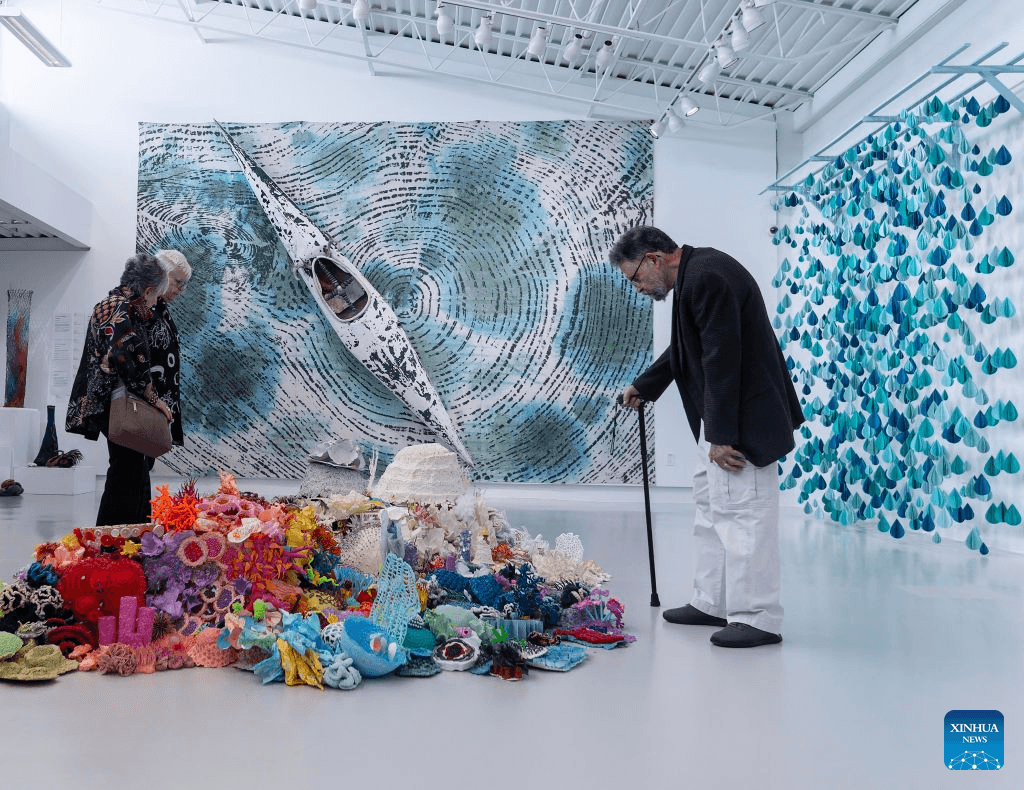
Visitors view artworks on display at the World of Threads Festival 2026 in Oakville, Ontario, Canada, on Sept. 28, 2026. Showcasing contemporary fibre and textile art in all forms from around the world, the event will last till Jan. 17, 2027. (Photo by Zou Zheng/Xinhua)
The "World of Threads Festival 2026–2027" has transformed the Queen Elizabeth Park Community and Cultural Centre in Oakville, Ontario, Canada, into a vibrant world of contemporary fibre and textile art. Bringing together 192 artists from around the world and more than 900 artworks, the festival celebrates the creative possibilities of textiles while exploring important issues such as environmental protection, identity, memory, conflict and human relationships.
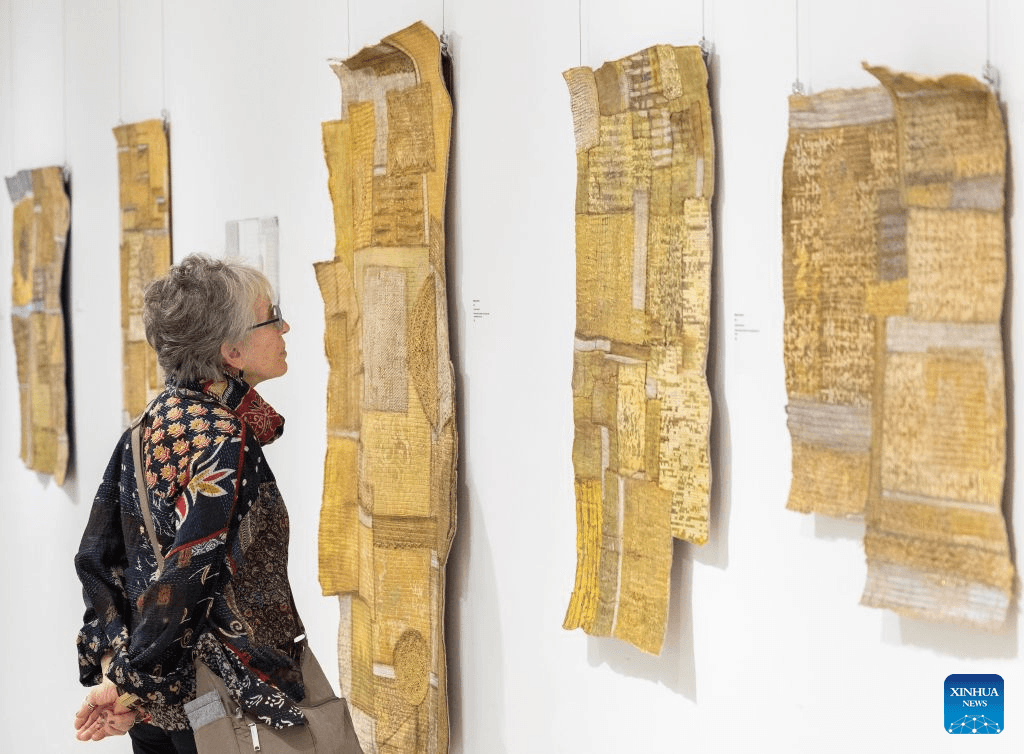
A visitor views artworks on display at the World of Threads Festival 2026 in Oakville, Ontario, Canada, on Sept. 28, 2026. Showcasing contemporary fibre and textile art in all forms from around the world, the event will last till Jan. 17, 2027. (Photo by Zou Zheng/Xinhua)
Organized and curated by Dawne Rudman and Gareth Bate, the festival is a not-for-profit initiative supported by dedicated volunteers. Over the years, it has become an important international platform for artists working with fibre, fabric, embroidery, weaving, quilting and mixed media. The festival aims to bring greater recognition to textile art as a meaningful and powerful form of contemporary artistic expression.
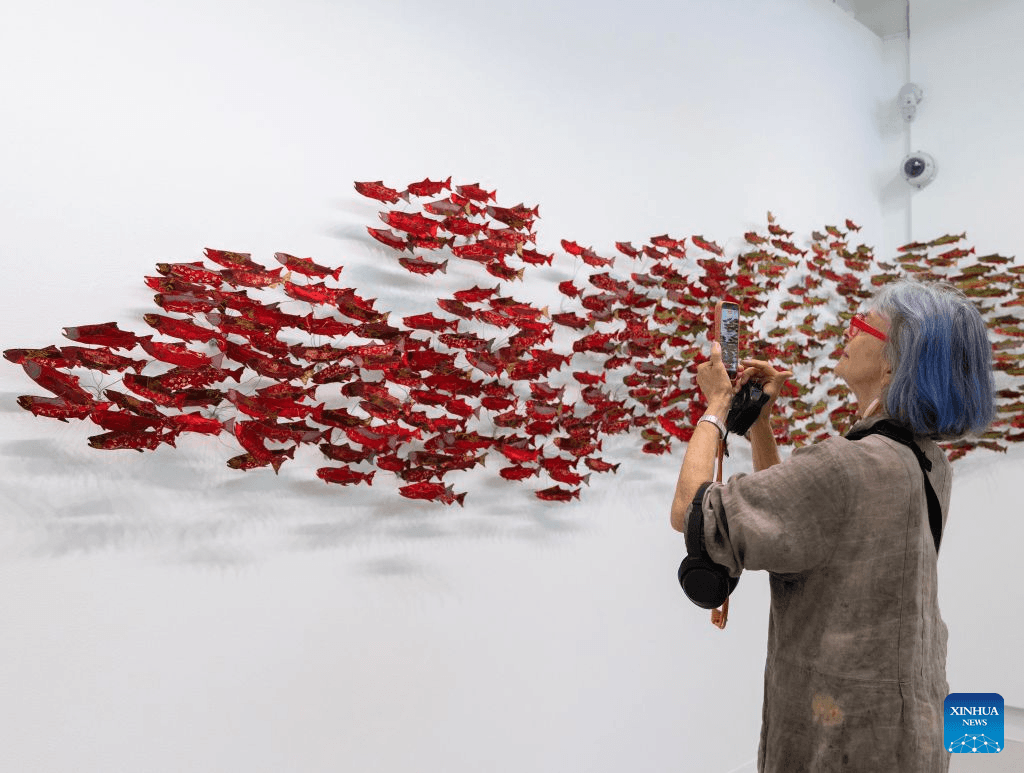
A visitor films artworks on display at the World of Threads Festival 2026 in Oakville, Ontario, Canada, on Sept. 28, 2026. (Photo by Zou Zheng/Xinhua)
One of the most interesting aspects of the festival is its setting. The Queen Elizabeth Park Community and Cultural Centre, a former high school transformed into a cultural space, offers galleries, corridors, halls and open public areas for exhibitions. Rather than presenting artworks only inside traditional gallery rooms, the festival allows visitors to discover art throughout the building. Large installations, individual exhibitions and carefully arranged group displays create an engaging experience where every corner offers something new.
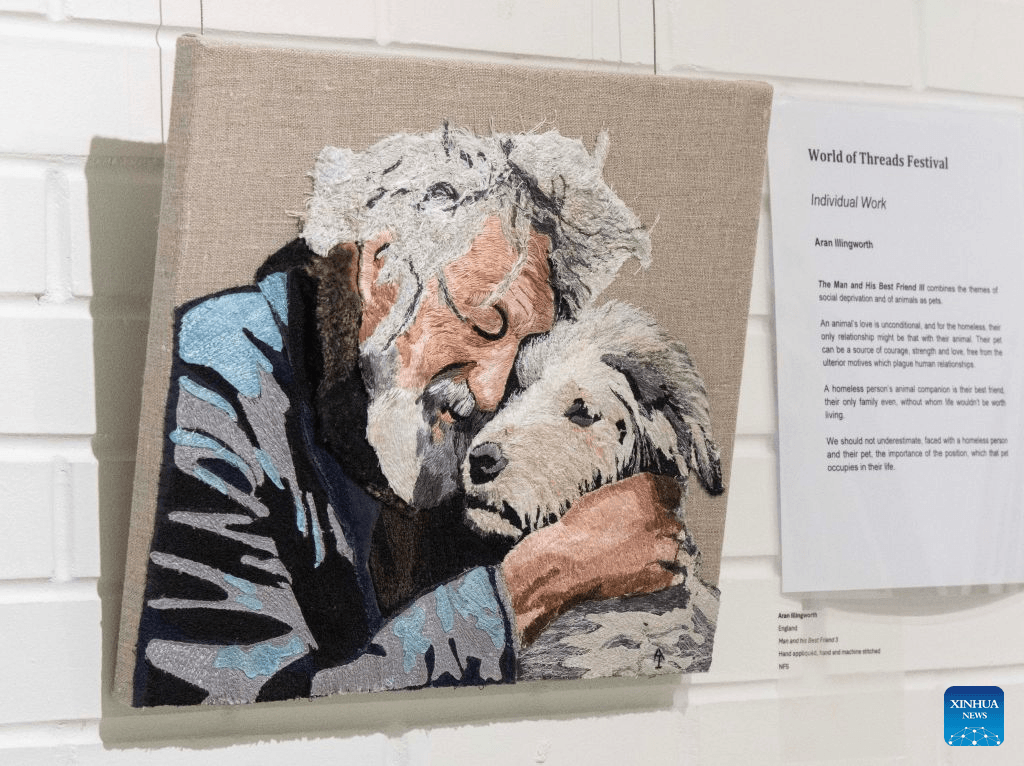
An artwork on display is seen at the World of Threads Festival 2026 in Oakville, Ontario, Canada, on Sept. 28, 2026. (Photo by Zou Zheng/Xinhua)
Water Stories: Exploring Our Connection with Nature
One of the major highlights of this year's festival is Water Stories, an exhibition exploring the relationship between people and water. Through imaginative installations and textile-based artworks, participating artists examine water as a source of life, memory, culture and environmental concern. Among the striking works is Resonance by Canadian artist Stan Olthuis. The installation features a large kayak with deer antlers mounted against a printed textile background. The kayak represents hunting, survival and respect for water, encouraging viewers to reflect on the close relationship between people, nature and traditional ways of life.
Another remarkable artwork is My Reclamation by Lorna Livey, an artist based in Etobicoke, Canada. Inspired by her experiences as a snorkeler, Livey has created an elaborate coral reef sculpture that highlights the damage caused by climate change, pollution and human activity. The artwork presents different stages of coral reef life, from colourful and healthy marine environments to bleached and damaged sections. Created over three years, the sculpture combines crochet, hand sewing, papier-mâché, quilling and recycled materials. Old prints, collected buttons, discarded objects and even unusual materials such as dog hair and dryer lint have been transformed into a detailed underwater world. Through this work, Livey reminds visitors that the beauty of our oceans is fragile. Her installation encourages people to think about waste, overconsumption and the urgent need to protect marine ecosystems.
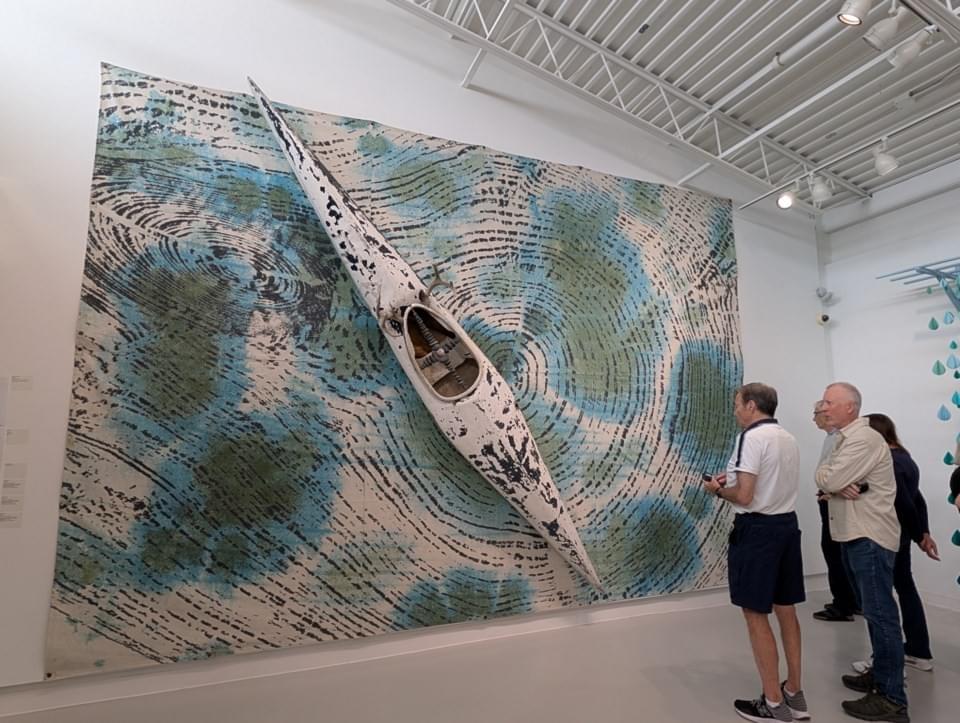
Resonance by Stan Olthuis on display at the Water Stories exhibit. (Photo by Ramona Leitao)
Threads That Speak About War and Displacement
Beyond environmental themes, the festival also explores the human experiences of conflict, loss and displacement. The War and Displacement exhibition brings together artists who use textiles to communicate stories of suffering, remembrance and resilience. Canadian-based artist Carla Costuros presents Quilts for the Children of Gaza, incorporating Palestinian tatreez embroidery and words from Palestinian poets. Her work uses the familiar and comforting form of a quilt to express difficult realities and draw attention to voices affected by conflict.
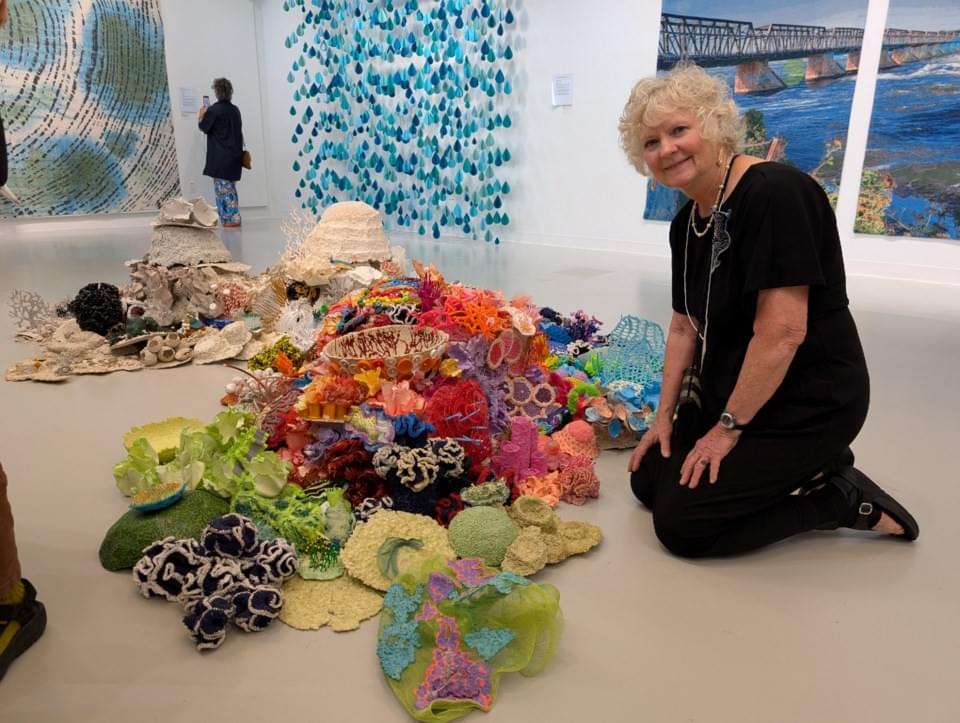
Lorna Livey with her piece, My Reclamation, at the World of Threads Festival. (Photo by Ramona Leitao)
American artist Laurel Izard also uses quilting to explore the impact of war on children. Her artworks combine baby blankets with contrasting images of drones and words from children's prayers. The combination of childhood innocence and military imagery creates a powerful emotional response, encouraging viewers to consider how conflict affects the most vulnerable members of society. These works demonstrate how textile art can move beyond decoration and craftsmanship to become a strong form of social commentary. Through fabric, stitching and personal symbolism, artists create space for reflection, compassion and understanding.
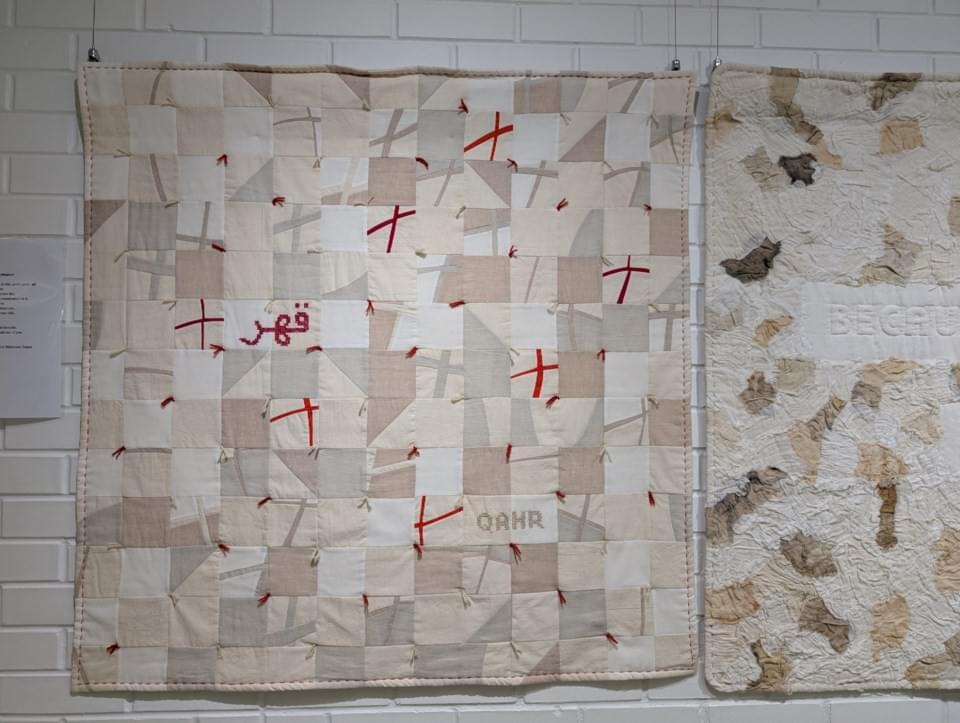
Quilts for the Children of Gaza by Carla Costuros. (Photo by Ramona Leitao)
Traditional Techniques Meet Contemporary Creativity
The festival also celebrates artists who bring traditional textile techniques into new creative directions. Quebec artist Mélany Fay works with kinusaiga, a Japanese technique that uses fabric pieces to create images without conventional stitching. By carefully placing fabric into prepared surfaces, she creates geometric compositions filled with colour, texture and detail. Originally working mainly with painting, Fay began exploring textile art as a way to reuse materials. Today, she combines her painting knowledge with fabric-based techniques, using dyed textiles and colour gradients to create depth and movement.
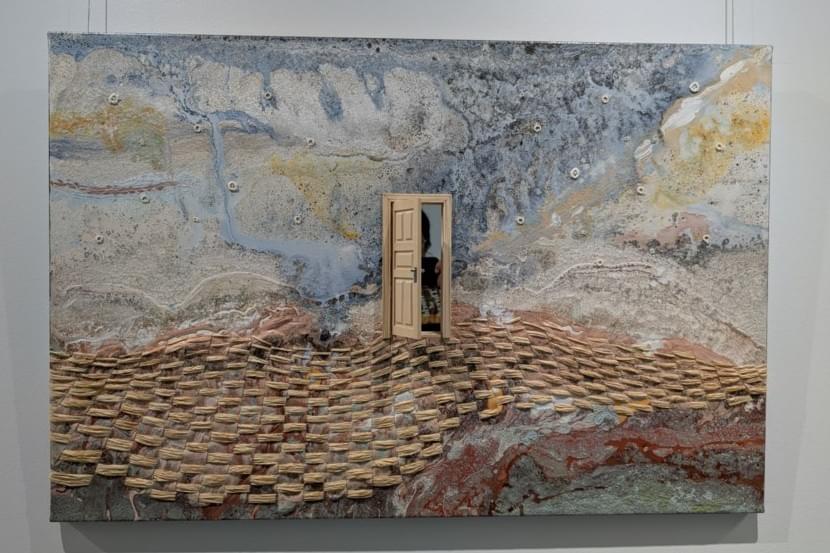
Sense of Self by Bernadette Badali and Craig Beal. (Photo by Ramona Leitao)
Her work shows how traditional craftsmanship can evolve through experimentation, sustainability and contemporary artistic thinking. Across the festival, visitors can experience a wide variety of techniques, from embroidery and weaving to sculptural installations and recycled-material artworks. Each artist brings a different cultural background, personal story and creative approach, making the exhibition a rich meeting point of artistic traditions and modern ideas.
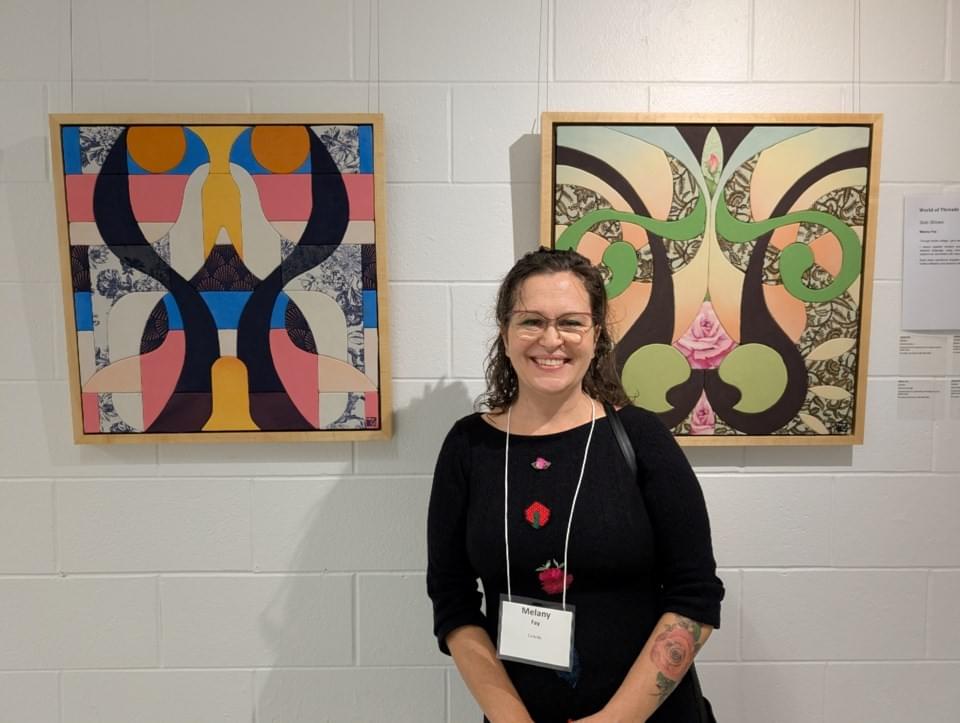
Artist Mélany Fay with her artwork at the World of Threads Festival. (Photo by Ramona Leitao)
Giving Fibre Art the Recognition It Deserves
One of the important messages behind the World of Threads Festival is that fibre and textile art deserve the same recognition as painting, sculpture and other established contemporary art forms. For many years, textile practices were often viewed mainly as domestic crafts rather than fine art. Yet artists working with threads and fabrics have continually challenged these boundaries, creating ambitious installations, conceptual works and deeply personal artistic statements. Gareth Bate has spoken about the changing position of textile art in the wider art world, highlighting how the medium has historically been overlooked despite the extraordinary creativity of its practitioners. He also points to the influence of gender, as women make up a significant proportion of artists working in this field. The festival plays an important role in changing these perceptions. By presenting fibre artworks on a large international platform, it encourages audiences to appreciate the artistic skill, cultural knowledge and conceptual depth behind textile practices.
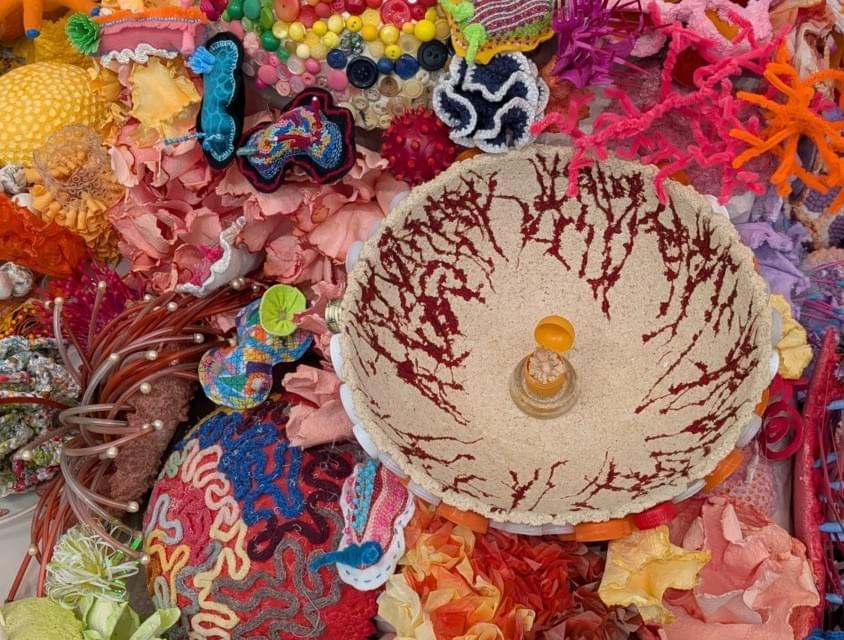
Lorna Livey used recycled materials and pieces she would find on her walks to create her coral reef art. (Photo by Ramona Leitao)
A Global Celebration of Creativity and Connection
The scale of the World of Threads Festival 2026–2027 reflects the growing international interest in fibre and textile art. With 192 participating artists and more than 900 works on display, the exhibition offers an extraordinary variety of artistic voices. According to Gareth Bate, the previous edition attracted approximately 80,000 visitors, demonstrating the strong public interest in this evolving art form. The festival's curatorial approach also makes it distinctive. Rather than following only a fixed exhibition theme, the organizers use a method they describe as synchronicistic curating, allowing connections between submitted artworks to help shape the exhibitions. This creates unexpected visual relationships and conversations between artists, materials and ideas.
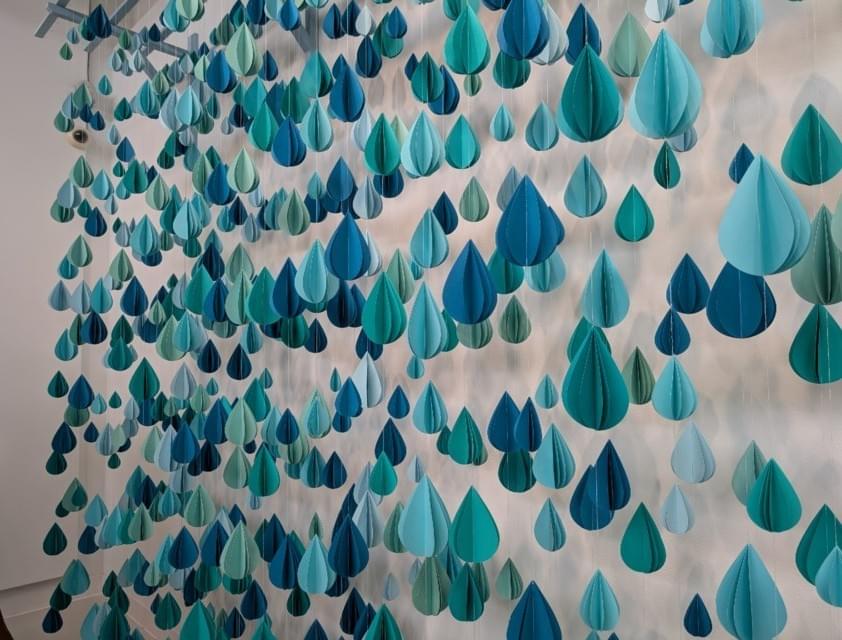
Paper Rain by Canadian-based artist Mackenzie Browning. (Photo by Ramona Leitao)
As visitors move through the galleries, corridors and public spaces, they encounter artworks that are beautiful, challenging, emotional and thought-provoking. Some celebrate the joy of colour and craftsmanship, while others address environmental destruction, cultural identity, war and social responsibility. Together, these works reveal the remarkable ability of fibre art to connect personal experiences with universal human concerns.

192 artists and curators Dawne Rudman (in the middle, sitting in a chair, wearing blue) and Gareth Bale (bottom row in the middle) took part in this year's World of Threads Festival, which is currently open at the Queen Elizabeth Park Community and Cultural Centre in Oakville. (Photo by Ramona Leitao)
Weaving a Future for Contemporary Textile Art
The World of Threads Festival 2026–2027 is more than an exhibition. It is a celebration of artistic freedom, cultural exchange and the power of materials to tell meaningful stories. From delicate embroidery to large-scale installations, the festival demonstrates that threads and textiles can carry memories, preserve traditions, challenge social ideas and inspire environmental awareness. By bringing international artists together in one welcoming cultural space, Dawne Rudman and Gareth Bate continue to build a platform where contemporary fibre art can be seen, understood and appreciated by wider audiences.
In a world increasingly shaped by technology and rapid change, the festival reminds us of the lasting importance of handmade expression. Every stitch, knot, layer and woven surface carries the presence of the artist, connecting material, imagination and human experience. The World of Threads Festival 2026–2027 invites audiences to look beyond the fabric and discover the stories, emotions and ideas woven into every artwork.

Black Rose and Moonlit by Indian-based artist Payal Jain. (Photo by Ramona Leitao)
Festival Information
Event: World of Threads Festival 2026–2027
Venue: Queen Elizabeth Park Community and Cultural Centre, Oakville, Ontario, Canada
Curators and Organizers: Dawne Rudman and Gareth Bate
Participating Artists: 192 international artists
Artworks: More than 900
Exhibition Closing Date: January 17, 2027
Official Website: https://worldofthreadsfestival.com
Editorial Feature | Art4you Magazine | International Art & Culture