
Egypt: Agenda Exhibition’s 19th edition transforms a simple spatial limitation into a compelling portrait of diversity, dialogue and the evolving identity of Egyptian visual culture.
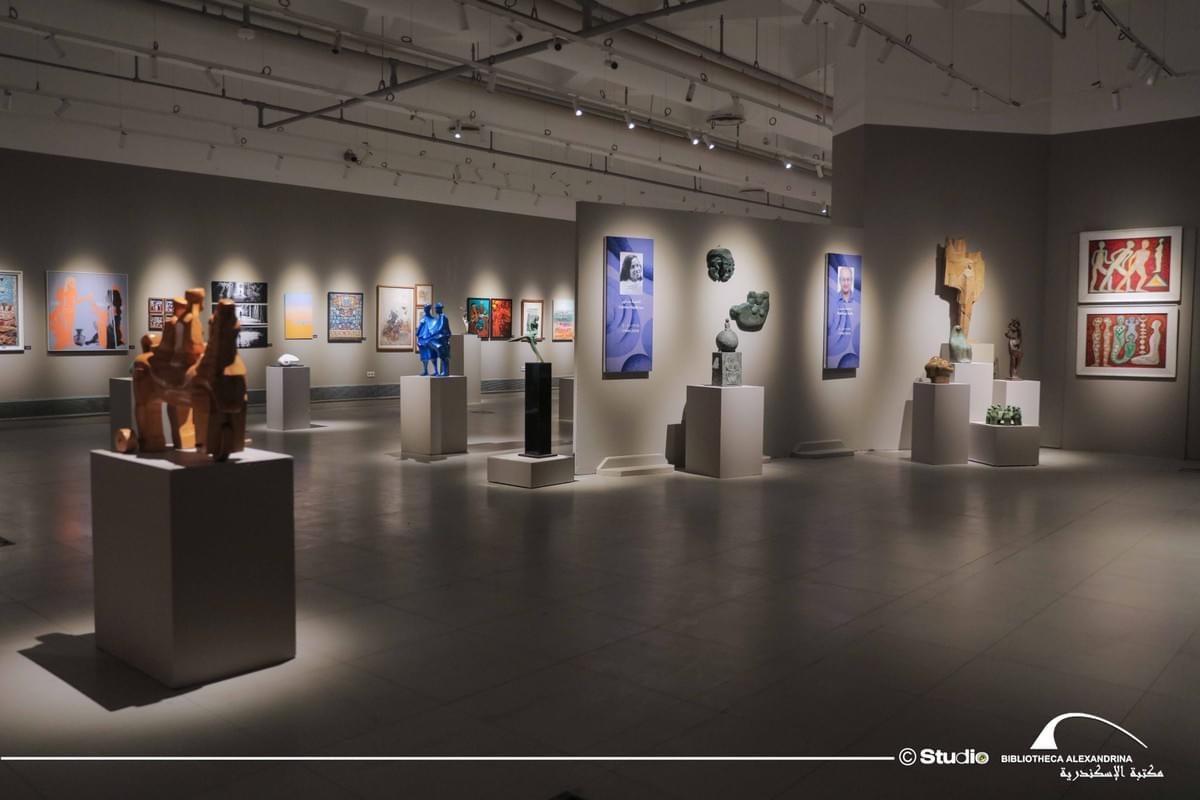
What can an artist say within a single square meter? At the 19th edition of Agenda Exhibition, the answer appears to be: almost anything.
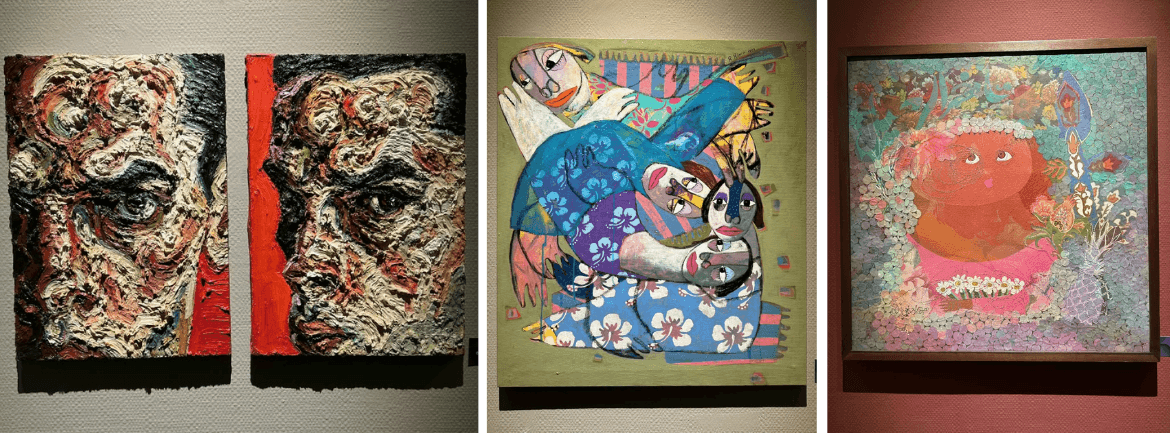
Across the East and West Exhibition Halls of the Bibliotheca Alexandrina’s Conference Center, 193 visual artists come together within an exhibition whose apparent spatial restriction becomes its most compelling curatorial proposition. Painting, photography, sculpture, printmaking, drawing, ceramics and video art occupy a shared environment, yet no single discipline is permitted to define the exhibition. Instead, Square Meter: A Free Space for Creativity becomes a mosaic of individual positions, a portrait of contemporary Egyptian art constructed not through one dominant narrative, but through many voices existing side by side.
Now in its nineteenth edition, Agenda has matured beyond the character of an annual group exhibition. It has become an important recurring meeting point within Egypt’s visual arts landscape: a place where emerging practices encounter established careers, where technical traditions coexist with experimentation, and where the visitor can observe not only individual artworks but the changing artistic consciousness of a country.
The Square Meter as a Curatorial Idea
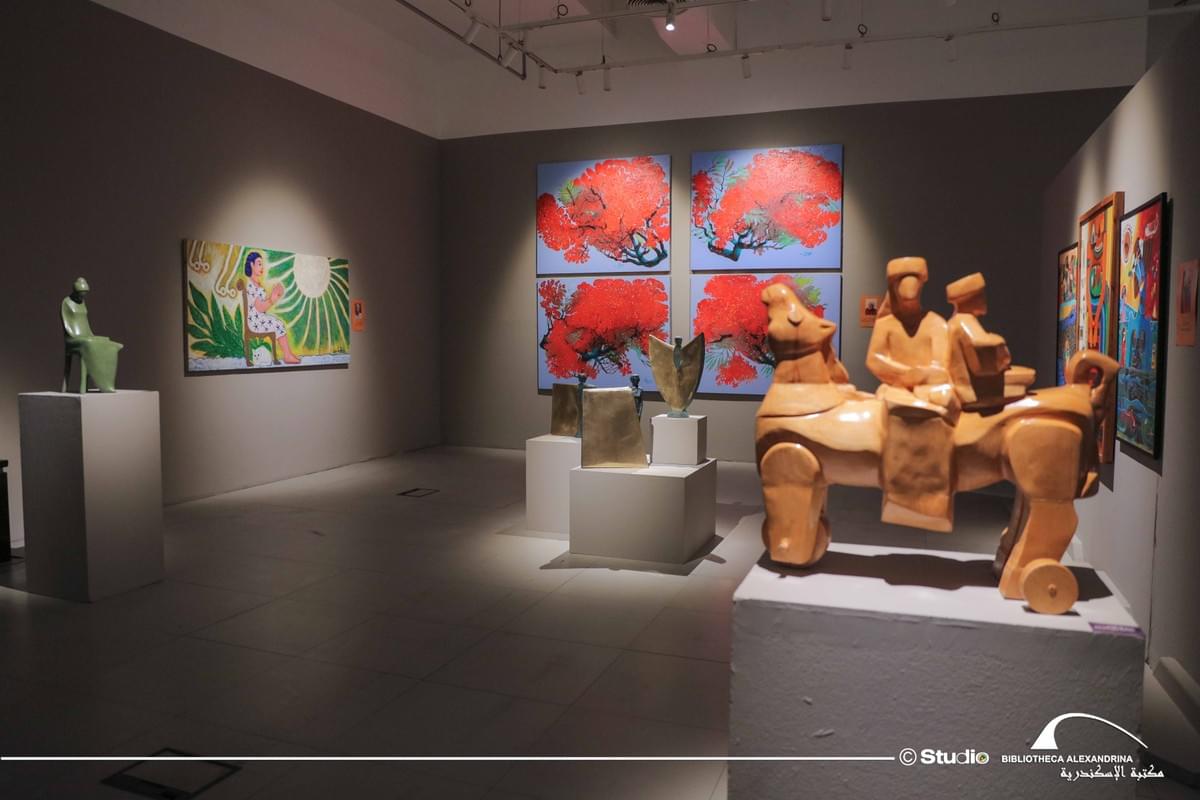
The most interesting aspect of Agenda is embedded directly in its format. A square meter sounds like a limitation. Here, it becomes an equaliser. Regardless of reputation, career stage or artistic language, every participating artist begins with the same fundamental proposition: a defined territory in which to communicate an idea. This produces an intriguing curatorial democracy. The established artist cannot rely upon monumental scale to dominate the room. The emerging artist is not physically relegated to the margins. Within the exhibition’s framework, experience and youth are brought into unusual proximity.
The hierarchy is softened. What remains is the work. And because the physical territory is controlled, another kind of expansion occurs, the expansion of ideas. Some artists use their allotted space densely, constructing layered visual environments. Others embrace restraint. Some works immediately announce themselves through colour or form; others require slower observation. The square meter therefore stops functioning merely as measurement. It becomes a question: How much artistic territory does an idea actually need? Agenda’s answer is persuasive. Scale and significance are not necessarily the same thing.
193 Artists, but No Single Definition of Egyptian Art
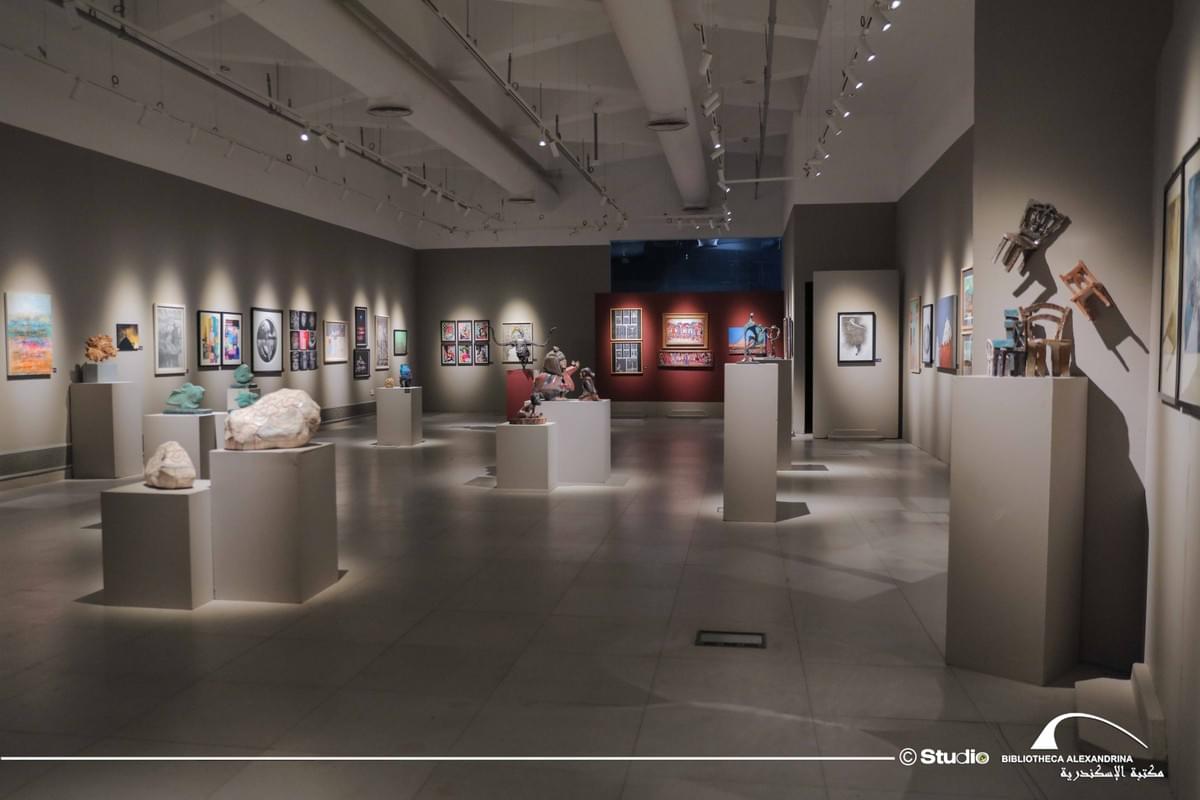
Large group exhibitions carry an inherent risk. When the number of participants becomes substantial, individuality can disappear into quantity. Agenda largely turns this challenge into an advantage. With 193 participating visual artists, uniformity would be impossible, and that is precisely the point. Moving through the exhibition reveals an Egyptian visual landscape that resists easy definition. Different generations, sensibilities, techniques and aesthetic concerns intersect throughout the halls.
There are practices grounded in observation and figuration alongside abstraction and conceptual exploration. Traditional processes meet contemporary visual languages. Material sensitivity sits beside narrative expression. Works concerned with personal worlds coexist with broader reflections on society, memory, identity, environment and human experience. The exhibition does not attempt to manufacture harmony between them. Instead, it allows difference to remain visible. This is important. The strength of a contemporary art scene should not be measured by whether its artists appear stylistically unified. Its vitality often lies in precisely the opposite condition: the freedom for contradictory positions to exist simultaneously. Agenda provides that space.
Alexandria as More Than a Location
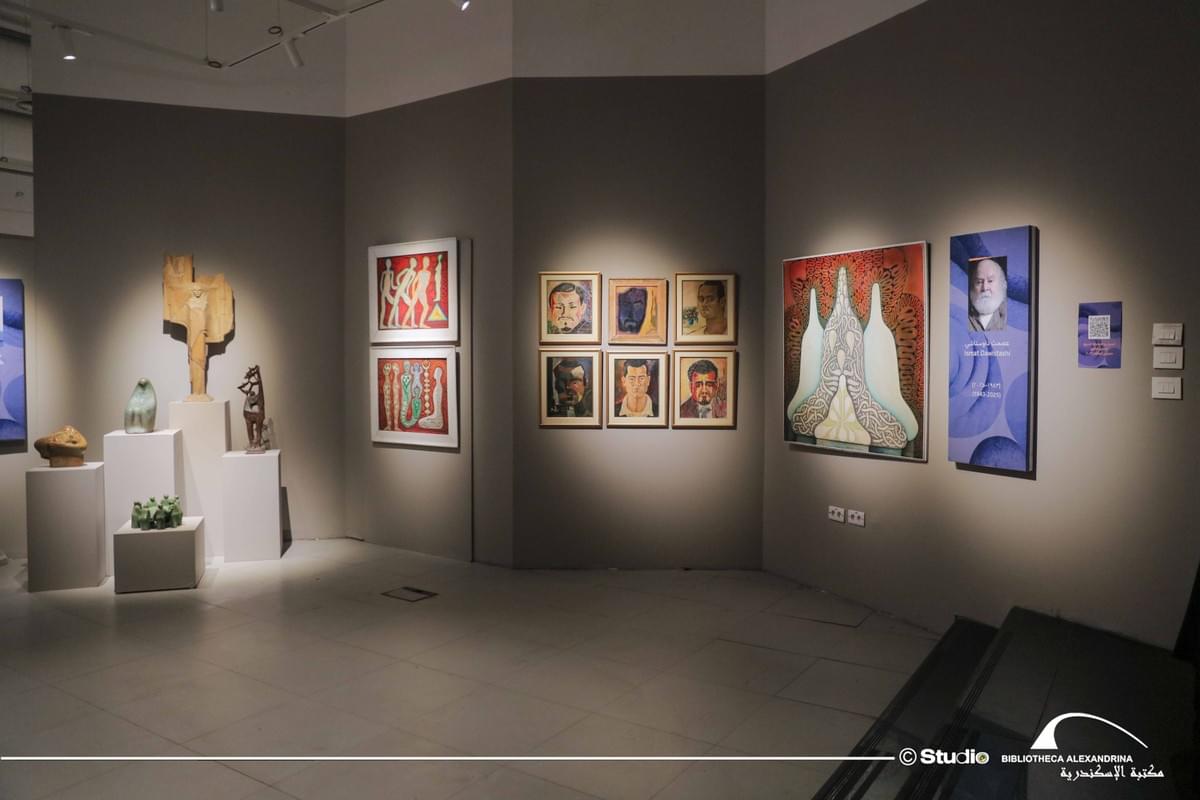
There is particular resonance in encountering an exhibition built around exchange, plurality and knowledge inside the Bibliotheca Alexandrina. Alexandria has historically existed at a crossroads of cultures, ideas, languages and civilizations. Its identity has long been connected with movement across the Mediterranean and with intellectual exchange extending far beyond geographical borders.
The modern Bibliotheca Alexandrina carries this historical memory while functioning as a contemporary institution for knowledge, science, culture and the arts. Within this setting, Agenda feels appropriately placed. The exhibition becomes part of a much larger idea of the library, not simply as an archive of what humanity has already created, but as an institution capable of enabling what comes next. Here, visual art becomes another form of knowledge. An artwork does not provide information in the manner of a book. It asks us to understand through material, colour, image, gesture, form and emotion. In this context, the exhibition halls operate almost as pages within an enormous visual volume. Each square meter becomes another entry. Each artist contributes another perspective.
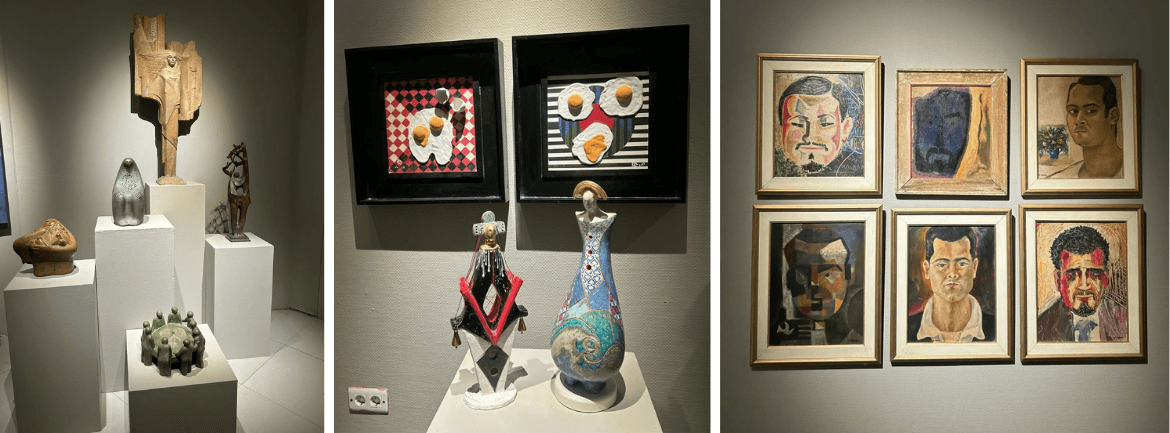
Where Generations Meet
One of Agenda’s most valuable characteristics is its deliberate intergenerational structure. Young and emerging artists exhibit alongside experienced practitioners, including figures who have already made significant contributions to Egyptian visual culture.
This arrangement does more than provide visibility. It creates dialogue. For a developing artist, being included within the same curatorial environment as an established practitioner carries symbolic importance. It suggests that contemporary culture is not created only after institutional recognition has been achieved. New voices are already part of the conversation. At the same time, younger artists bring their own urgency. They arrive with changing references, technologies, social realities and visual influences. Their understanding of image-making has developed within a radically different world from that experienced by previous generations. Placed together, these positions reveal both continuity and rupture.
Techniques are inherited and transformed. Familiar subjects acquire different meanings. Older aesthetic questions return through new media. Experience encounters ambition. Tradition encounters experimentation. Neither needs to defeat the other.
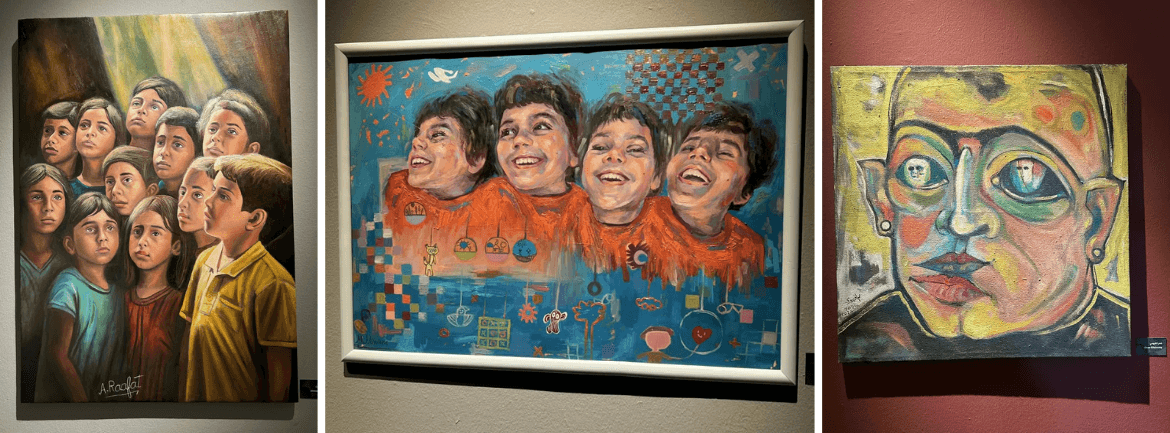
A Productive Visual Restlessness
Agenda is not an exhibition that should necessarily be approached in search of visual calm. Its strength lies elsewhere. With so many independent practices assembled together, the viewing experience is naturally energetic. The eye moves rapidly between different scales of thought, surfaces, colours, materials and artistic intentions. This creates what might be described as productive visual restlessness.
A quiet work may follow an expressive one. A meticulously controlled composition can appear beside a work driven by gesture. A ceramic object shifts the visitor’s attention from image to material; photography changes the rhythm again; sculpture interrupts the flatness of the wall and returns the body to three-dimensional space. Rather than concealing these transitions, Agenda allows them to become part of its identity. The exhibition asks the viewer to constantly recalibrate. Look. Move. Stop. Reconsider. Move again. In a contemporary culture increasingly conditioned by rapid image consumption, this physical movement between objects carries particular value.
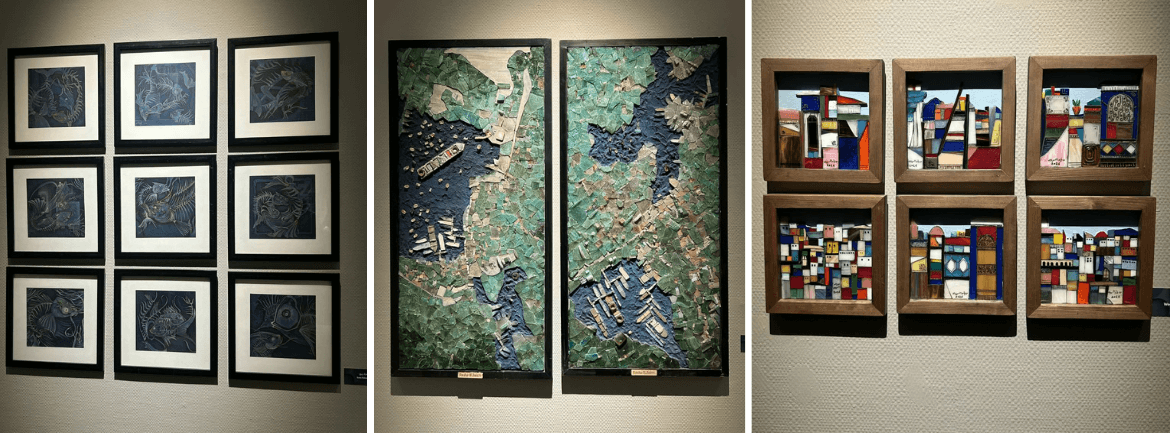
Material Still Matters
Another important dimension of the exhibition is its commitment to multiple artistic media. Painting remains strongly present, but it is not asked to speak for contemporary Egyptian art alone. Photography, drawing, printmaking, sculpture, ceramics and video broaden the field considerably. This matters because media are never neutral.
A photograph produces a different relationship with memory than a painting. Ceramic material carries its own relationship with earth, heat and touch. Printmaking contains processes of transfer and repetition. Sculpture forces the viewer to negotiate physical space. Through these different material languages, Agenda demonstrates that contemporary art is not simply a collection of images. It is also a collection of ways of thinking. The medium becomes part of the meaning.
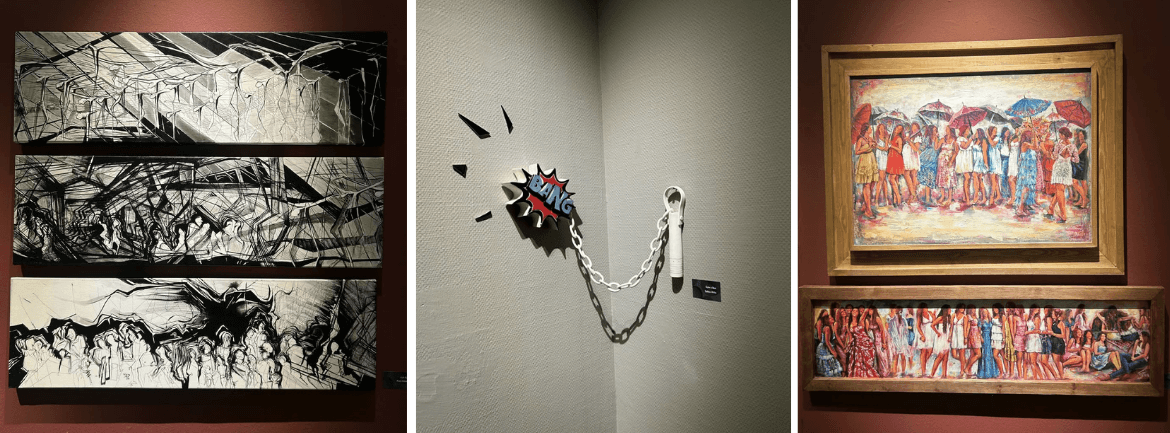
Emerging Artists Need More Than Exposure
The exhibition’s commitment to young artists deserves particular attention. “Providing opportunities” is a phrase frequently used within cultural programming, but meaningful opportunity requires context. Visibility alone is not enough. An emerging artist benefits from being seen within an environment where the work is taken seriously, where audiences encounter it alongside established practice and where participation becomes part of a wider cultural record. Agenda provides precisely this kind of framework.
For some participants, inclusion may represent an early public milestone. For others, it may become another stage in an already developing practice. Either way, the platform establishes something important: permission to participate in the larger cultural conversation. That can have consequences extending far beyond the duration of an exhibition.
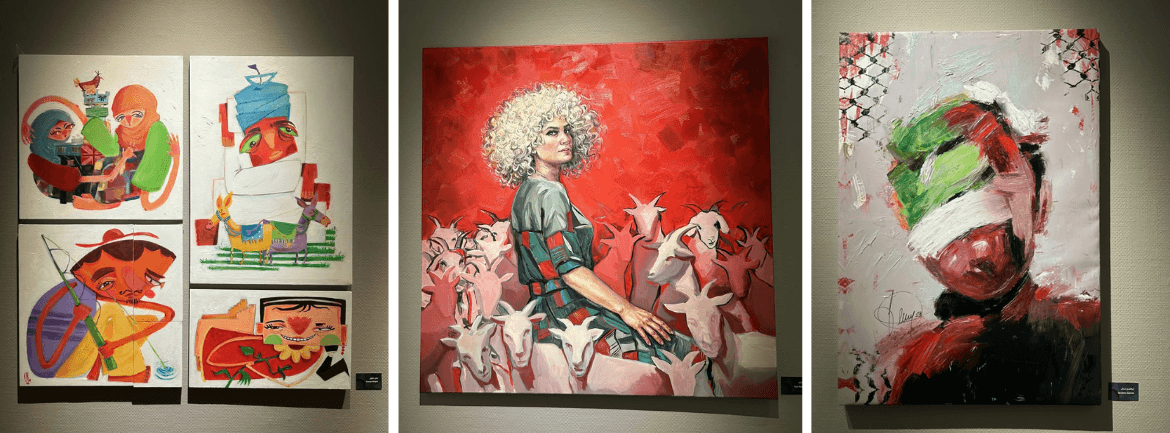
The Challenge and Value of Abundance
An exhibition featuring 193 artists inevitably raises a curatorial challenge: how does one preserve intimacy within abundance? Agenda does not solve this by reducing difference. Instead, the exhibition embraces accumulation. This means the visitor must work. There is too much to absorb instantly. Not every artwork reveals itself with equal speed. Some works compete strongly for attention while others depend upon quieter encounters. But perhaps this is appropriate.
Agenda is less like a tightly scripted solo exhibition and more like entering a city. There are major avenues and smaller discoveries. Certain images remain immediately in memory; others emerge retrospectively. One visitor’s essential work may be entirely different from another’s. The exhibition therefore resists the expectation that a curator must dictate every conclusion. It allows discovery to retain an element of chance.
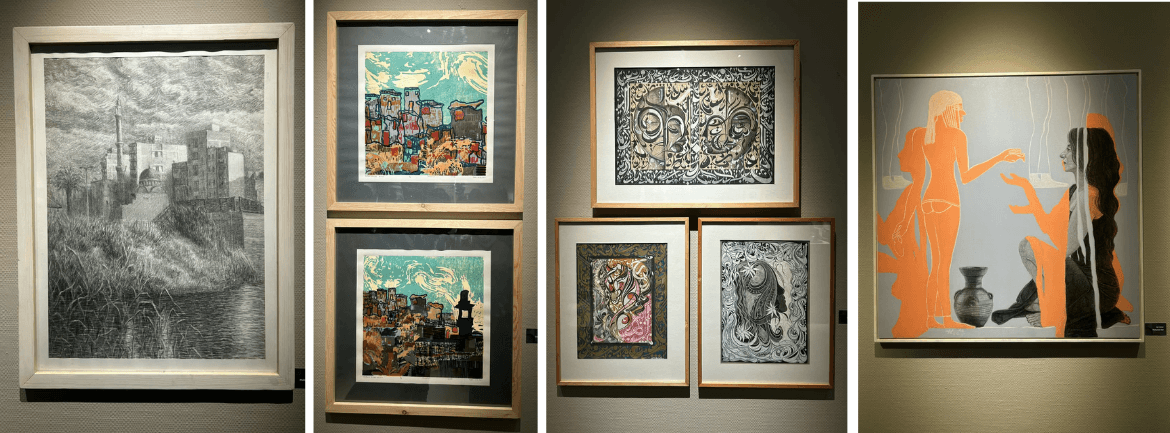
Beyond Established Names
The format also raises an important question about how we look at art. How much does an artist’s reputation influence our judgement?
Within the square-meter principle, the visitor has an opportunity to encounter works before constructing elaborate hierarchies around the people who made them. This encourages a more instinctive form of looking. Does the work hold attention? Does it create curiosity? Does its material language feel convincing? Does it provoke an emotional, intellectual or sensory response? These questions become particularly valuable in an exhibition that deliberately brings different career stages together. Agenda asks audiences to discover rather than merely confirm.
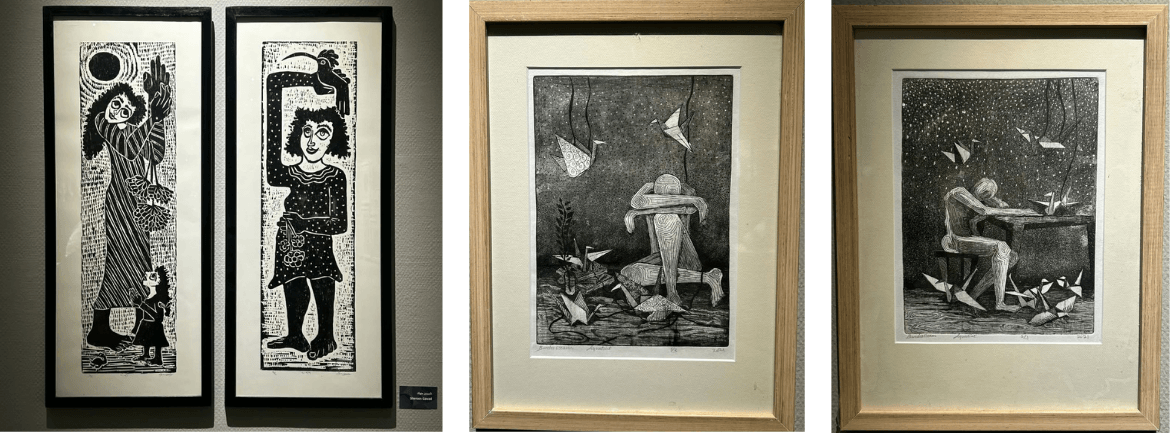
Bibliotheca Alexandrina as Cultural Enabler
The longevity of the exhibition is itself significant. Launched in 2008, Agenda has continued for nineteen editions, building a cumulative relationship with Egypt’s artistic community. Annual exhibitions can easily become repetitive if they exist simply because a calendar requires them. Longevity has cultural value only when the platform continues to provide relevance. Agenda’s endurance suggests something more substantial.
Through its Art Exhibitions and Collections Department within the Cultural Outreach Sector, the Bibliotheca Alexandrina has maintained a platform capable of introducing new artists while retaining connections with established practitioners. The institution therefore operates not only as host but as cultural enabler. This distinction matters. Cultural institutions shape art histories partly through what they preserve, but equally through what they choose to make visible in the present.
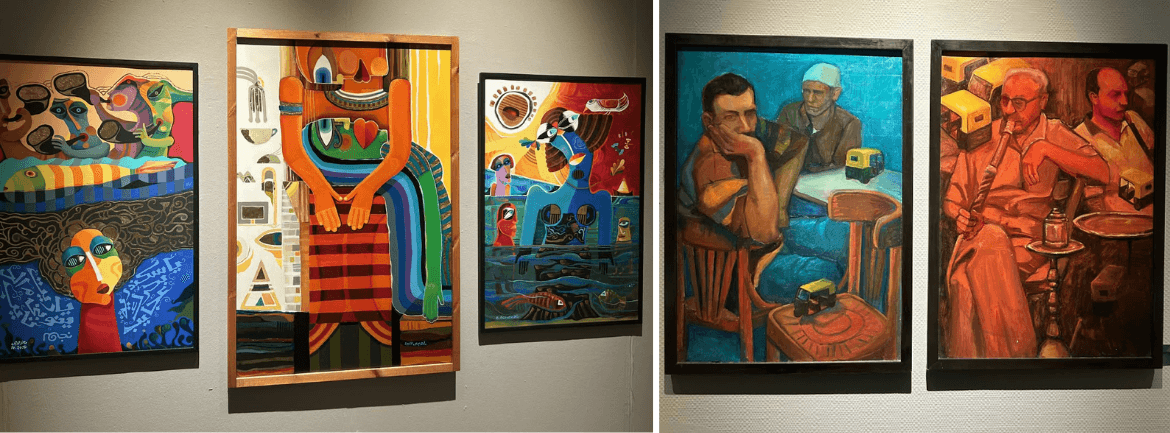
A Portrait of Contemporary Egypt in Fragments
Perhaps Agenda is most compelling when understood not as 193 separate exhibits but as 193 fragments of a larger cultural portrait. No individual work can represent contemporary Egyptian art. Nor should it. But when so many different artistic positions occupy a shared space, patterns begin to emerge, not necessarily stylistic patterns, but evidence of creative energy.
There is experimentation. There is technical continuity. There is individualism. There is curiosity. There is the persistent desire to make images and objects capable of translating private experience into something public. This is where the exhibition moves beyond statistics. The significance is not simply that 193 artists participated. It is that 193 artistic worlds were temporarily permitted to coexist.
Art4you Review: A Small Space Can Hold a Large Idea
The title Square Meter: A Free Space for Creativity contains a deliberate contradiction. A measured space is, by definition, limited. Creativity is not. That tension gives the nineteenth Agenda Exhibition its conceptual strength. Within a single square meter, an artist may construct a memory, challenge a convention, investigate material, record an emotion or create an entirely imaginary world. Multiply that proposition by 193 artists and the exhibition becomes something far larger than its individual units. It becomes a study in plurality.
Agenda also demonstrates why open and intergenerational platforms remain essential to a healthy cultural ecosystem. Art history is not built only through masterpieces and celebrated names. It develops through communities, experiments, opportunities, encounters and institutions willing to provide space before certainty arrives. At Bibliotheca Alexandrina, that philosophy takes physical form.
One artist. One space. One visual proposition. Repeated across the exhibition halls, the square meter becomes less a boundary than a beginning. In its nineteenth edition, Agenda reminds us that artistic freedom is not determined by how much space an artist occupies, but by how far an idea can travel once that space is given. And across Alexandria this August, those ideas are travelling in 193 different directions.
EXHIBITION DETAILS
Agenda Exhibition – 19th Edition
Square Meter: A Free Space for Creativity
Venue: East & West Exhibition Halls, Conference Center, Bibliotheca Alexandrina, Alexandria, Egypt
Exhibition: 11–29 August 2026 | Participating Artists: 193 visual artists
Disciplines: Painting, Photography, Sculpture, Printmaking, Drawing, Ceramics, Video Art and interdisciplinary visual practices
Organised by: Art Exhibitions and Collections Department, Cultural Outreach Sector, Bibliotheca Alexandrina
*Written by Noura Hamed | Contributor: Perihan Marwan - Egypt/ UAE | Art4you Magazine | August 2026
*Image Supplied by Bibliotheca Alexadrina & Perihan Marwan