
Henry Moore: Monumental Nature transforms one of the world’s great botanical landscapes into a living encounter between sculpture, landscape, architecture and the enduring forms of nature.
At the Royal Botanic Gardens, Kew, London, Moore’s monumental sculptures have found an extraordinary setting. Henry Moore: Monumental Nature, running until 31 January 2027, brings together art and landscape across one of Britain’s most celebrated cultural and botanical landmarks. Presented in partnership with the Henry Moore Foundation, the exhibition is the largest and most comprehensive presentation of Moore’s work at Kew to date, placing 30 sculptures throughout Kew’s 320-acre landscape and within the magnificent Temperate House.
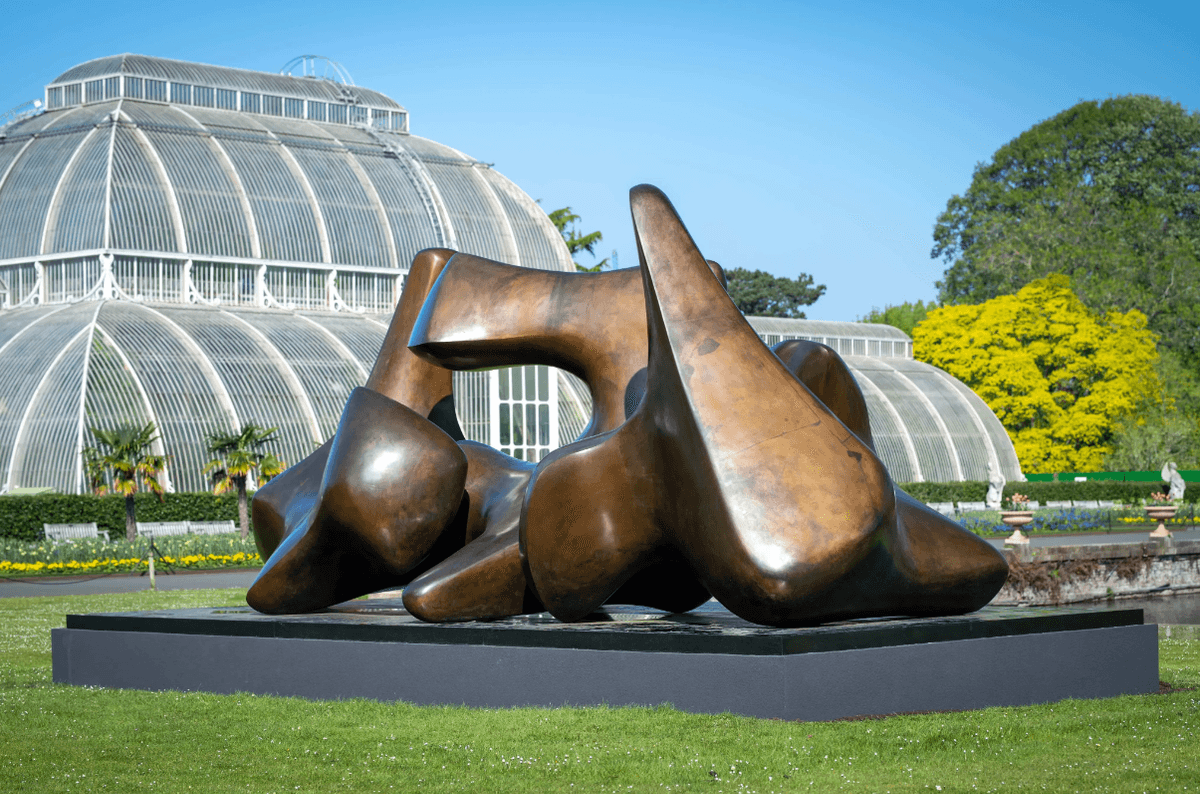
Three Piece Sculpture: Vertebrae 1968 -69 © Pete Higgins
It is more than an outdoor sculpture exhibition. Monumental Nature feels like a return, to the earth, organic form and landscape that shaped Moore’s artistic imagination throughout his life.
Henry Moore: The Sculptor Who Looked to Nature
Henry Moore (1898–1986) remains one of the defining figures of twentieth-century British sculpture and one of the artists who radically expanded the international language of modern sculpture. Born in Castleford, Yorkshire, Moore developed a visual vocabulary that would eventually become instantly recognisable: reclining figures, mothers and children, internal and external forms, pierced bodies, bones, shells and monumental abstractions that hover between the human body and the landscape.
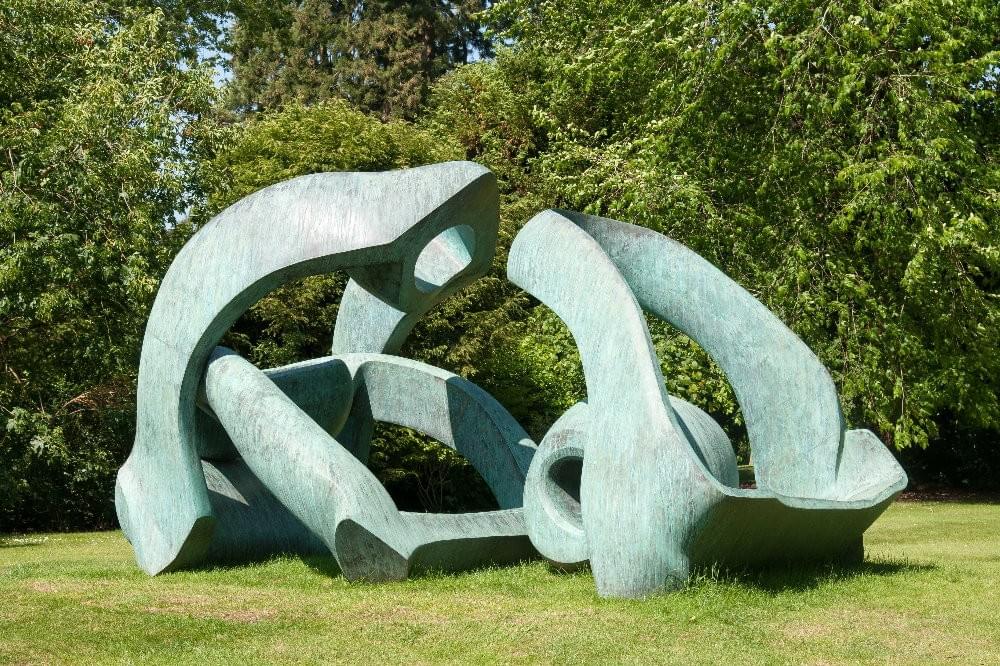
Hill Arches 1973
Yet reducing Moore to the famous reclining figure misses the depth of his achievement. At the heart of his practice was an extraordinary sensitivity to form itself, how a curve grows, how mass occupies space, how a hollow can be as expressive as solid material, and how the human body can echo hills, stones, caves, bones and geological formations. Moore collected natural objects including stones, shells and bones, studying them not simply as references to copy but as structures from which artistic possibilities could emerge. Nature offered him an endless vocabulary of rhythm, tension, erosion, weight, balance and growth. This makes Kew an especially meaningful environment in which to reconsider his work.
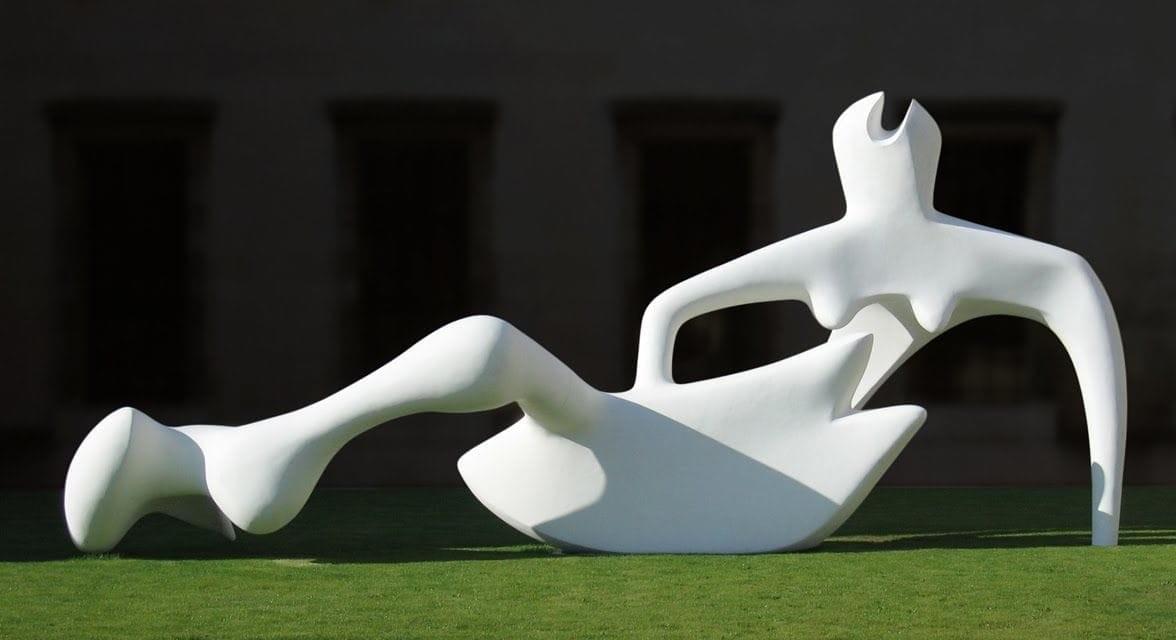
Monumental Nature by Henry Moore
Why Kew Changes the Experience
Kew Gardens is not simply the backdrop to Monumental Nature. It becomes an active participant in the exhibition. The Royal Botanic Gardens, Kew, a UNESCO World Heritage Site, brings together centuries of botanical science, horticulture, conservation, landscape design and architectural history. Its gardens contain one of the world's most significant living plant collections, while landmarks such as the Palm House and Temperate House have become symbols of Britain's botanical heritage.
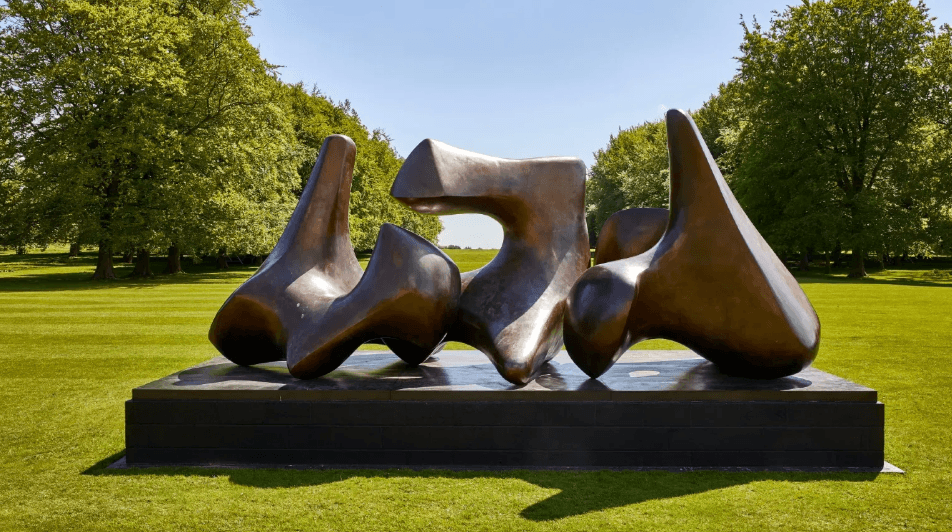
Three Piece Sculpture: Vertebrae 1968 -69 © Pete Higgins
Across this expansive environment, Moore's sculptures enter into constantly shifting relationships with their surroundings. A work encountered against open sky reads differently from the same sculpture viewed against dense foliage. Bronze surfaces respond to sunlight, shadow and rain. Openings within a sculpture suddenly frame trees or distant landscape. Curves appear to repeat the contours of branches, leaves and earth.
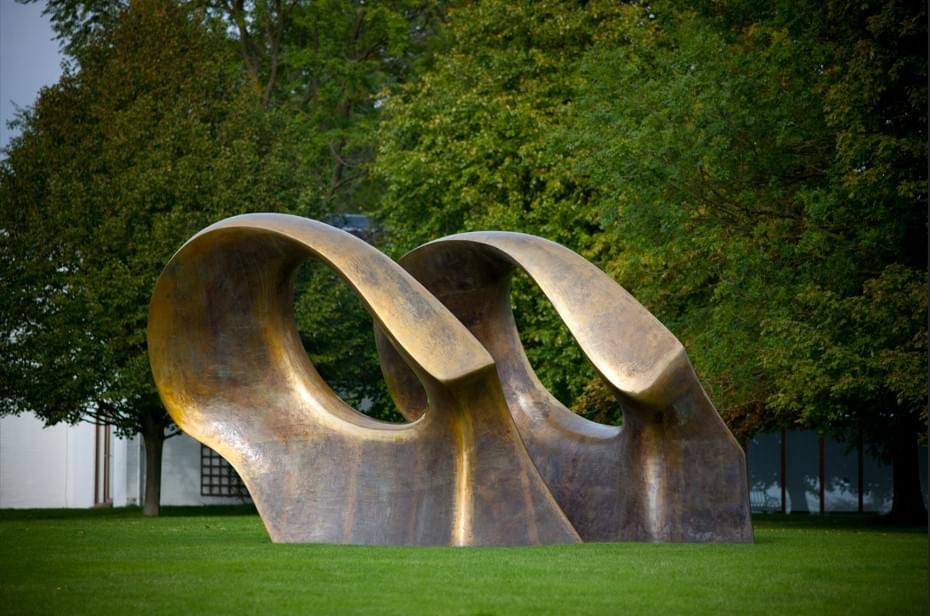
Double Oval 1966 © Jonty Wilde
Walking becomes part of viewing.
The visitor does not simply stand before a sculpture. One approaches it from a distance, moves around it, sees the landscape through it and watches its character change from one perspective to another. This relationship was fundamental to Moore's thinking. He believed sculpture could gain tremendous power when placed within landscape. At Kew, that principle can be experienced rather than merely studied.
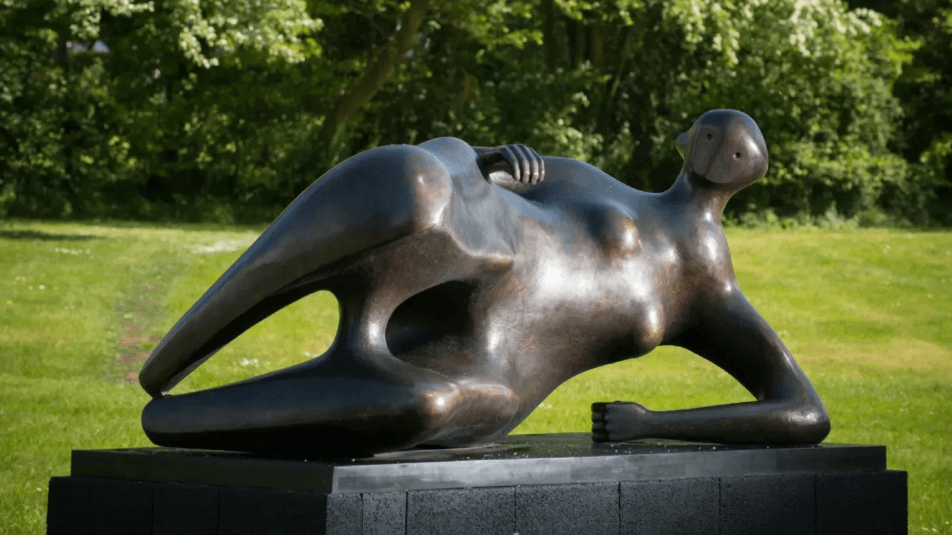
Reclining Women © Pete Higgins
Thirty Sculptures, Hundreds of Conversations
Spread throughout Kew's landscape and the iconic Temperate House, the world's largest surviving Victorian glasshouse, the 30 outdoor and large-scale works create individual encounters rather than a conventional linear exhibition route. Among the works represented are important examples from different stages of Moore's career, including sculptures such as Knife Edge Two Piece, Large Reclining Figure, Reclining Connected Forms and Three Piece Sculpture: Vertebrae.
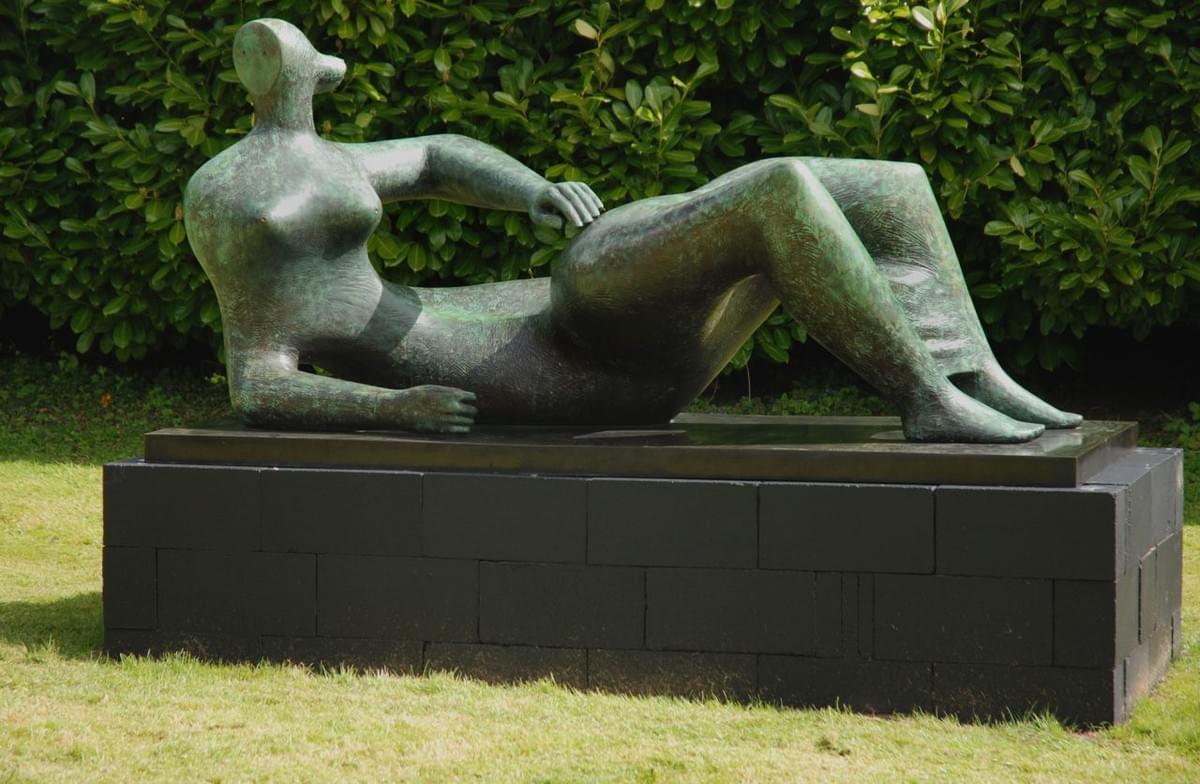
Reclining Figure © Pete Higgins
The titles themselves reveal Moore's world.
“Reclining” connects sculpture to the human figure. “Vertebrae” suggests anatomy and biological structure. “Connected Forms” evokes relationships between bodies and spaces. “Knife Edge” introduces tension, sharpness and balance. But Moore rarely provides a single visual answer. A sculpture may appear human from one angle and geological from another. What initially resembles bone might suddenly resemble landscape. A hollow may become a window onto a tree. A massive bronze form can paradoxically appear weightless when framed against the sky. This ambiguity is central to Moore's enduring power.
His sculpture exists in the territory between figuration and abstraction, body and landscape, solidity and emptiness, intimacy and monumentality. At Kew, those relationships become particularly vivid because nature is not represented, it is physically present.
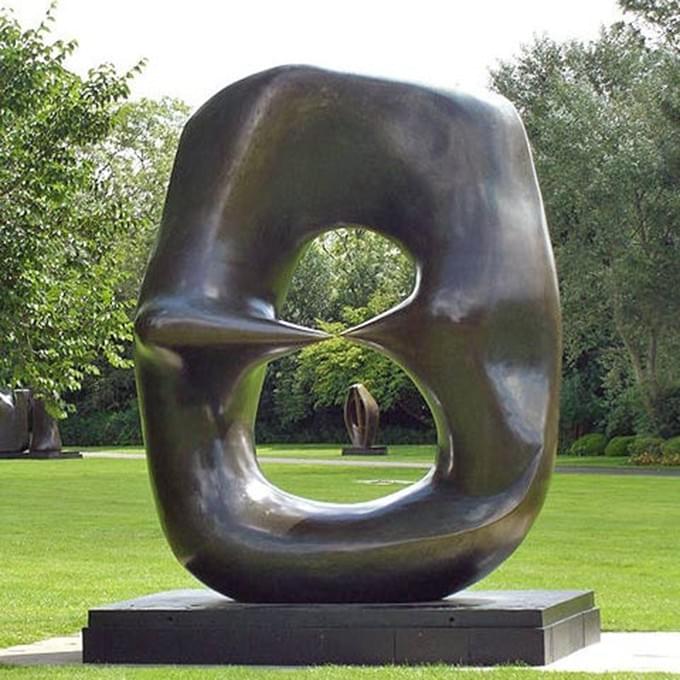
Metal cast outdoor Henry moore art statue
Inside Moore's Creative Mind
The experience continues inside the Shirley Sherwood Gallery of Botanical Art, where a substantial curated exhibition brings together more than 90 works, including bronzes, drawings, prints, stone and wood carvings. If the monumental works outside reveal Moore's thinking at architectural scale, the gallery provides an opportunity to understand how that thinking developed.
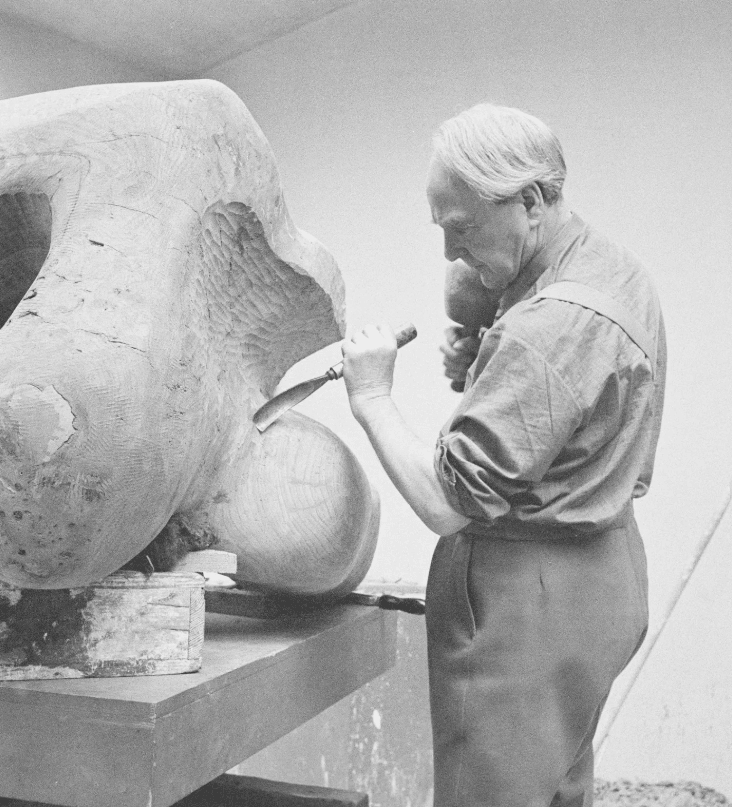
Henry Moore carving Reclining Figure 1959–64. © Errol Jackson
The exhibition explores Moore's process of “thinking through nature,” bringing major works into conversation with lesser-known pieces, including material rarely accessible to the public. Of particular significance is the presentation of Moore's wood sculptures. Wood reveals another dimension of his sensitivity to material. Rather than treating material simply as a substance to be controlled, Moore frequently responded to its inherent characteristics, grain, density, irregularity and natural structure.
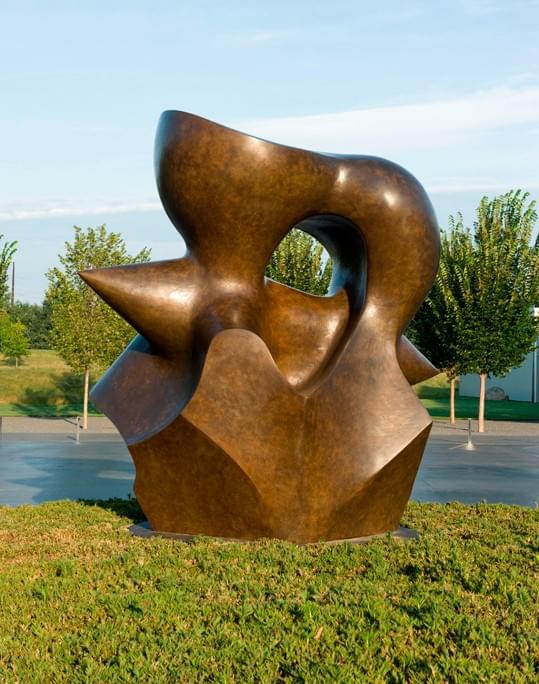
Garden Bronze Henry Moore Sculpture
The exhibition therefore allows visitors to move between finished monumentality and artistic investigation: between drawing and sculpture, observation and abstraction, natural object and transformed form. Works from Kew's own collections further deepen this dialogue, alongside important loans from British collections including Tate and the Sainsbury Centre for Visual Arts.
The Temperate House: Architecture Meets Organic Form
Among the most compelling aspects of Monumental Nature is the presence of Moore's sculpture within and around Kew's Temperate House. Completed in the nineteenth century, the vast glasshouse is itself a remarkable meeting of engineering and nature. Its soaring Victorian structure encloses an extraordinary botanical world, creating an architecture designed specifically around living forms. Placing Moore within this environment creates layers of visual conversation: industrial structure, botanical growth and sculptural abstraction.
Iron framework meets bronze. Human construction surrounds organic life. Moore's forms sit somewhere between both. It is precisely this tension that makes the exhibition feel contemporary despite the historical importance of the artist. Moore's questions remain remarkably relevant: What is humanity's relationship with nature? How do we occupy landscape? Where does the body end and environment begin? Can an artwork reconnect us with forms that modern life teaches us to overlook?
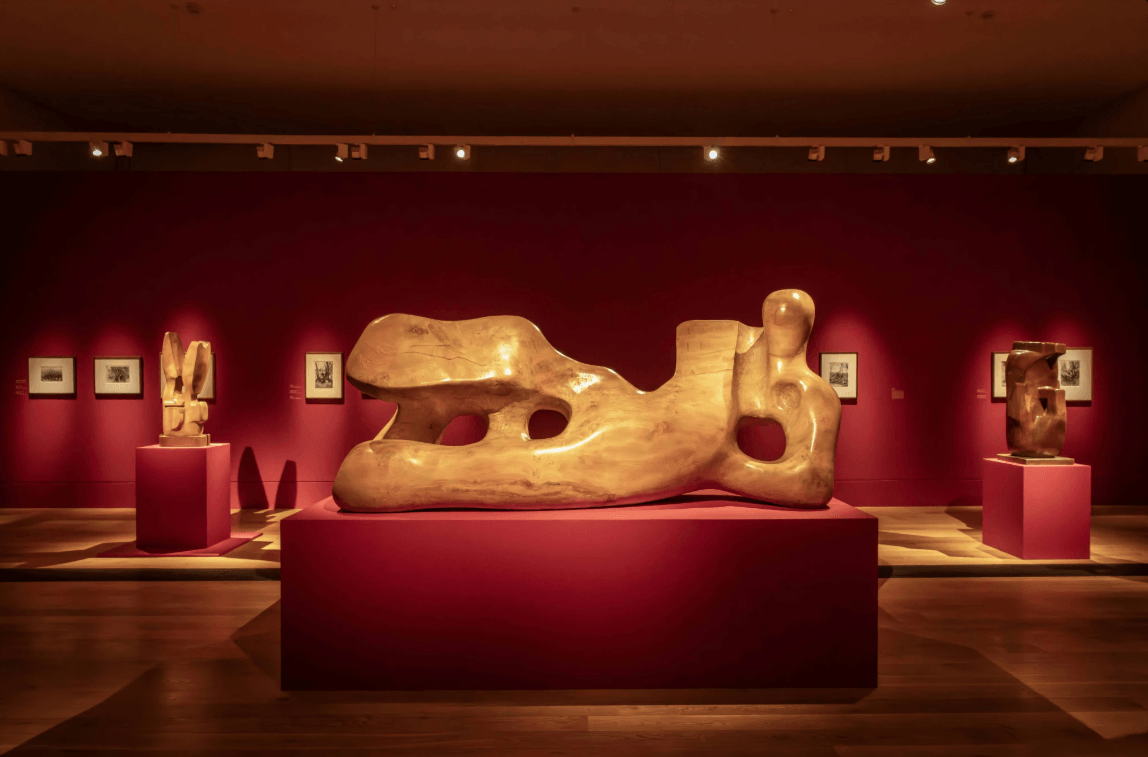
Works by Henry Moore in the Shirley Sherwood Gallery © Henry Moore Foundation. Photo: Ines Stuart-Davidson
Kew has expanded Monumental Nature beyond conventional exhibition viewing through a programme designed to encourage different ways of encountering Moore. Family activities invite younger audiences to explore selected sculptures through sight, touch and sound, while special guided experiences provide closer interpretation of the works and their surroundings. The programme also includes evening events, talks and experiences exploring Moore's life, legacy and artistic practice. The wider approach is important because Moore's sculpture rewards movement and time. These are not works designed to be understood through a single frontal photograph.
They need to be walked around. They need changing light. They need distance. And perhaps most importantly, they need space. Kew provides that space magnificently.
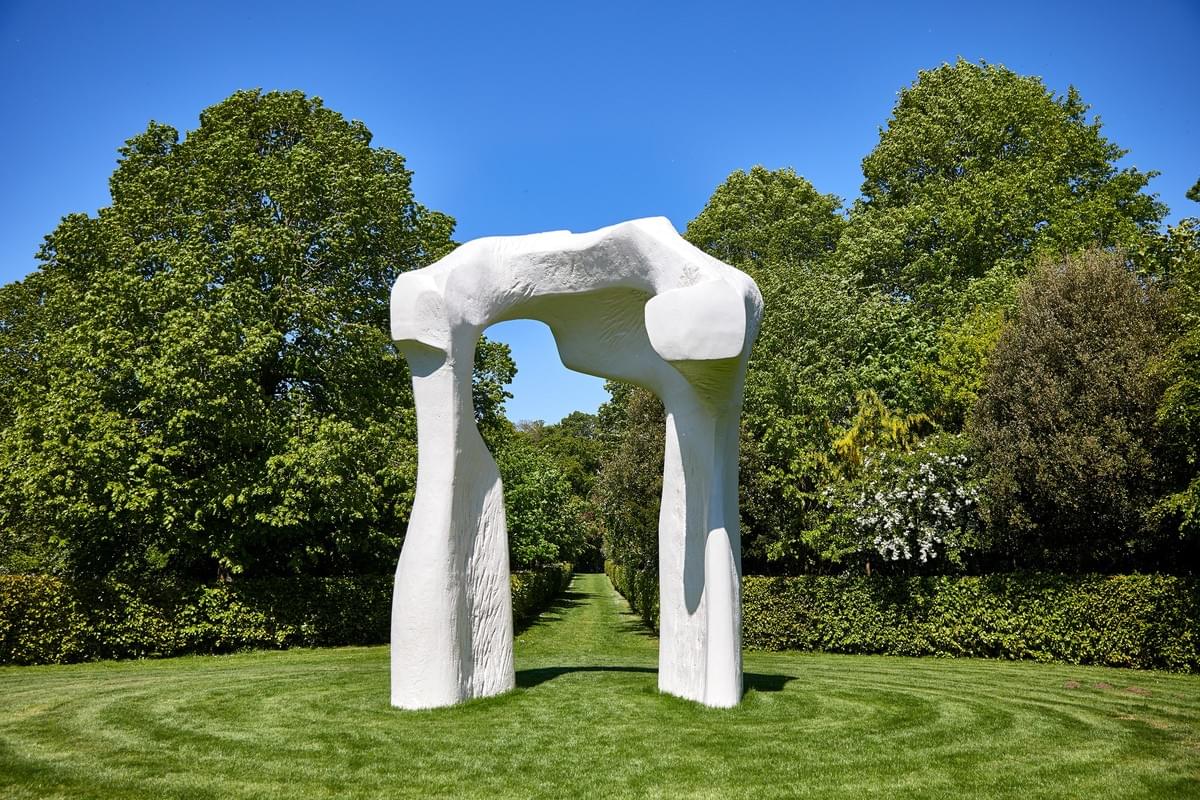
Henry Moore Sculpture
A New Reading of a Modern Master
Nearly four decades after Moore's death, his sculpture continues to feel unexpectedly alive because its central concerns have not disappeared. If anything, questions surrounding humanity, ecology, environment and our relationship with the natural world have become increasingly urgent. Seen within Kew Gardens, Moore's monumental forms cease to belong exclusively to the history of modernism. They begin participating in a contemporary conversation. Sebastiano Barassi, Head of Henry Moore Collections & Programmes, has reflected on how the exhibitions at Kew and Wakehurst encourage audiences to reconsider Moore through ideas of nature, humanity and environment, themes whose relevance has only intensified.
This may ultimately be the greatest achievement of Monumental Nature. It does not simply tell us why Henry Moore was important. It allows us to experience why he remains important.
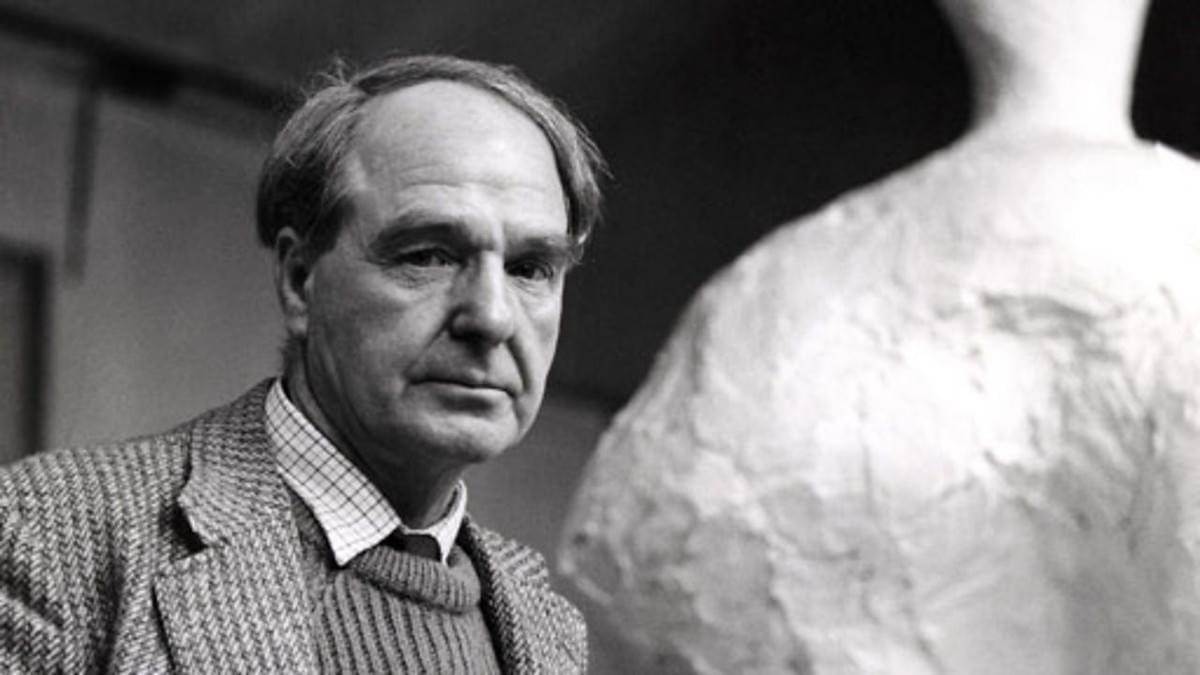
Henry Moore at his Studio
There is something profoundly appropriate about encountering Moore away from the white walls of the museum. At Kew, sculpture becomes part of a larger visual ecology. Bronze meets bark. Curves meet branches. Negative spaces capture fragments of sky. Human-made forms appear beside botanical structures shaped through millions of years of evolution. The boundaries begin to dissolve. Is the sculpture interrupting the landscape, or has it always somehow belonged there? That uncertainty lies at the centre of Moore's artistic language.
Henry Moore: Monumental Nature reminds us that monumental sculpture does not have to dominate its surroundings. At its most powerful, it can teach us to notice them. And perhaps that is why Kew Gardens is such an exceptional place to encounter Henry Moore. Here, nature is neither decoration nor background. It is Moore's collaborator. Through this meeting of one of modern sculpture's greatest figures and one of the world's most extraordinary botanical landscapes, Monumental Nature becomes something larger than a retrospective. It becomes an invitation to slow down, walk, look again and recognise the ancient visual relationships connecting the human body, the earth and the forms growing around us.
In Kew's gardens, Henry Moore's sculptures do not simply stand in nature. They seem to return to it.
Exhibition Information
Name: Henry Moore: Monumental Nature
Location: Royal Botanic Gardens, Kew, London
Dates: 9 May 2026 - 31 January 2027
Presented in partnership with the Henry Moore Foundation
The exhibition encompasses 30 monumental works across Kew Gardens and the Temperate House, alongside more than 90 works in the Shirley Sherwood Gallery of Botanical Art.
Dale Lawrence | Art4you Magazine | International Art & Culture Feature | 2026
©Image credits: Henry Moore Foundation & Royal Botanic Gardens, Kew