
Paris: More than a century after Howard Carter’s extraordinary discovery in Egypt’s Valley of the Kings, the story of Tutankhamun continues to capture the global imagination. This summer, Paris has once again stepped into the mysterious world of the young pharaoh through “Tutankhamun: His Tomb and His Treasures,” which opened at Paris Expo Porte de Versailles on 3 July 2026 and continues until 6 September 2026. Presented across more than 2,500 square metres, the exhibition takes visitors beyond a conventional museum display, recreating the atmosphere, spatial arrangement and extraordinary visual richness of one of archaeology’s most famous discoveries.
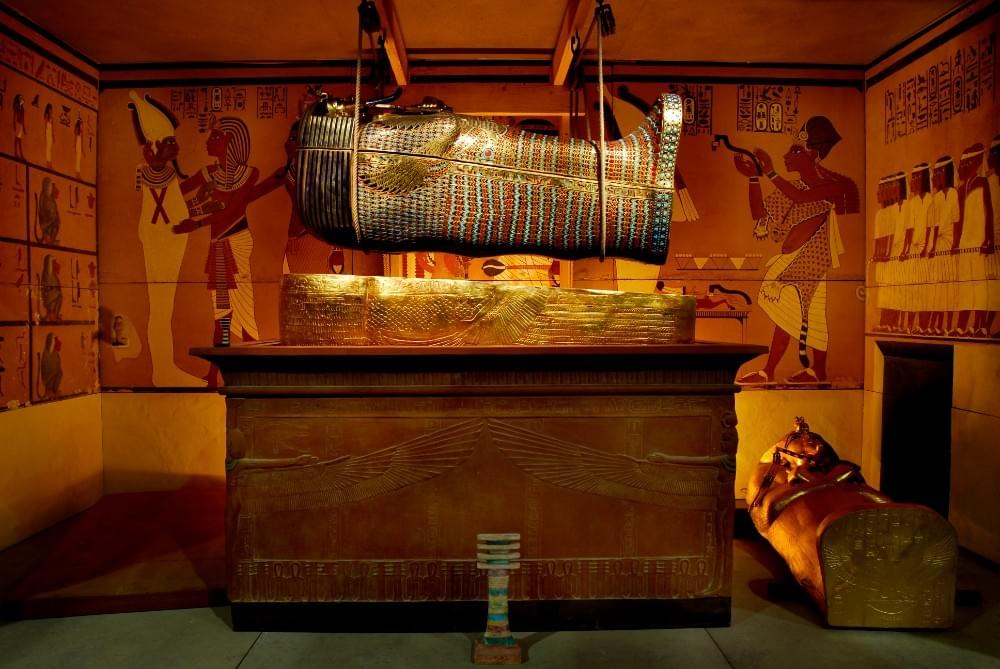
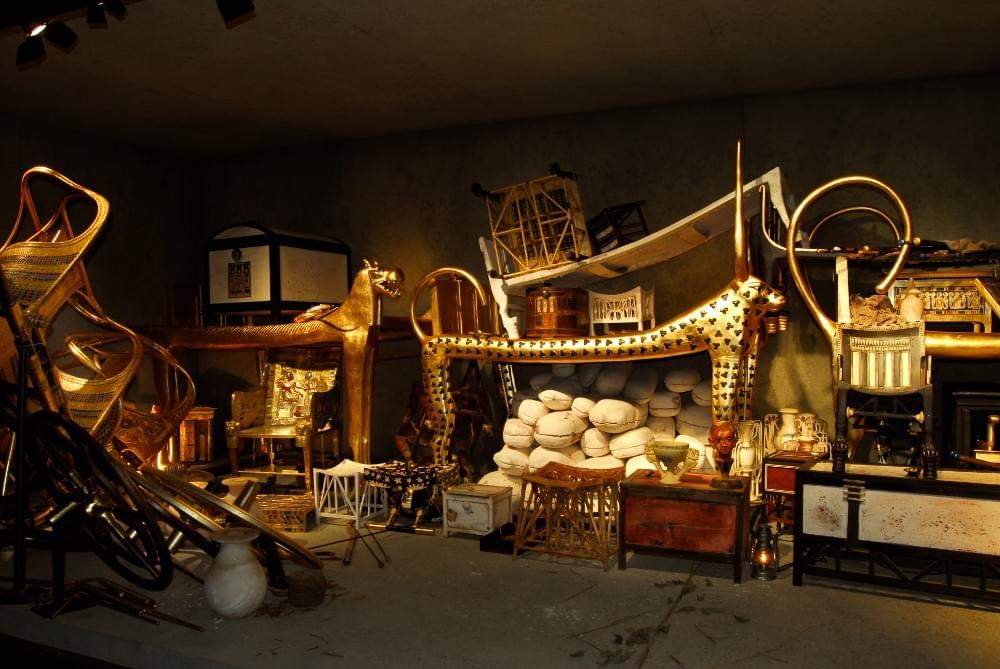
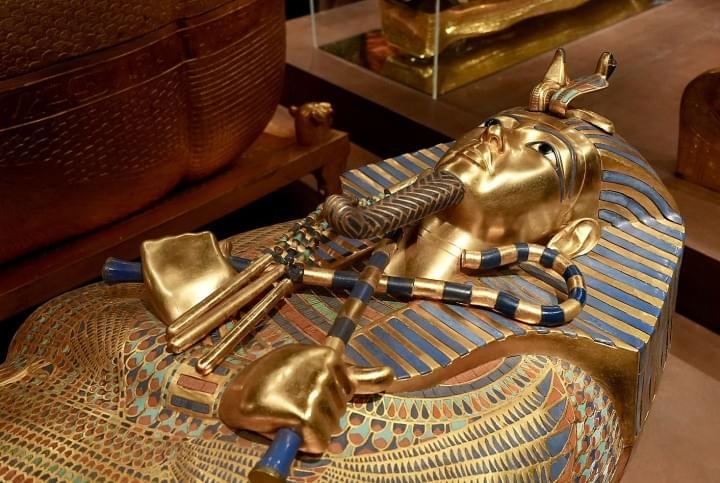
At the centre of the experience is an extensive reconstruction of Tutankhamun’s tomb as it appeared when discovered in 1922, bringing together approximately 1,000 meticulously produced replicas created with reference to archaeological records, historical photographs, sketches, research and documentation. Importantly, the objects are not original antiquities from Tutankhamun’s treasure. Instead, the exhibition uses scientifically informed reproductions to reconstruct the archaeological context in a way that would be impossible with fragile original artefacts. This distinction ultimately becomes part of the exhibition’s strength: visitors can approach the reconstructed objects more closely and understand how the extraordinary accumulation of royal possessions once occupied the tomb.
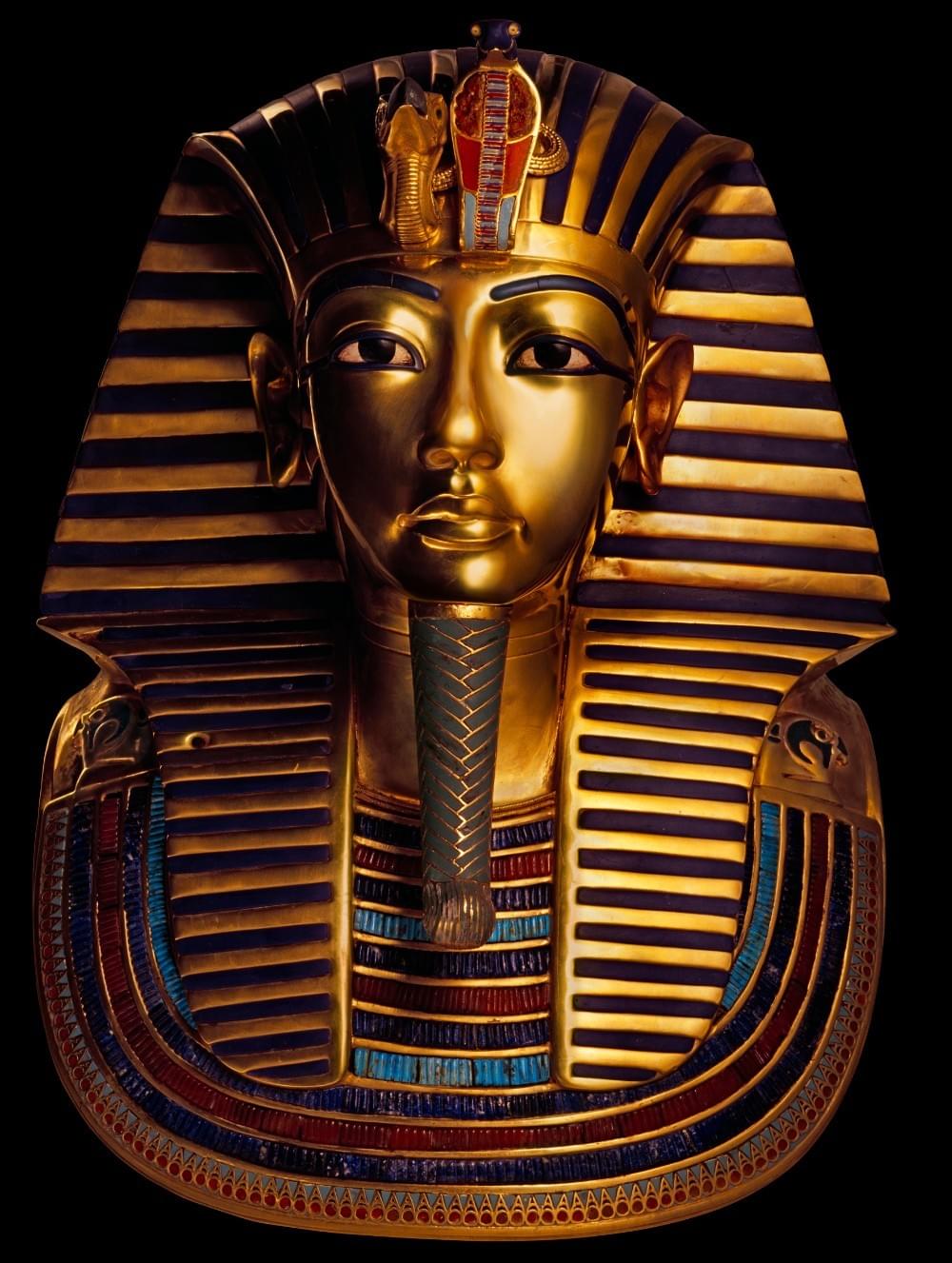
The journey begins by establishing the wider world of ancient Egypt, with introductory material exploring hieroglyphs, archaeology and Egyptian civilisation, alongside a replica of the Rosetta Stone. An approximately eight-minute film then returns visitors to the dramatic events of 1922, when British archaeologist Howard Carter, working with the support of Lord Carnarvon, uncovered a tomb that had remained largely undisturbed for almost 3,300 years. From here, the exhibition introduces the architecture of the burial site, the antechamber, burial chamber and treasury, before visitors enter its most theatrical reconstruction.
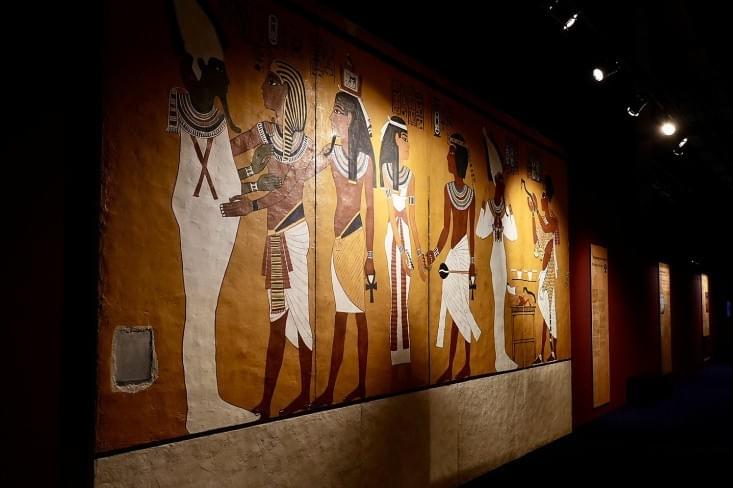
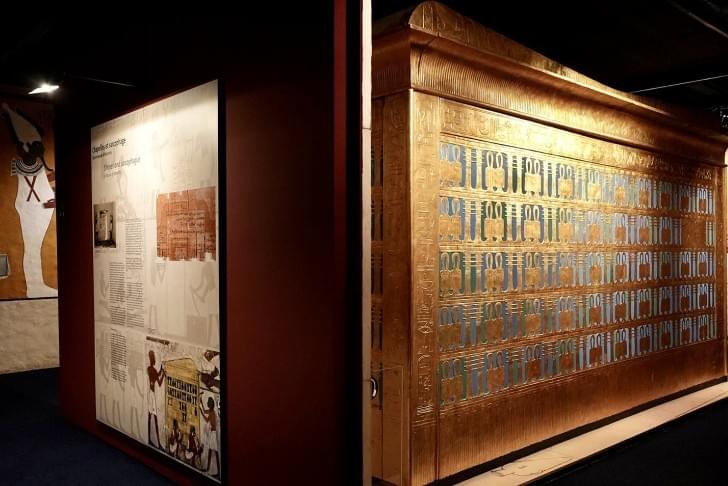
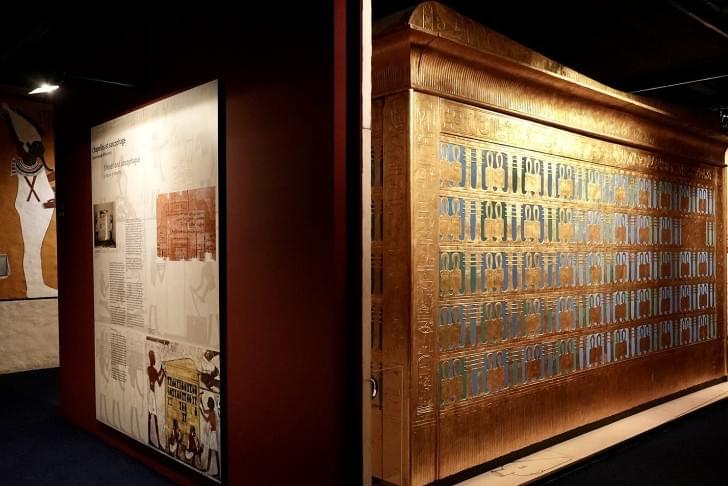
Darkness, gold and carefully controlled illumination shape the visual identity of the main galleries. Chapels, sarcophagi, chests and funerary structures emerge dramatically from the subdued surroundings, creating a sense of gradual discovery rather than presenting the objects as an isolated archaeological catalogue. Royal furniture, ceremonial chariots, protective statues, funerary beds, shields, fans, ritual objects and the celebrated visual language associated with Tutankhamun collectively reveal the remarkable complexity of ancient Egyptian beliefs surrounding kingship, death and the afterlife. The abundance of objects also communicates something easily lost when individual masterpieces are viewed separately: the tomb was conceived as an interconnected environment prepared to accompany the pharaoh into eternity.
Technology extends the experience further. A 360-degree immersive room surrounds visitors with projected imagery inspired by ancient Egypt and its mythology, shifting the atmosphere from archaeological interpretation towards sensory experience. A separate virtual-reality component introduces another layer of digital storytelling, transporting headset-wearing visitors into a reconstructed ancient Egyptian world. Together, these additions demonstrate the increasingly important role immersive technology plays in translating historical subjects for contemporary audiences.
The exhibition’s Paris opening was also marked by the presence of renowned Egyptian archaeologist and Egyptologist Zahi Hawass, who delivered Archaeological Adventures on 4 July. Drawing on more than five decades of work, Hawass explored major questions surrounding Tutankhamun, Nefertiti, the Valley of the Kings, the Great Pyramids and discoveries including the ancient City of Gold, connecting the exhibition’s reconstructed past with the continuing evolution of Egyptological research.
Ultimately, “Tutankhamun: His Tomb and His Treasures” succeeds not because it claims to replace an encounter with authentic antiquities, but because it offers something fundamentally different: context. By reconstructing objects alongside one another and returning them to an approximation of their original spatial relationships, the exhibition allows audiences to imagine the astonishing moment when Carter first encountered the tomb’s contents.
More than 100 years after that discovery, Tutankhamun remains one of history’s most recognisable figures. In Paris, his story is being told again, not through the originals themselves, but through reconstruction, scholarship, scenography and technology. The result demonstrates how archaeological history can move beyond the display case and become an immersive cultural narrative, inviting a new generation to enter the darkness of an ancient tomb and rediscover the golden world that waited there for millennia.
Tutankhamun: His Tomb and His Treasures | Paris Expo Porte de Versailles | 3 July – 6 September 2026